
Leftover meatloaf night used to be met with zero enthusiasm in my house. I'd set it on the table and get that look from Saad — you know the one. Then one evening I sliced it thick, stacked it between buttered sourdough with two layers of cheddar, and threw it in a hot skillet. The whole thing was gone in ten minutes. No complaints, no looks. Just silence and chewing.
What makes this work is the double cheese layer — one on each side of the meatloaf so it acts like glue and melts into every crevice. I learned that trick after my first attempt fell apart when I cut it. One slice of cheese wasn't enough to hold everything together, and I ended up with a sad pile of meatloaf on my cutting board. Two layers changed everything. The outside gets properly golden and crispy because I don't rush it — medium heat, a little patience, and a gentle press with the spatula is all it takes.
This is my go-to for nights when I've got meatloaf in the fridge and nothing planned for lunch. It takes about 15 minutes start to finish, which is honestly faster than reheating in the oven. My husband adds a smear of barbecue sauce inside his; I prefer ketchup. Both versions are great. If you're looking for something to serve alongside it, my marinated cucumber tomato onion salad cuts right through the richness of the sandwich and takes almost no time to put together.
One thing to know before you start: use cold or room-temperature meatloaf, not hot. Hot meatloaf is too soft and crumbles when you try to slice it. Cold slices hold their shape in the skillet and heat through by the time the bread is golden. I use whatever bread I have — sourdough is my first pick because it gets deeply crispy, but regular sandwich bread works fine too if that's what's in the house.
Why You'll Love This Recipe
- It uses up leftovers without feeling like leftovers: Reheated meatloaf on its own is fine but rarely exciting. Put it inside a grilled cheese and suddenly it feels like a completely different meal. I make a double batch of meatloaf on Sundays specifically so I can make these sandwiches on Monday. Nobody ever complains about Monday lunch when this is on the menu.
- It comes together in about 15 minutes: There's no prep beyond slicing the meatloaf and buttering the bread. I've made this on school mornings when I had virtually no time, and it still came out right. The skillet does all the work — you just need to not walk away from it.
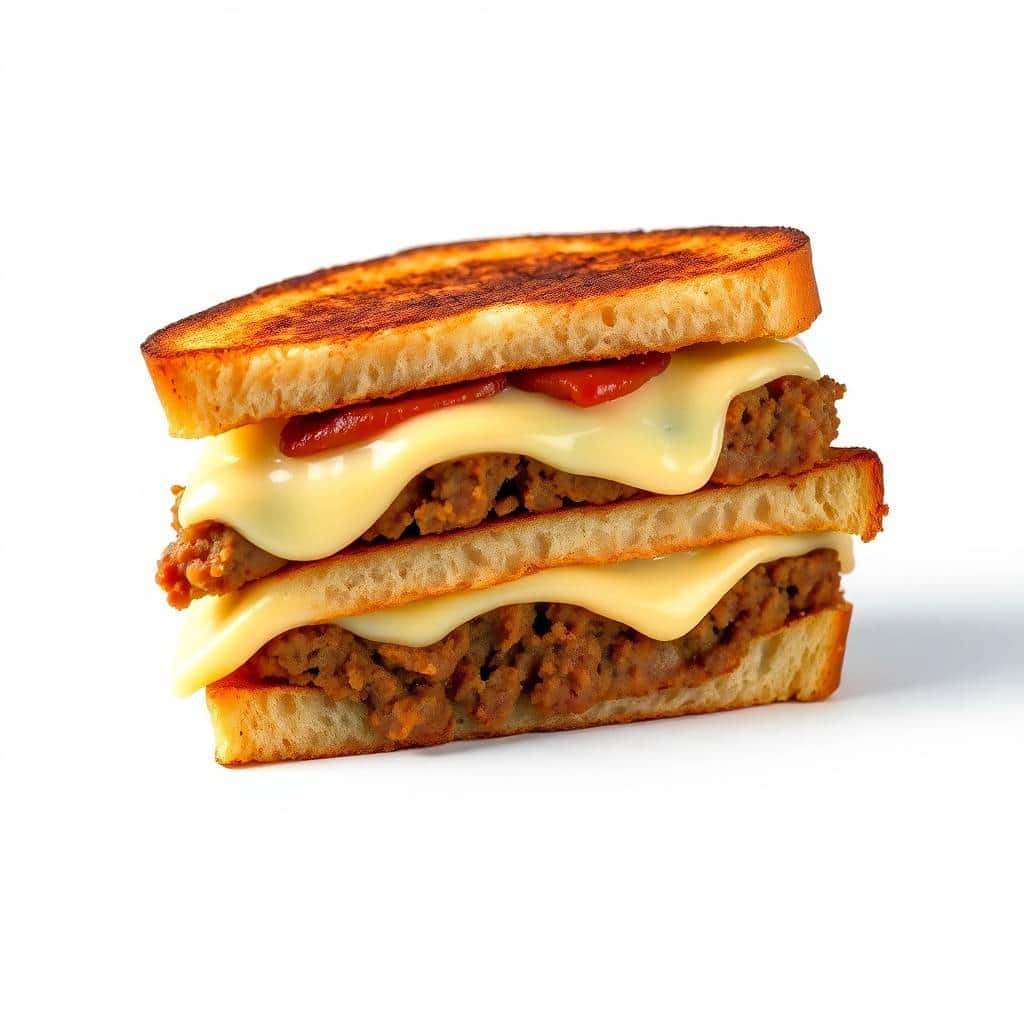
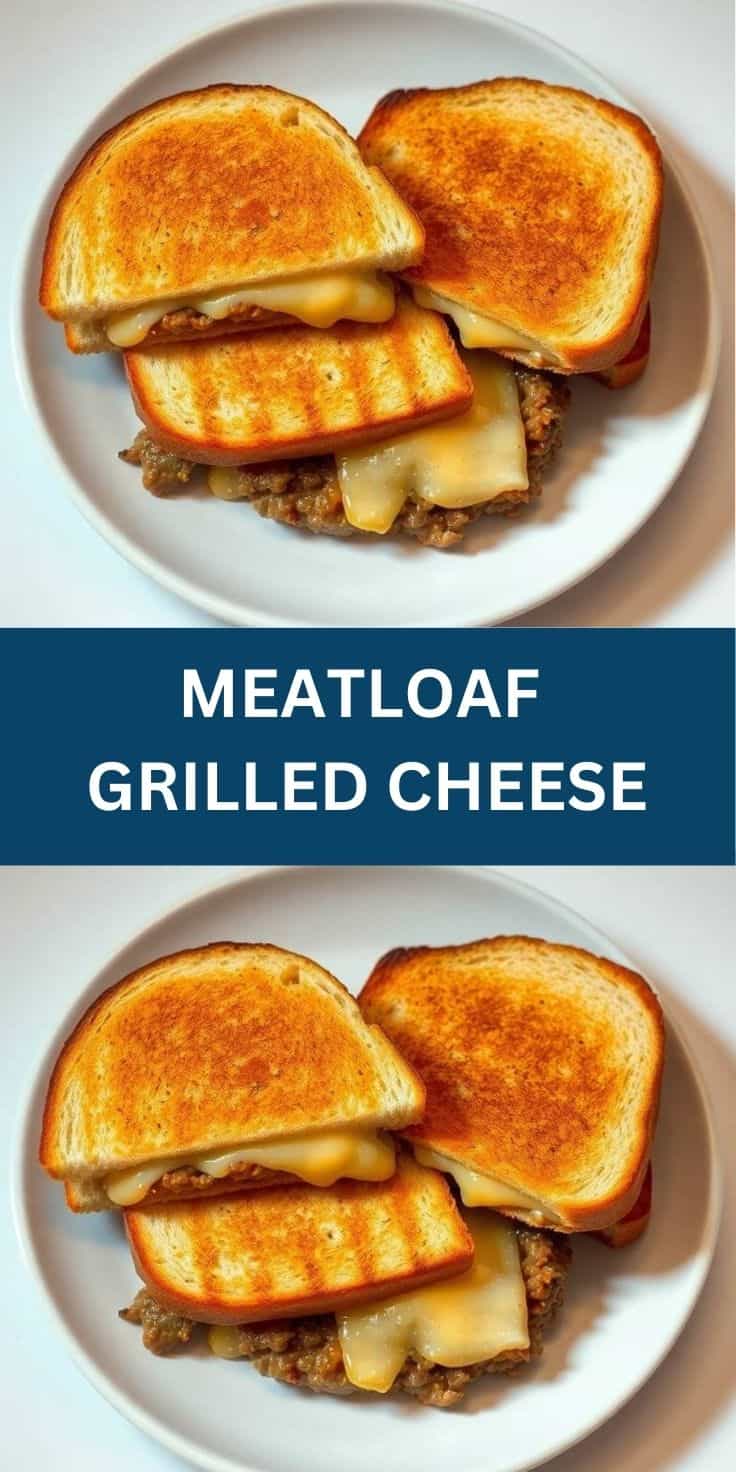
- The texture contrast is genuinely satisfying: Crispy, buttery bread on the outside, soft meatloaf in the middle, and stretchy melted cheese holding it all together. It's the kind of sandwich that makes a sound when you bite into it. That matters to me more than I'd like to admit.
- You can customize it with almost anything in the fridge: Different cheeses, different sauces, caramelized onions, pickles — the base recipe is forgiving enough that you can throw in whatever you have and it still works. I've made it with provolone, with smoked gouda, with a smear of Dijon mustard. All good.
- No special equipment needed: A heavy skillet — cast iron or non-stick — and a spatula. That's it. I use the same skillet I use for everything else in my kitchen. Nothing fancy required.
Ingredients
- 4 slices sourdough or sandwich bread
- 2 tablespoons butter, softened
- 4 slices cheddar cheese (or cheese of your choice — provolone and gouda both work well)
- 2 thick slices cooked meatloaf, cold or room temperature
- 1 tablespoon ketchup or BBQ sauce (optional, but I almost always use it)
- Pickles or caramelized onions (optional, for extra flavor)
Directions
- Step 1: Butter the bread — Spread softened butter on one side of each bread slice. Softened butter spreads without tearing the bread; cold butter drags and leaves bare patches that won't brown evenly.
- Step 2: Build the sandwich — Place one slice of bread butter-side down on your work surface. Add one slice of cheese, then the meatloaf, then your sauce if using, then another slice of cheese, and finally the second slice of bread butter-side up. The cheese on both sides of the meatloaf is the move — it melts and helps everything stick together when you cut it.
- Step 3: Heat the skillet — Set a heavy skillet over medium heat and let it warm up for a minute before you add the sandwich. A properly preheated pan gives you more even browning than one you throw the sandwich into cold.
- Step 4: Grill it slowly — Place the sandwich in the skillet and cook for 3–5 minutes per side. Press down gently with a spatula every so often — not hard, just enough to keep good contact with the pan. Resist the urge to crank the heat; low and slow is what gets you golden bread and fully melted cheese at the same time.
- Step 5: Rest and slice — Pull the sandwich off the heat and let it sit for a full minute before you cut it. I know it's tempting to cut right away, but that minute lets the cheese firm up just slightly so everything stays together instead of sliding out.
Tips for Success
- Cold meatloaf slices cleaner and holds together better: I tried making this once with meatloaf I'd just reheated in the microwave and it crumbled the second I pressed the spatula down. Cold or room-temp meatloaf stays firm enough to handle and heats through in the skillet by the time the bread is done. Pull it straight from the fridge and you're good.
- Medium heat is non-negotiable: Every time I've tried to hurry this sandwich along by turning up the heat, I've ended up with burnt bread and cheese that's barely melted in the middle. Medium heat — or even medium-low if your stove runs hot — gives you the time to get everything golden on the outside and properly melted on the inside. It's an extra couple of minutes that completely changes the result.
- Use thick-cut bread if you can: Thin sandwich bread can get a bit soggy in the middle by the time the outside is brown. Sourdough or a thick-cut white bread holds up much better and gives you that satisfying crunch when you bite in. Texas toast thickness is ideal if you can find it.
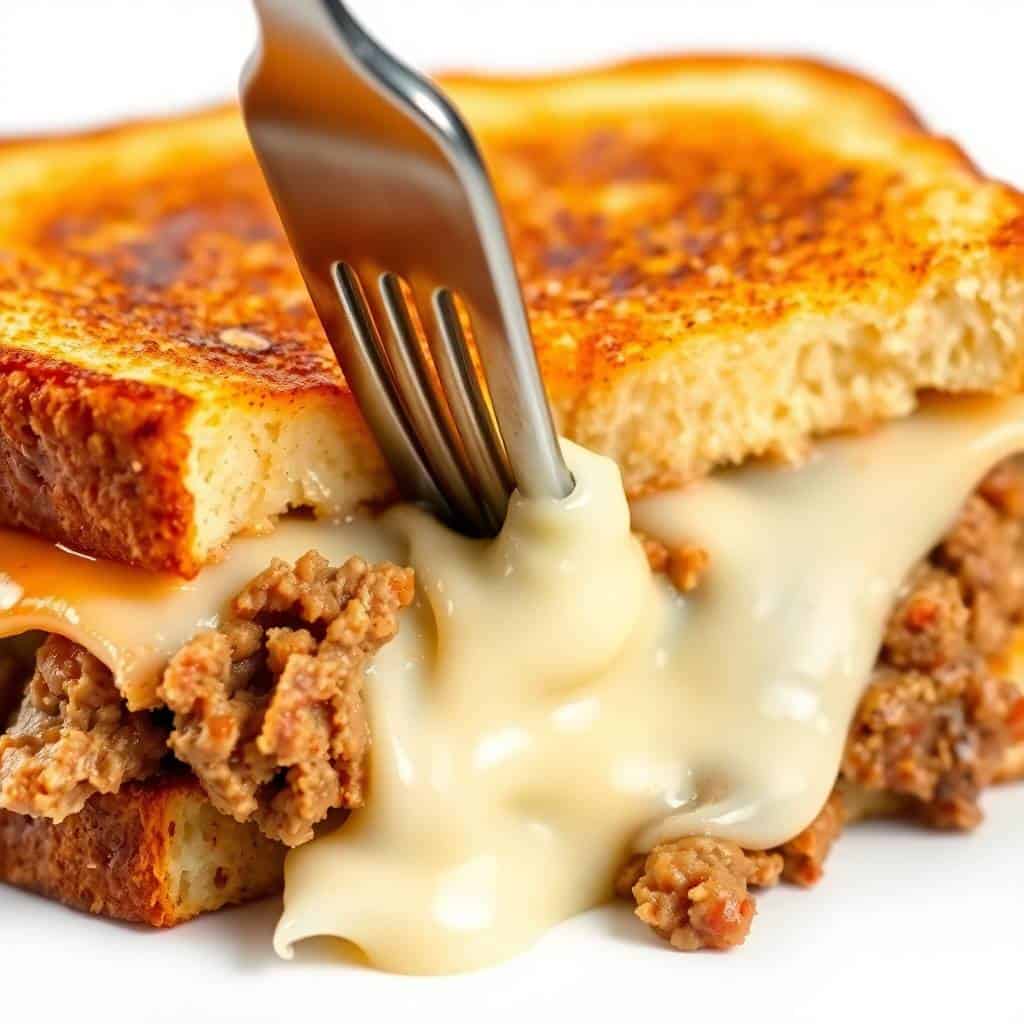
- Don't skip the rest before cutting: I know I mentioned this in the directions, but it's worth repeating because I still want to skip this step every time. One full minute off the heat. The cheese needs that moment to go from molten liquid to just-set, so when you slice through the sandwich, it stays gooey but doesn't immediately escape onto your plate.
- A light press with the spatula helps, a heavy press hurts: Gentle pressure keeps the sandwich in even contact with the pan and helps it brown uniformly. Pressing down hard squeezes out the cheese and compresses the meatloaf into something dense and a little sad. Think "firm handshake" pressure, not "smashing a bug" pressure.
Variations
- BBQ style: Swap the ketchup for your favorite barbecue sauce and use smoked gouda instead of cheddar. My husband's version — he insists on this combination every single time. The smoky cheese and the sweet-tangy sauce work really well against the savory meatloaf. I've started keeping smoked gouda in the fridge specifically for this.
- Italian-style: Spread a thin layer of marinara on the bread instead of ketchup and use mozzarella. It tastes like a meatball sub in grilled cheese form, which sounds ridiculous but actually works. I'd serve this with a side of extra marinara for dipping if you want to go all in.
- Breakfast version: Add a fried egg inside the sandwich and use American cheese instead of cheddar. It's a completely different meal and a great reason to keep leftover meatloaf in the fridge overnight. If you like hearty breakfast sandwiches, check out my sausage, egg and cheese breakfast roll-ups — same energy, different format.
- Caramelized onion and gruyère: Pile on some slow-cooked caramelized onions and use gruyère instead of cheddar. This one takes more time because of the onions, but it tastes genuinely fancy. It's the version I make when I want the sandwich to feel like an actual dinner rather than a quick lunch.
- Mini sliders: Use dinner rolls to make small meatloaf grilled cheese sliders. I cut the meatloaf into smaller pieces and use one slice of cheese per slider. These disappear instantly whenever I make them for the kids — Saad can eat three before I've even finished making the first batch.
Serving and Storage
Serving
Serve the sandwich immediately while the cheese is still melty and the bread is crispy. It goes well with tomato soup, kettle chips, or a simple salad — my marinated cucumber tomato onion salad is a great pairing because the acidity cuts through the richness of the sandwich nicely. A dill pickle spear on the side is never a wrong call. Cut the sandwich on the diagonal — I don't know why it tastes better that way, but it does.
Storage
Honestly, this sandwich is best eaten right away. If you somehow have half left, wrap it in foil and refrigerate — it'll keep for a day. Reheat it in a dry skillet over medium-low heat for a few minutes per side to bring back some of the crispiness. The microwave will make the bread soft and the cheese rubbery, so I'd avoid that if you can. The meatloaf itself can be stored in the fridge for up to 3 days and sliced fresh whenever you're ready to make another sandwich.
Frequently Asked Questions
Can I use frozen meatloaf?
Yes, but thaw it completely in the fridge first before slicing. Frozen-then-partially-thawed meatloaf is too wet and won't hold together in the skillet. Once it's fully thawed and cold, slice it thick and you're good to go.
Which cheese melts best in this sandwich?
Cheddar, provolone, mozzarella, and American cheese all melt really well. Gouda is my personal favorite because it gets almost creamy when it melts. Avoid anything crumbly like feta or cotija — those don't melt and you'll end up with dry chunks instead of the gooey pull you're going for.
Can I assemble the sandwich ahead of time?
You can build the sandwich and wrap it tightly, then refrigerate for a few hours before grilling. I wouldn't do this more than 2–3 hours ahead though, since the bread starts absorbing moisture from the meatloaf and gets a bit soggy. Grill it fresh right before you want to eat it.
What bread works best?
Sourdough is my first pick — it gets deeply crispy and has enough structure to hold everything together. Thick-cut white sandwich bread and rye both work well too. Avoid very thin or soft bread (like regular white sandwich bread) if you can, because it tends to go a bit limp in the middle before the outside browns properly.
How do I know when the cheese is fully melted?
You can usually tell by pressing gently on the top of the sandwich — if it gives a little and feels soft in the middle, the cheese has melted. If you're not sure, peek at the edge of the sandwich; you'll see the cheese starting to ooze slightly when it's done. Covering the skillet with a lid for the last minute of cooking also helps trap heat and speeds up the melting.
MEATLOAF GRILLED CHEESE
Ingredients
- 4 slices sourdough or sandwich bread
- 2 tablespoons butter softened
- 4 slices cheddar cheese or cheese of choice
- 2 thick slices cooked meatloaf
- 1 tablespoon ketchup or BBQ sauce optional
- Pickles or onions optional, for extra flavour
Instructions
Prepare the Bread:
- Spread butter on one side of each slice of bread.
Assemble the Sandwich:
- Place one slice of cheese on the unbuttered side of a bread slice. Add a slice of meatloaf, optional sauce, another cheese slice, and top with the second bread slice, buttered side out.
Grill the Sandwich:
- Heat a skillet over medium heat. Cook the sandwich for 3–5 minutes per side until the bread is golden brown and the cheese is melted.
Serve:
- Let cool slightly, then slice and serve warm with chips, soup, or a pickle on the side.
Notes
Cooked meatloaf can be stored in the fridge for up to 3 days. Slice and use as needed for sandwiches. Customizing the Flavor:
Try adding sautéed onions, bacon, or a spicy aioli to elevate the sandwich. Serving Suggestions:
Perfect with tomato soup, fries, or a crisp side salad. Allergy-Friendly Options:
Use gluten-free bread and dairy-free cheese to adapt for dietary needs. Storage Tips:
Best enjoyed fresh, but leftovers can be wrapped and reheated in a skillet for crispiness.
This sandwich has genuinely changed how I think about leftover meatloaf. I used to treat it as a problem — something that needed to be gotten through before it went bad. Now I plan for it. I make a slightly bigger meatloaf than I need on Sunday specifically so I have slices ready in the fridge for this. Fifteen minutes, one skillet, and dinner is sorted without any stress.
What I appreciate most about it is that it doesn't ask much of you. No fancy bread, no special cheese, no technique you need to look up. Just butter, heat, and a little patience. It's the kind of cooking I enjoy most — straightforward, satisfying, and reliably good even on a tired evening when I don't have much to give.
If you're in a dinner rut or staring at fridge leftovers with zero inspiration, start here. And if you want something sweet to follow it up, my cinnamon roll sugar cookies are a completely effortless dessert that the kids go absolutely wild for. 🥪✨
If you liked this recipe, here are a few more you might want to try:
- Sausage, Egg and Cheese Breakfast Roll-Ups — great if you want to use up that meatloaf at breakfast too
- Marinated Cucumber Tomato Onion Salad — the side dish I always pair with this sandwich
- Chicken Wings with Mushrooms — another easy skillet situation for weeknights
- Tomato Basil Bruschetta — if you want something lighter and quick to put together
- Cinnamon Roll Sugar Cookies — for when you need something sweet after a hearty lunch





Comments
No Comments