
I made egg rolls for the first time about six years ago, and I completely underestimated how much filling I could fit in each wrapper. Half of them burst open in the oil and made a spectacular mess. The other half were actually really good — crispy, golden, and way better than the ones from the Chinese takeout place near us. That was enough to keep me going.
What I've figured out since then is that the filling is where all the work is, and the technique is pretty forgiving once you learn two things: cool the filling before you roll, and don't overcrowd the pan. The wrapper crisps up fast, the inside stays juicy, and if you get the oil temperature right (350°F — use a thermometer, it matters), you get that satisfying crunch every time. I use ground chicken or pork depending on what I have, and the rest of the filling is whatever vegetables are in my fridge.
These have become a regular in our house, especially on weekends when we want something that feels like a treat without actually ordering out. My husband can eat six in one sitting, which I take as a compliment. I usually make a double batch because a single batch disappears before it even cools down properly.
If you're looking for more finger food that's worth the effort, my Bacon Jalapeño Popper Cheese Balls are another one the family asks for constantly. But for now — egg rolls. Let me walk you through how I make them.
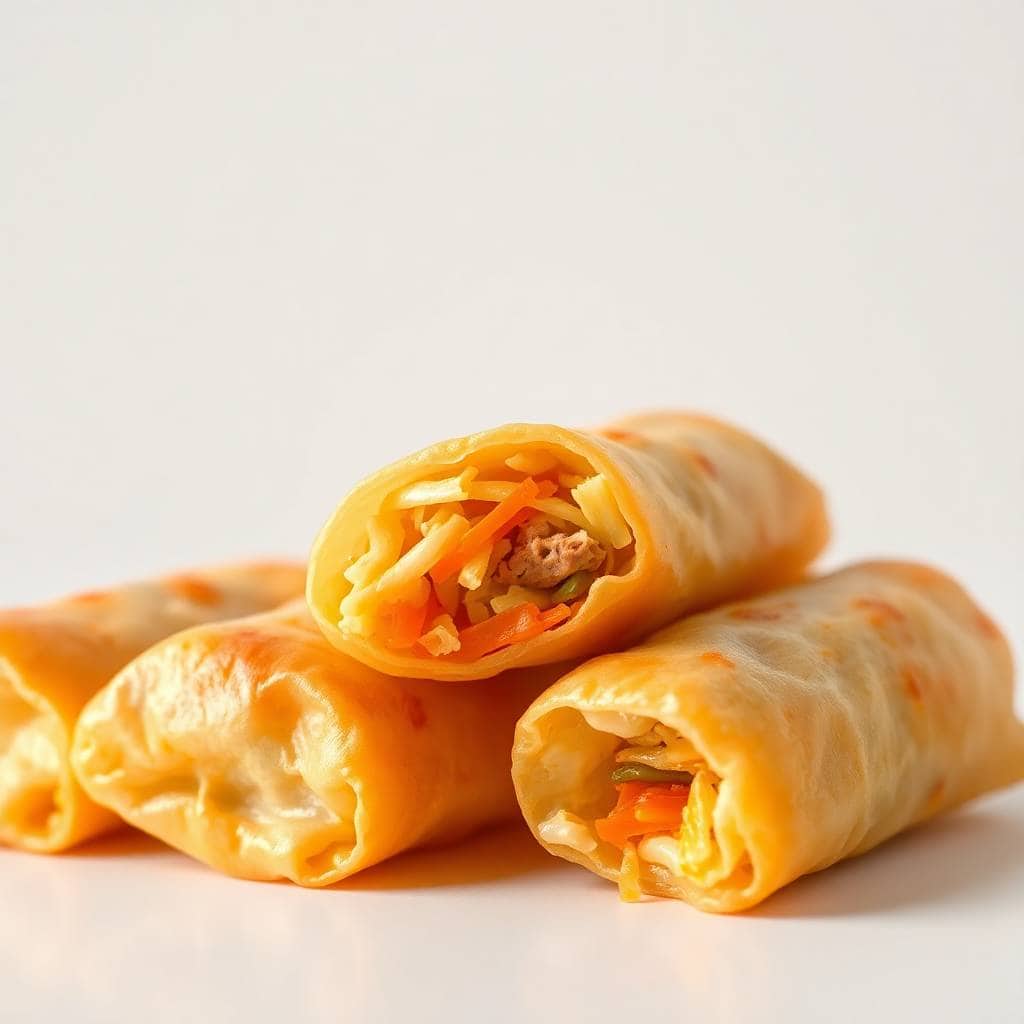
Why You'll Love This Recipe
- You control what goes in them: Store-bought egg rolls are a mystery. I have no idea what's actually in that filling. Making them at home means I know exactly what my kids are eating — real cabbage, real carrots, real meat. I can go lighter on the salt or add more ginger depending on the mood. That matters to me more than I expected it would.
- The filling is endlessly flexible: I've made these with ground pork, ground chicken, shrimp, and even just vegetables when I'm feeding someone who doesn't eat meat. The base — cabbage, carrot, green onion, soy sauce, sesame oil — stays the same. Everything else is negotiable. I've thrown in leftover rotisserie chicken on busy nights and it works perfectly.
- They freeze beautifully: I assemble a full batch, fry what we need, and freeze the rest uncooked. When I want them later I fry straight from frozen — just add a couple of minutes to the cooking time. This is genuinely useful on nights when I don't feel like cooking but still want something real rather than opening a bag of chips.
- Kids can help roll them: Saad thinks rolling egg rolls is basically the best thing in the world. He's gotten surprisingly good at folding the sides in and rolling tight. Yes, some of his look a little rough and those tend to split open first — but he's proud of every single one. It turns a cooking task into something we do together on Saturday afternoons.
- Faster than you think: The filling takes about 15 minutes, rolling takes another 10, and frying is done in batches. Start to finish I'm usually done in under an hour — less if I prepped the vegetables the night before. That's reasonable for something that genuinely feels like a special meal.
Ingredients
- 8–10 egg roll wrappers (found in the refrigerated section near tofu at most grocery stores)
- 1 cup shredded cabbage (pre-shredded coleslaw mix from a bag works great)
- ½ cup shredded carrots
- ½ cup cooked ground chicken or pork (shrimp, or tofu also work — see variations below)
- 2 green onions, chopped
- 2 cloves garlic, minced
- 1 tablespoon soy sauce
- 1 teaspoon sesame oil
- 1 egg, beaten (for sealing the wrappers)
- Vegetable oil, for frying (canola or peanut oil also work well)
Directions
- Make the filling: In a large skillet over medium heat, cook your ground meat until browned and cooked through, breaking it up as it cooks. Add the garlic, cabbage, carrots, and green onions and sauté for 3–4 minutes until the vegetables have softened. Stir in the soy sauce and sesame oil, then take it off the heat. Let the filling cool for at least 10–15 minutes before you start rolling — this is not optional. Warm filling creates steam inside the wrapper which makes it soggy and hard to seal.
- Roll the egg rolls: Lay an egg roll wrapper on a flat surface with one corner pointing toward you (like a diamond shape). Spoon 2–3 tablespoons of cooled filling near the bottom corner. Fold that corner up over the filling, fold in the two side corners snugly, then roll upward firmly. Brush a little beaten egg on the top corner to seal it shut. Don't overfill — I know it's tempting, but an overstuffed egg roll will split open in the oil.
- Heat the oil: Pour about 1 inch of vegetable oil into a heavy skillet or deep saucepan and heat it over medium-high until it reaches 350°F (175°C). A kitchen thermometer is your best friend here — I tried guessing the temperature for years and my results were inconsistent. At the right temperature, the wrapper bubbles immediately when it hits the oil.
- Fry in batches: Add 2–3 egg rolls at a time — no more. They need space to fry, not steam. Cook for 2–3 minutes per side, turning occasionally, until they're deep golden brown all over. Use tongs and be careful of the hot oil. Lift them out and drain on a paper towel-lined plate.
- Serve hot: Let them rest for just a minute or two before serving — the filling holds heat like crazy. Set out whatever dipping sauces you like: sweet chili sauce, soy sauce, duck sauce, or spicy mustard all work well.
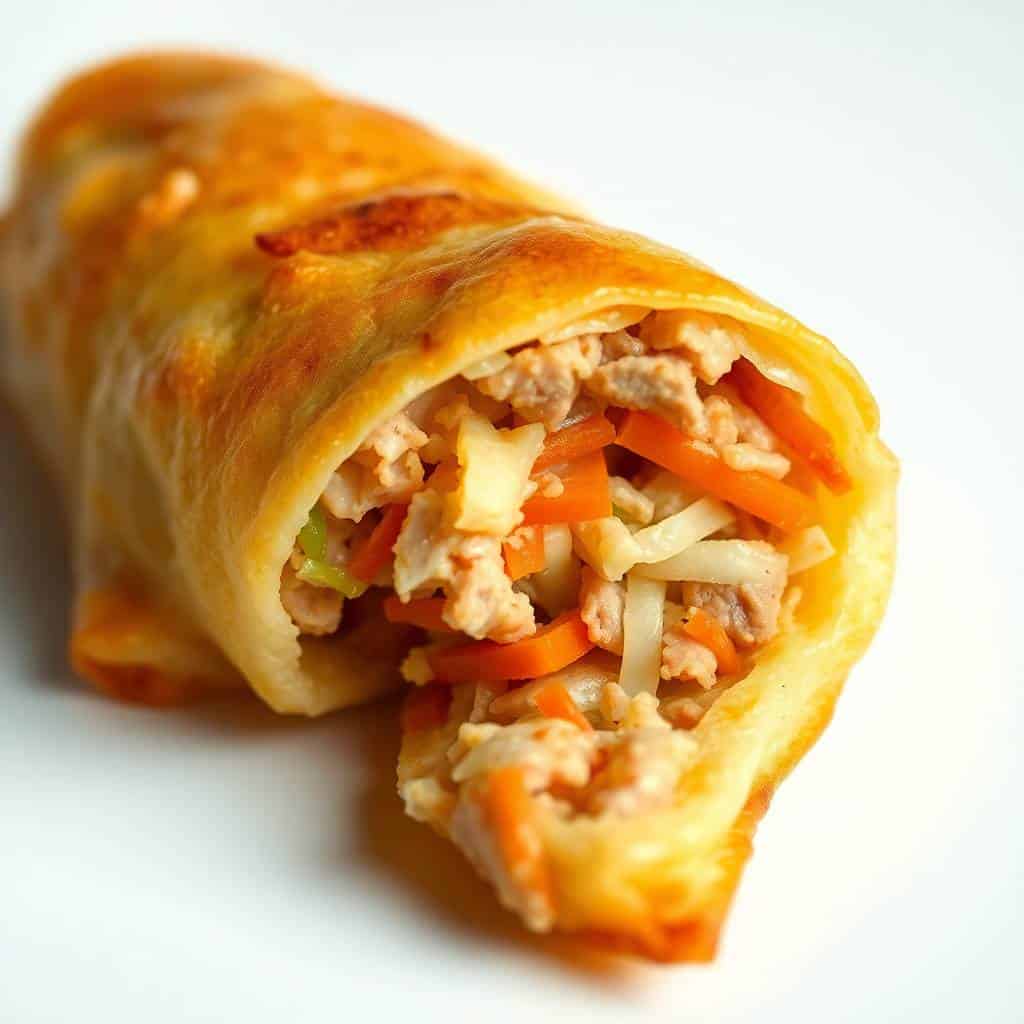
Tips for Success
- Cool the filling — really: I cannot stress this enough because I ignored it the first few times. Hot filling releases moisture as it sits inside the wrapper, which turns the whole thing soft and makes sealing nearly impossible. I usually spread the filling on a sheet pan for 10 minutes to cool it faster. Once I started doing this consistently, my egg rolls stopped falling apart in the oil.
- Roll tight and seal well: A loose roll means oil gets inside during frying, and the filling can leak out into the pan — which burns and makes a mess. When you fold in the sides, press them in firmly before you roll forward. Brush the egg wash generously on that final corner and press it down for a few seconds. If you're not using egg, a little dab of water works too, just use more of it.
- Use a thermometer for the oil: I have a basic candy/fry thermometer I picked up for about $10 and it changed my frying game completely. Too cool and the egg rolls absorb oil and go soggy. Too hot and the wrappers brown before the inside heats through. 350°F is the sweet spot and once you hit it, it's easy to maintain by adjusting the heat slightly between batches.
- Don't crowd the pan: Every time I've rushed this and added too many at once, I've ended up with pale, greasy egg rolls. Adding cold egg rolls drops the oil temperature quickly, and the more you add, the more it drops. Two or three at a time is the move. Yes, it takes longer, but the difference in texture is completely worth it.
- Use a coleslaw bag as a shortcut: If you don't want to shred a whole cabbage and a bunch of carrots, just grab a bag of pre-shredded coleslaw mix from Walmart or Trader Joe's. It's exactly what you need, it's already the right size, and it saves you five minutes of prep. I do this almost every time now.
Variations
- Fully vegetarian: Skip the meat entirely and use a combination of finely chopped mushrooms, shredded firm tofu, and whatever vegetables you have. Mushrooms are the key — they add a meatiness that makes the filling feel substantial. I've made this version for friends who don't eat meat and they've asked for the recipe every time.
- Spicy version: Add a teaspoon of chili garlic paste (like Sambal Oelek, which you can find at most grocery stores) or a finely chopped jalapeño into the filling. My husband adds extra chili sauce at the table too. If you're cooking for kids, keep the filling mild and just set out a spicy dipping sauce on the side.
- Shrimp egg rolls: Use peeled, deveined shrimp chopped into small pieces instead of ground meat. Cook them just until pink before mixing with the vegetables — they continue cooking in the fryer so you don't want to overcook them at this stage. The filling turns out lighter and a bit more delicate than the pork version.
- Baked instead of fried: Brush the assembled egg rolls lightly with oil and bake at 400°F (200°C) for about 20–25 minutes, flipping halfway through. They won't be quite as shatteringly crispy as the fried version, but they're genuinely good and much easier if you're making a big batch for a group. I do this when I'm making them for Saad's school events and don't want to stand over a pot of hot oil.
- Air fryer method: Spray the egg rolls with cooking spray and air fry at 375°F (190°C) for about 10–12 minutes, turning once halfway. The result is genuinely crispy — not quite deep-fried crispy, but close enough that I make them this way during the week when I'm cooking just for myself and don't want to deal with a pot of oil.
Serving and Storage
Serving
Serve these hot, right out of the pan if possible. Set out a few dipping sauces — sweet chili, soy sauce, duck sauce, and spicy mustard are all classics. In our house I usually do sweet chili for the kids and something with more heat for the adults. These work as an appetizer before a bigger meal, or honestly as the main event with some fried rice alongside. If you want a full spread, my Lemon Garlic Chicken Bites make a great pairing on the same table.
Storage
Leftovers keep in an airtight container in the fridge for up to 2 days. To reheat and get the crispiness back, put them in the oven at 375°F for about 8–10 minutes — don't microwave them unless you're okay with a soft wrapper. For longer storage, freeze them uncooked after rolling. When you're ready to use them, fry straight from frozen at 350°F, adding 1–2 extra minutes to the cooking time. They come out just as good as freshly rolled.

Frequently Asked Questions
Can I make egg rolls ahead of time?
Yes — assemble them, lay them on a parchment-lined tray so they don't touch, and refrigerate for up to 4 hours before frying. You can also freeze them uncooked on the tray, then transfer to a zip-lock bag once frozen solid. Fry straight from frozen and add 1–2 extra minutes to the cooking time.
Can I bake these instead of frying?
Absolutely. Brush or spray the rolled egg rolls with oil and bake at 400°F (200°C) for 20–25 minutes, flipping once halfway through. They won't be quite as crispy as the fried version, but they're still really good and a lot less messy to make in a big batch.
What's the best oil for frying egg rolls?
You want a neutral oil with a high smoke point — vegetable oil, canola oil, or peanut oil all work well. Avoid olive oil for frying; its smoke point is too low and it'll start burning before your egg rolls are done. I usually grab whatever vegetable or canola oil is on sale at the store.
Can I use store-bought coleslaw mix instead of shredding my own cabbage and carrots?
Yes, and honestly I recommend it. A bag of pre-shredded coleslaw mix is exactly the right ratio of cabbage to carrots and saves you prep time. I use it almost every time. Just make sure to cook it down in the pan so any excess moisture cooks off before you cool the filling.
Why do my egg rolls come out soggy instead of crispy?
There are usually two culprits: filling that wasn't cooled before rolling (moisture from warm filling steams the wrapper from the inside), or oil that wasn't hot enough when you added them. Get your oil to 350°F before you start, and always let the filling cool fully. Frying in small batches also helps keep the oil temperature stable.
These egg rolls have become one of those recipes I come back to without even thinking about it. When I'm not sure what to make on a Saturday afternoon, when there's a bag of coleslaw mix in the fridge that needs using, when my husband asks for "something crispy" — this is where I go. It's not complicated food, but it delivers every single time.
I know this isn't a traditional restaurant-style recipe with perfectly uniform rolls and a dozen specialty ingredients. It's my home version, built from trial and error and a lot of burst egg rolls along the way. But that's exactly why it works for a normal weeknight kitchen — the ingredients are easy to find, the technique is learnable, and the results are genuinely satisfying.
If you're on a roll (pun fully intended) with appetizers and finger food, go check out my Mini Breakfast Omelets — they're another great option when you want something handheld and crowd-friendly that comes together without a lot of fuss. And if you're planning a bigger spread, the Chicken Pot Pie Pasta is the kind of thing you make alongside and everyone ends up hovering around both dishes. 🥢✨
HOMEMADE EGG ROLLS
Ingredients
- 8 –10 egg roll wrappers
- 1 cup shredded cabbage
- ½ cup shredded carrots
- ½ cup cooked chicken pork, shrimp, or tofu (optional)
- 2 green onions chopped
- 2 cloves garlic minced
- 1 tablespoon soy sauce
- 1 teaspoon sesame oil
- 1 egg beaten (for sealing)
- Vegetable oil for frying
Instructions
- Prepare Filling: In a large bowl, combine cabbage, carrots, protein (if using), green onions, garlic, soy sauce, and sesame oil. Mix well.
- Assemble Egg Rolls: Lay an egg roll wrapper on a flat surface. Place 2–3 tablespoons of filling near one corner. Fold the corner over the filling, fold in the sides, and roll tightly. Seal with beaten egg.
- Heat Oil: In a deep skillet or pan, heat about 1 inch of vegetable oil over medium-high heat.
- Fry Egg Rolls: Fry 2–3 egg rolls at a time, turning occasionally, until golden brown and crispy (about 2–3 minutes per side). Drain on paper towels.
- Serve: Serve hot with dipping sauce such as sweet chili, soy sauce, or duck sauce.
Notes
- Make Ahead: Assemble egg rolls ahead and refrigerate for up to 4 hours before frying.
- Flavor Variations: Add mushrooms, bean sprouts, or bell peppers for extra texture.
- Serving Suggestions: Serve with dipping sauces or alongside fried rice or noodles.
- Storage Tips: Store leftovers in an airtight container in the fridge for up to 2 days; reheat in the oven to maintain crispiness.
If you liked this recipe, here are a few others you might want to try next:
- Bacon Jalapeño Popper Cheese Balls (No-Bake Party Appetiser)
- Lemon Garlic Chicken Bites
- Mini Breakfast Omelets
- Chicken Pot Pie Pasta



Comments
No Comments