
My mother in Pakistan's one-pot rice philosophy is foundational rather than circumstantial — she does not make one-pot rice because she is short on time or dishes but because she believes, on principle, that a pot of rice that has cooked in company with its protein and aromatics produces something fundamentally more coherent than rice cooked separately and combined with chicken that was cooked separately and then placed alongside.
The specific Pakistani rice technique that this recipe draws from is the pulao method — chicken is cooked first in oil with whole spices until the fat renders and the exterior colors, then broth is added, then rice goes in to absorb the spiced chicken broth as it cooks, producing rice that is flavored from within rather than flavored from the top with something added after the fact. The simplified version here uses ground spices rather than whole, frozen vegetables rather than fresh, and a 25-minute timeline rather than the hour that a proper pulao requires, but the structural logic is the same.
Saad requests "the yellow rice" by color — the turmeric in the cooking liquid tints the basmati a warm golden yellow that he identified and named before he knew what turmeric was, and which he has used consistently as the identifying descriptor for this specific dinner since approximately age four. He does not refer to the chicken or the vegetables. He refers to the yellow rice. The chicken and vegetables are incidental accessories to the yellow rice as far as Saad's dinner interest is concerned.
Zainab's position on this dinner is to eat the rice and the peas specifically — she picks the corn out of her portion and relocates it to my plate without comment, eats the rice and peas with focused enthusiasm, and then pushes the chicken pieces to the edge of the bowl unless they have been cut into very small pieces that she can eat without awareness that she is eating chicken, which is a specific texture response that has required a chopping step I now perform as a matter of course.
My husband eats two full portions of this dinner as a standard serving — it is the dinner he requests most frequently for the nights when he is hungry at 6 PM, work has been relentless, and the question of what is for dinner needs to have an answer that arrives within 30 minutes of being asked. One pot, 25 minutes, under $5 for four servings. That is the specific combination of properties that makes this dinner the most frequently made weeknight dinner in our household.
The frozen vegetable specification is intentional rather than a compromise. Frozen peas and frozen corn are harvested and frozen at peak season, have no prep requirement, portion exactly, waste nothing, and taste indistinguishable from fresh in a cooked rice dish where they spend their last 5 minutes of cooking time absorbing the flavored cooking liquid alongside the already-cooked rice. Fresh spring peas, if available, are excellent — but the frozen version is what makes this dinner genuinely any-night, any-season, any-pantry.
The under-$5 calculation assumes halal chicken thighs (bone-in for this recipe — the bone contributes collagen to the cooking liquid that enriches the rice absorption) at the regular non-sale price, basmati rice from the bulk section or a large bag, and store-brand frozen peas and corn — all pantry-accessible at any grocery store without planning or specialty shopping.
Whether you are cooking a weeknight dinner for a family of four on a genuinely constrained budget, looking for the fastest one-pot chicken and rice that tastes like it took longer than it did, feeding children who request the yellow rice by color rather than by ingredient, or simply needing a reliable any-night dinner that uses pantry and freezer staples and produces one pot to wash, this budget chicken and rice is exactly that dinner.
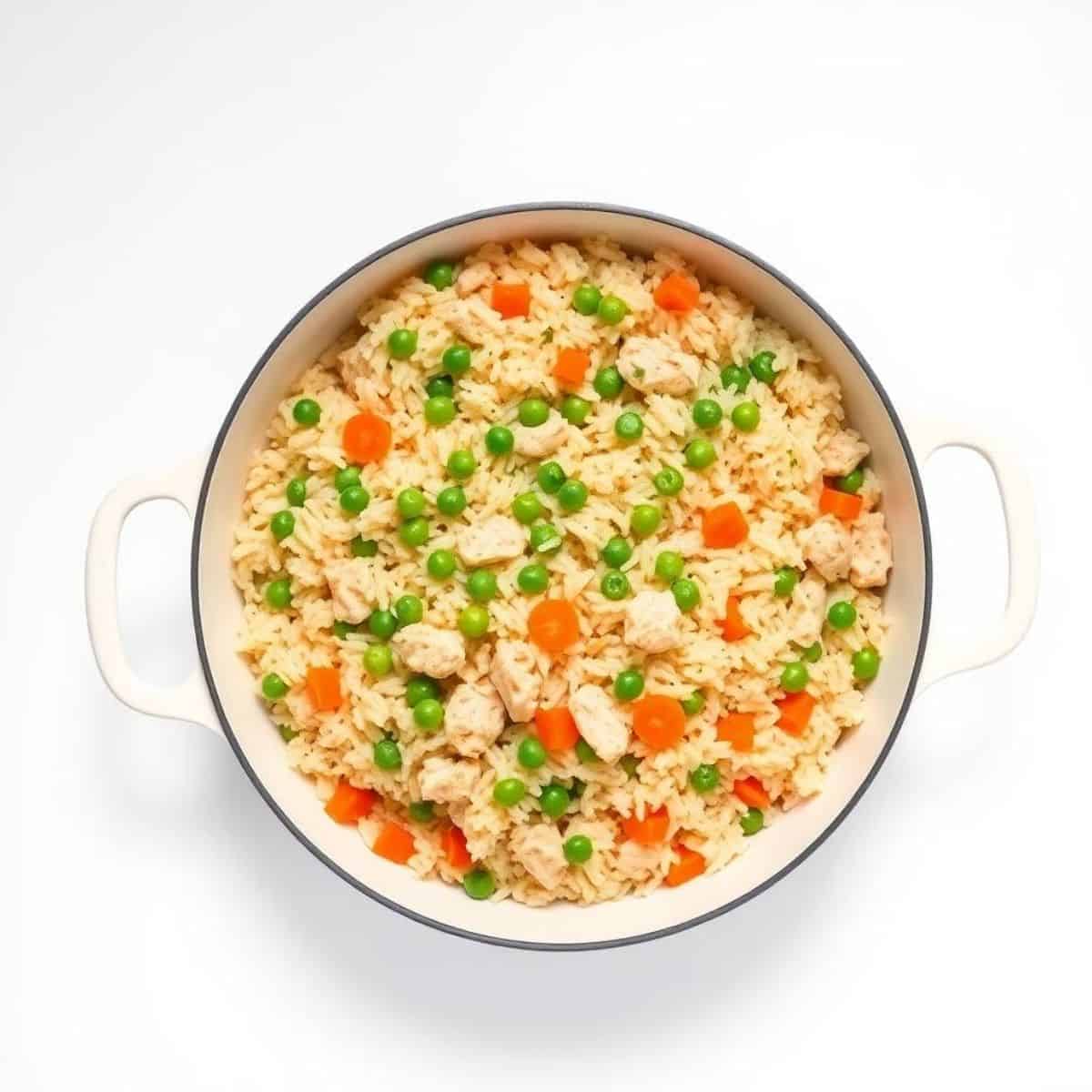
Why You'll Love This Budget Chicken and Spring Vegetable Rice
- Under $5 for four servings — the most economical one-pot dinner in our weekly rotation: Bone-in halal chicken thighs are among the least expensive cuts of halal poultry and contribute more flavor to the rice than boneless thighs because the bone and cartilage release collagen and gelatin into the cooking liquid as they cook, enriching the broth the rice absorbs. Basmati rice from a large bag, store-brand frozen peas and corn, and pantry spices bring the total to approximately $4.50 for four generous servings at regular non-sale prices.
- 25 minutes from cold start to table — the fastest one-pot chicken and rice available: The sequence is specific and fast: chicken thighs brown 3 minutes per side in the pot, aromatics and spices go in for 60 seconds, broth and rice follow, everything cooks covered for 15 minutes, frozen vegetables go in for the final 5 minutes. The rice is cooked through and flavorful from the spiced chicken broth, and the total elapsed time from lighting the burner to plating is 25 minutes.
- One pot — the specific weeknight advantage that makes this dinner happen instead of not happening: On the nights when the choice is between a dinner that requires multiple pots and pans and a dinner that requires one, the one-pot dinner is the one that gets made. This recipe's entire execution — browning, aromatics, rice, vegetables — takes place in a single wide pot or a deep skillet with a lid. One pot to wash.
Ingredients
- 4 halal bone-in chicken thighs (approximately 2 lbs), skin removed if preferred — bone-in for the collagen contribution to the cooking liquid, which enriches the rice
- 1½ cups dry basmati rice, rinsed in cold water until the water runs clear (the rinsing removes excess surface starch and prevents the rice from becoming sticky)
- 2 cups low-sodium chicken broth + 1½ cups water (the rice needs more liquid than a standard pilaf because the chicken thighs are cooking in the same pot and absorbing some of the liquid)
- 1 medium onion, diced
- 3 garlic cloves, minced
- 1 teaspoon ground cumin
- ¾ teaspoon ground turmeric — the color source that Saad identifies as "the yellow rice" and which also contributes mild anti-inflammatory properties that are a bonus rather than the reason to use it
- ½ teaspoon ground coriander
- ½ teaspoon smoked paprika
- ¼ teaspoon black pepper
- 1 teaspoon salt (start here; adjust at the end)
- 2 tablespoon neutral oil (vegetable or canola)
- 1 cup frozen peas
- 1 cup frozen corn kernels
- Fresh cilantro for serving
- Lemon wedges for serving — the lemon squeeze over the finished plate is not optional, it brightens everything
Directions
- Step 1: Season and brown the chicken thighs. Season the chicken thighs on both sides with salt and pepper. Heat oil in a wide, heavy pot or deep skillet over medium-high heat until shimmering. Place chicken thighs skin-side down (or the side with the most surface area down if skinless) in the hot oil. Do not move them for 3 minutes — let them develop a proper brown crust on the first side. Flip and cook 2 more minutes on the second side. Remove the browned chicken to a plate — they are not fully cooked at this point, just browned. This browning step is optional for budget efficiency but the flavor it contributes to the finished rice is significant enough that I include it as a standard step.
- Step 2: Sauté the onion and bloom the spices. In the same pot with the chicken fat that has rendered out, sauté the diced onion over medium heat 3-4 minutes until soft and slightly golden at the edges. Add the minced garlic and cook 60 seconds until fragrant. Add cumin, turmeric, coriander, smoked paprika, and ½ teaspoon of the salt. Stir constantly for 60 seconds — this blooming step (cooking ground spices in fat briefly before adding liquid) releases the fat-soluble flavor compounds in the spices and produces a significantly more flavorful result than adding the spices directly to the liquid.
- Step 3: Add the rice, broth, and water. Add the rinsed basmati rice to the pot and stir to coat in the spice and onion mixture — 60 seconds of stirring here allows each grain of rice to absorb some of the aromatic cooking fat and spices before the liquid goes in. Pour in the chicken broth and water. Stir once to distribute. Taste the liquid at this point and adjust salt — this is the last opportunity to season before the rice absorbs everything, and properly salted cooking liquid is what produces properly flavored rice.
- Step 4: Nestle the chicken back into the rice and bring to a simmer. Return the browned chicken thighs to the pot, pressing them gently into the liquid so they are partially submerged. Bring the liquid to a simmer over medium-high heat. Once simmering, reduce to the lowest heat your burner can produce, place a tight-fitting lid on the pot, and cook for 15 minutes without lifting the lid — the steam inside the closed pot is what cooks the rice, and every time the lid is lifted the steam escapes and the cook time increases.
- Step 5: Add the frozen vegetables and finish. After 15 minutes, lift the lid and add the frozen peas and frozen corn directly onto the surface of the rice without stirring. Replace the lid and cook 5 more minutes. At 20 minutes total, the rice should be fully cooked, the vegetables should be heated through, and the chicken should be cooked to 165°F at the thickest point. If the rice still has bite or the liquid hasn't been fully absorbed, replace the lid and cook 3-5 more minutes. If the rice is done but liquid remains, uncover and cook over medium heat for 2 minutes to evaporate the excess.
- Step 6: Rest 5 minutes before serving. Turn off the heat and let the covered pot rest 5 minutes before serving. This rest period allows the steam to redistribute through the rice, producing a more evenly cooked and fluffier result than serving immediately from the active heat. Fluff the rice gently with a fork around the chicken thighs. Scatter fresh cilantro over everything. Serve with lemon wedges.
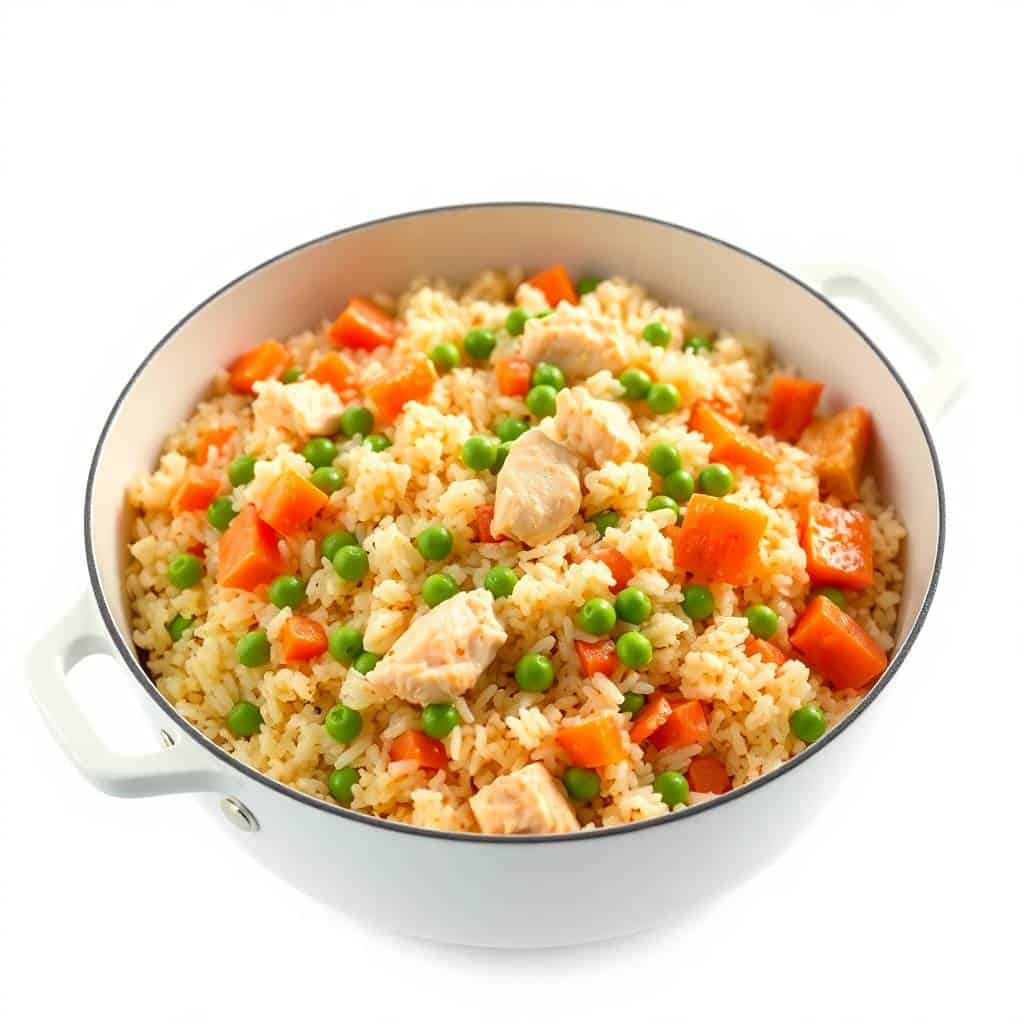
Tips for Perfect One-Pot Rice
- Rinse the rice until the water runs clear. Unrinsed basmati rice has excess surface starch that turns the cooking liquid gluey and produces sticky, clumped rice rather than the separate, fluffy grains that basmati is known for. Rinse in cold water, stirring with your hand, until the water draining from the bowl is clear rather than milky — typically 3-4 changes of water. This 2-minute step changes the texture outcome of the finished dish significantly.
- Do not lift the lid during the 15-minute cooking period. The steam inside the closed pot is the cooking mechanism, not the heat directly — basmati rice cooked covered at low heat is being steamed rather than boiled, and the steam pressure inside the pot cooks the rice more evenly than boiling would. Every lid removal releases accumulated steam and extends the required cooking time. Wait until the 15-minute mark before checking.
- The liquid ratio for this recipe is slightly higher than standard pilaf. A standard pilaf uses a 1:1.75 ratio of rice to liquid. This recipe uses a 1:2.3 ratio because the chicken thighs absorb some liquid during cooking and the frozen vegetables release a small amount of water when they thaw in the pot. If you scale the recipe or substitute boneless thighs (which absorb less liquid), reduce the liquid by ¼ cup.
- Bone-in produces better rice than boneless for this recipe. The collagen and gelatin released from the bones during cooking enriches the broth the rice absorbs, producing rice that is richer, silkier, and more flavorful than the same rice cooked with boneless thighs. The bone-in thigh is also significantly less expensive per pound than the boneless version. Remove the chicken from the bone before serving if preferred.
Variations
- Pakistani pulao spicing (for a more traditionally spiced version): Replace the ground spices with: 1 cinnamon stick, 4 green cardamom pods (lightly crushed), 2 cloves, 1 bay leaf, and ½ teaspoon cumin seeds — bloom these whole spices in oil for 90 seconds before adding the onion. The whole-spice version produces a more aromatic, layered flavor that my mother in Pakistan would recognize as closer to the original technique. Remove whole spices before serving.
- Spring vegetable swap: Replace or supplement the peas and corn with: diced zucchini (add with the rice, not at the vegetable step — it needs longer cooking), sliced sugar snap peas (add at the 5-minute vegetable step), frozen edamame (replace the peas entirely, same step), or baby spinach (add with 2 minutes remaining — it wilts instantly). The base rice recipe accommodates almost any frozen or fast-cooking vegetable without changes to the timing structure.
- Lamb version (for a richer flavor profile): Replace the chicken thighs with 1 lb halal bone-in lamb shoulder chops or lamb neck pieces. Increase the browning time to 5 minutes per side and increase the total cooking time from 20 minutes to 30 minutes — lamb requires longer cooking than chicken to achieve the same tenderness. Add ¼ teaspoon garam masala and ¼ teaspoon allspice to the spice blend. The lamb version of this rice is the closest to a proper Pakistani pulao of any of the variations.
Serving and Storage
How to Serve
Serve from the pot at the table with lemon wedges alongside — the lemon is the finishing element that the dish needs, applied individually by each person according to their own preference for acid brightness. For Saad: a bowl of the yellow rice with the chicken removed from the bone and cut small, corn relocated to the edge, peas distributed throughout where he cannot separate them individually. For Zainab: rice and peas, chicken cut very small and mixed in so she eats it without the texture awareness that triggers refusal. For adults: a full serving of chicken on the bone, rice, vegetables, a generous squeeze of lemon, and fresh cilantro. A simple cucumber salad alongside makes the dinner feel more complete without any additional cooking.
How to Store
Refrigerator: airtight container, up to 3 days. The flavors develop overnight and the leftover version is genuinely excellent. Reheat: add 2-3 tablespoons of water per serving, microwave covered at 70% power for 2 minutes, stir, heat another 60 seconds — the water addition prevents the rice from drying out and restores the moisture that was absorbed during refrigerator storage. Freezer: portion cooled rice and chicken into individual containers, freeze flat, up to 2 months. Defrost in the refrigerator overnight and reheat as above.
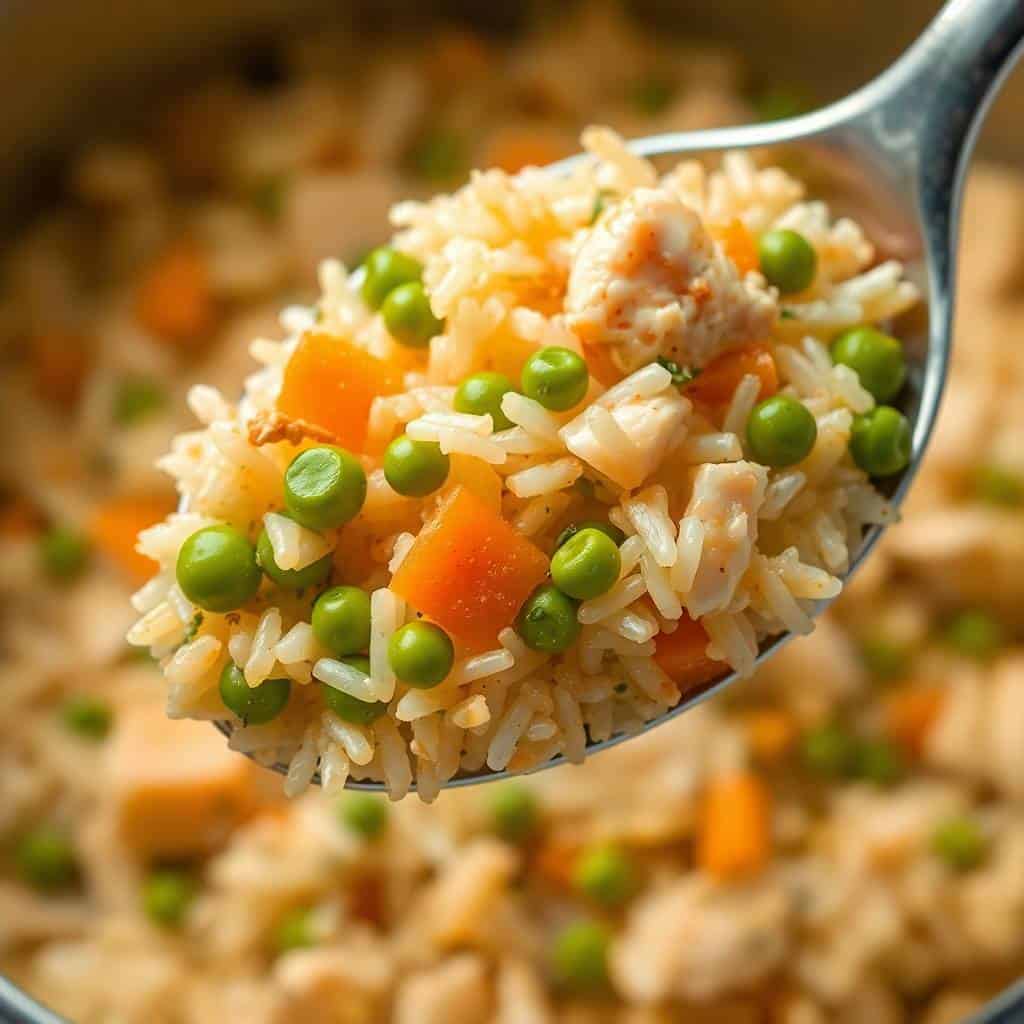
Related Recipes You'll Love
- One-Pan Cheesy Hot Dog Mac for Toddlers
- Hidden Zucchini Mac and Cheese
- 21 High-Protein Summer Lunch Bowls
- No-Heat Crockpot BBQ Pulled Chicken
- 20 Office Lunch Bowls That Reheat Well
Can I use boneless chicken thighs instead of bone-in?
Yes — reduce the liquid by ¼ cup (use 1¾ cups broth + 1¼ cups water) because boneless thighs absorb less liquid than bone-in, and reduce the cooking time to 12 minutes covered rather than 15. The rice will be less rich than the bone-in version because the gelatin the bones contribute to the cooking liquid will be absent, but the recipe still works well and the time saving is essentially none since both versions cook in under 25 minutes.
Why does the rice sometimes come out sticky or mushy?
Three likely causes: not rinsing the rice (surface starch makes the cooking liquid gluey), using too much liquid (the recipe's ratios are specific to bone-in chicken thighs — if you use boneless or a different protein, adjust the liquid), or cooking at too high a heat with the lid on (simmering gently with the lid on is correct; vigorous boiling with the lid on creates excess steam and overcooks the rice). Rinsing is the single most impactful fix if the rice has been sticky in previous attempts.

ONE-POT BUDGET CHICKEN AND SPRING VEGETABLE RICE UNDER $5
Equipment
- Large pot or Dutch oven
- Wooden Spoon
- Knife and Cutting Board
- Measuring cups
Ingredients
For the Chicken and Rice:
- 1 lb chicken thighs, diced
- 1 ½ cups long-grain white rice
- 2 cups frozen mixed spring vegetables
- 1 small yellow onion, diced
- 2 cloves garlic, minced
- 1 tablespoon olive oil
- 3 cups chicken broth
- 1 teaspoon salt
- ½ teaspoon black pepper
- 1 teaspoon dried parsley
Optional Garnish:
- 2 tablespoons green onions, sliced
- 1 tablespoon fresh parsley, chopped
Instructions
Cook Chicken
- Heat olive oil in a large pot over medium heat. Add diced chicken and cook until lightly browned, about 5 minutes.
Add Aromatics
- Stir in onion and garlic. Cook for 2–3 minutes until softened and fragrant.
Add Rice
- Add rice and stir for 1 minute to lightly toast the grains.
Simmer
- Pour in chicken broth and add salt, pepper, and parsley. Bring to a boil, then reduce heat, cover, and simmer for 15 minutes.
Add Vegetables
- Stir in frozen spring vegetables. Cover and cook for 5 more minutes until rice is tender and vegetables are heated through.
Serve
- Fluff rice with a fork, garnish if desired, and serve warm.
Notes
- Budget-Friendly: Uses affordable pantry staples and frozen vegetables.
- One-Pot Meal: Minimal cleanup makes busy nights easier.
- Meal Prep Friendly: Stores well in the refrigerator for up to 4 days.
- Protein Boost: Add extra chicken or beans for more protein.
- Freezer Option: Freeze portions for up to 2 months and reheat when needed.


Comments
No Comments