
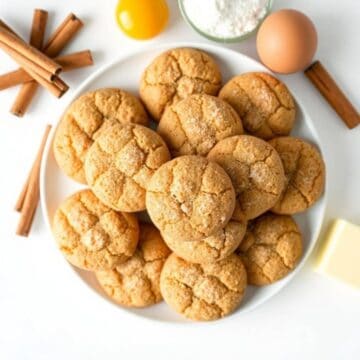
The reason snickerdoodles work so beautifully is the combination of cream of tartar (the unusual ingredient that defines them) and the cinnamon-sugar coating that creates the signature crackled tops. Cream of tartar is a mild acid that reacts with the baking soda to produce a soft, slightly chewy texture and a subtle tangy flavor that distinguishes snickerdoodles from sugar cookies — without cream of tartar, you have a generic sugar cookie, not a snickerdoodle. The cinnamon-sugar coating bakes into a crackled, slightly crisp shell while the inside stays soft and pillowy — the textural contrast in each bite is what makes these so addictive. My mother in Pakistan didn't bake American-style cookies (her baking was confined to traditional South Asian sweets), but she always taught me that specific ingredients in specific recipes can't be substituted without changing the result entirely. Cream of tartar in snickerdoodles is exactly that — non-negotiable, even though most American home bakers don't keep it stocked. The 3-dollar spice jar at the grocery store is what separates real snickerdoodles from imposter cookies.
This recipe makes 30 medium cookies, takes 30 minutes total from start to finish (15 minutes prep + 10-12 minutes baking + 5 minutes cooling), and costs about $5-6 for the entire batch. The dough freezes beautifully (raw dough balls can be frozen for up to 3 months), which makes this the ideal cookie for batch-baking ahead and pulling out for last-minute hosting, after-school snacks, holiday cookie boxes, school bake sales, and unexpected guest situations. For holiday cookie exchanges, kids' lunchbox treats, after-dinner desserts, gift-giving (homemade cookies are still the best low-key thank-you present), and any time you need a reliable crowd-pleasing cookie, this is the recipe that delivers consistent excellence. My husband's brother specifically requests these for his family Christmas gathering each year, and Saad's kindergarten teacher asked for the recipe after that first homework assignment.
A practical note about the cream of tartar. Cream of tartar (potassium bitartrate) is a fine white powder found in the baking aisle near the baking soda and baking powder — it's not a common ingredient in American home kitchens, but a single jar lasts for months of snickerdoodle baking and other applications. Don't try to substitute with lemon juice (changes the texture and the moisture balance), white vinegar (same problem), or skip it entirely (creates generic sugar cookies, not snickerdoodles). McCormick brand cream of tartar is widely available at any grocery store for $3-4. The single specialty ingredient is what makes the recipe work — and once you have it stocked, you can also use it for stabilizing whipped egg whites for meringues and angel food cake, preventing sugar crystallization in syrups, and several other baking applications. Same principle my mother applied to South Asian cooking — kewra essence, atta flour, mustard oil are all "uncommon" ingredients to American kitchens but non-negotiable for the dishes they're called for in. Buying the specialty ingredient once unlocks an entire category of recipes you couldn't make properly before.
Why You'll Love This Recipe
- Soft pillowy centers, lightly crisp edges — the classic snickerdoodle texture: The combination of cream of tartar, baking soda, butter, and proper baking time creates the signature snickerdoodle texture — soft and slightly chewy inside, lightly crisp on the outside edges, with a delicate cracked sugar-coated top. This is the textural contrast that defines proper snickerdoodles and separates them from generic cinnamon cookies. The recipe consistently delivers this texture batch after batch, which makes it a reliable cookie-jar staple rather than a hit-or-miss experiment.
- Beginner-friendly — no fussy techniques, no chilling marathons required: This is genuinely one of the easiest cookie recipes for new bakers. No creaming-to-the-perfect-color step (just cream until fluffy), no dough-chilling marathon (30 minutes is plenty), no piping or shaping skills required (roll balls, roll in cinnamon sugar, bake). The dough is forgiving — slightly more or less flour won't ruin the batch. The cinnamon-sugar coating is a natural quality-disguiser that makes even slightly uneven cookies look beautiful. For first-time cookie bakers and kids learning to bake, this is the perfect confidence-building recipe.
- Freezer-friendly dough — bake fresh cookies anytime in 15 minutes: The raw dough freezes beautifully. Roll dough into balls, freeze on a baking sheet until solid (1 hour), then transfer to a freezer bag for up to 3 months. To bake from frozen: place frozen dough balls on a parchment-lined baking sheet, roll in cinnamon sugar, and bake 12-14 minutes (add 2-3 minutes to the normal baking time). This means you can have fresh-baked cookies anytime — for surprise guests, after-school cravings, late-night snack attacks, or unexpected potluck obligations. The freezer-stash trick is what makes this recipe genuinely valuable in real home kitchens.
- Kid-involvement friendly — perfect for baking with children: The dough is firm enough for small hands to roll, the cinnamon-sugar rolling step is the perfect kid-friendly job, and the cookies are forgiving enough that uneven shapes still look beautiful after baking. Saad and Zainab help with every batch — Saad does the aggressive rolling that distributes the cinnamon-sugar everywhere, Zainab does the precise rolling that makes perfect spheres. The 45 minutes of supervised kid-baking creates the kind of family-memory experience that's worth the cinnamon dust on the kitchen floor afterward.
- Classic flavor that crosses all generations and palates: Snickerdoodles are universally loved — kids love the cinnamon sweetness, adults appreciate the soft texture and slight tang from the cream of tartar, grandparents recognize the recipe from their own childhoods. For mixed-age gatherings, school events, work potlucks, holiday cookie exchanges, and gift-giving, these are the cookies that please everyone without modifications. The familiar nostalgic flavor profile is what keeps this recipe in regular rotation — there's no "audience" who won't appreciate a properly-made snickerdoodle.
Ingredients
- For the Cookie Dough:
- 2¾ cups all-purpose flour
- 2 teaspoon cream of tartar (the non-negotiable signature ingredient)
- 1 teaspoon baking soda
- ½ teaspoon salt
- 1 cup (2 sticks) unsalted butter, softened to room temperature
- 1½ cups granulated sugar
- 2 large eggs, room temperature
- 2 teaspoon pure vanilla extract
- For the Cinnamon-Sugar Coating:
- ⅓ cup granulated sugar
- 3 tablespoon ground cinnamon
- Optional: 1 teaspoon finely ground cardamom (Pakistani-American upgrade)
- Optional: pinch of nutmeg
Directions
- Step 1: Preheat oven and prep the baking sheets. Preheat your oven to 375°F (190°C). Line 2-3 baking sheets with parchment paper. Don't grease — parchment is essential for preventing the sugar coating from sticking and for easy cookie release.
- Step 2: Whisk together dry ingredients. In a medium bowl, whisk together flour, cream of tartar, baking soda, and salt until evenly distributed. The cream of tartar is what creates the signature snickerdoodle tang and soft texture — don't skip or substitute. Set aside.
- Step 3: Cream butter and sugar together until light and fluffy. In a large bowl or stand mixer with paddle attachment, beat softened butter and sugar on medium-high speed for 3-4 minutes until light and fluffy (the mixture should look noticeably paler in color). This step incorporates air into the dough, which creates the tender texture. Don't shortcut — the 3-4 minutes of creaming is the foundation of cookie texture.
- Step 4: Add eggs one at a time, then vanilla. Beat in eggs one at a time, mixing well after each addition. Scrape down the sides of the bowl. Beat in the vanilla extract until smooth.
- Step 5: Add dry ingredients in 2 portions. Add the dry ingredient mixture to the wet ingredients in 2 portions, mixing on low speed just until combined after each addition. Don't overmix — once you can't see any dry flour, STOP. Overmixing develops gluten, creating tough cookies instead of tender ones.
- Step 6: Chill the dough 30 minutes (optional but helpful). Cover the dough and refrigerate for 30 minutes. This isn't strictly necessary, but chilled dough is easier to handle, prevents excessive spreading during baking, and creates cookies with slightly thicker, chewier centers. If you're in a hurry, you can skip chilling and proceed directly.
- Step 7: Mix the cinnamon-sugar coating. In a small bowl, mix together ⅓ cup granulated sugar, 3 tablespoons ground cinnamon, and any optional spices (cardamom, nutmeg) until evenly combined. The ratio is fairly heavy on cinnamon compared to most coatings — this is intentional, because the cinnamon flavor needs to come through after baking.
- Step 8: Roll dough into balls and coat in cinnamon-sugar. Roll dough into 1-1.5 inch balls (about 1.5 tablespoons each). Roll each dough ball thoroughly in the cinnamon-sugar mixture, ensuring complete coverage on all sides. This is the kid-friendly step — let children take over this part for the genuine snickerdoodle experience.
- Step 9: Place on baking sheets with proper spacing. Place coated dough balls on the prepared baking sheets, leaving 2-2.5 inches of space between cookies (they spread significantly). 12 cookies per standard baking sheet is the right count.
- Step 10: Bake 10-12 minutes until edges are set, centers still soft. Bake at 375°F for 10-12 minutes — the edges should be set and lightly golden, the tops should look slightly underdone with characteristic crackled patterns, and the centers should still look slightly soft. DO NOT over-bake — that's the single biggest snickerdoodle mistake. The cookies continue cooking on the hot pan after removal, and over-baking leads to crisp, dry cookies instead of soft chewy ones.
- Step 11: Cool on baking sheet 5 minutes, then transfer to wire rack. Let the cookies rest on the hot baking sheet for 5 minutes — they'll finish setting during this carryover cooking time. Then transfer carefully to a wire cooling rack. Cool completely before storing (about 20 minutes).
- Step 12: Store and enjoy. Store cooled cookies in an airtight container at room temperature for up to 5 days. To maintain softness for longer, add a slice of plain white bread to the cookie container — the bread releases moisture that keeps the cookies soft. The cookies are at peak texture on day 1, still excellent through day 3, slightly drier by day 5.

Tips for Success
- Don't skip the cream of tartar — it's the signature ingredient. Cream of tartar is what gives snickerdoodles their distinctive soft, chewy texture and subtle tang. Without it, you have generic sugar cookies, not snickerdoodles. Don't substitute with lemon juice, white vinegar, or skip entirely — none of those replicate the proper effect. Buy a $3-4 jar of McCormick cream of tartar at any grocery store. One jar lasts for months of snickerdoodle baking and also works for meringues, angel food cake, and several other recipes. The single specialty ingredient is what unlocks the entire recipe.
- Use room-temperature butter and eggs — cold ingredients ruin the texture. Cold butter doesn't cream properly with sugar, resulting in dense cookies. Cold eggs added to creamed butter can cause the mixture to break, also producing dense cookies. Pull butter and eggs out of the fridge at least 1 hour before starting. If you forgot, microwave eggs in a bowl of warm water for 5 minutes to take the chill off; soften butter at 30% microwave power for 15-20 seconds. The temperature of ingredients affects the final texture more than home bakers realize — this is the single biggest invisible variable.
- Don't over-bake — pull cookies out when centers still look slightly underdone. Snickerdoodles continue cooking on the hot pan for 3-5 minutes after removal from the oven. If they look fully done when you pull them out, they'll be over-baked by the time they cool — dry and crisp instead of soft and chewy. The right doneness: edges set and lightly golden, tops have characteristic crackled patterns, centers look slightly underdone and slightly puffy. Trust the visual cues over the timer because oven temperatures vary significantly.
- Measure flour correctly — spoon and level, don't scoop. The single most common cause of dry, dense snickerdoodles is too much flour, and the cause of too much flour is scooping the measuring cup directly into the flour bag (which packs the flour in and adds 20-30% more than the recipe calls for). The proper technique: fluff the flour in its container with a fork, spoon the flour into the measuring cup loosely without packing, then level off the top with the back of a knife. The spoon-and-level method gives accurate measurements; scooping gives 20-30% extra flour and dry cookies.
- Roll dough balls in cinnamon-sugar GENEROUSLY — don't be stingy. The cinnamon-sugar coating creates the signature crackled top and the warm cinnamon flavor in every bite. Coat each dough ball thoroughly on all sides, with no exposed dough showing through. The ⅓ cup sugar + 3 tablespoons cinnamon ratio is heavy on cinnamon intentionally — most home bakers use too little cinnamon and end up with insufficient flavor. The generous coating is what makes these "the best" rather than "okay" snickerdoodles. Saad and Zainab help with this step every batch, and the more aggressive the rolling, the better the result.
Variations
- Pakistani-American cardamom snickerdoodles (Sana's hybrid): Add 1 teaspoon finely ground green cardamom to the cookie dough along with the dry ingredients. Add 1 teaspoon ground cardamom to the cinnamon-sugar coating. The cardamom adds a floral-citrusy warmth that complements the cinnamon beautifully and bridges the American cookie with Pakistani-flavored desserts. My mother in Pakistan would call this the "cinnamon-elaichi" cookie — both spices are foundational in their respective cuisines, and combining them creates a hybrid that feels deeply familiar even though it's neither traditional American nor traditional Pakistani. My husband requests this version when his Pakistani-American cousins visit.
- Chewy brown sugar version (extra chew, extra depth): Replace ½ cup of the granulated sugar with light brown sugar. The molasses in brown sugar adds moisture and caramel-adjacent depth, creating noticeably chewier cookies with slightly deeper color. The result is a more sophisticated, less sweet snickerdoodle that adults often prefer over the classic version. For cookie exchange contributions where you want to stand out, the brown sugar version makes a noticeable difference.
- Pumpkin spice snickerdoodles (fall favorite): Replace half the cinnamon in the coating with pumpkin pie spice (or make your own: cinnamon + nutmeg + ginger + cloves + allspice). Add ½ teaspoon pumpkin pie spice to the cookie dough as well. The result is a fall-spiced snickerdoodle perfect for October-November baking, thanksgiving cookie boxes, and Halloween bake sales. The classic snickerdoodle gets a seasonal upgrade without losing its identity.
- Stuffed snickerdoodles (caramel center surprise): Wrap each dough ball around a small unwrapped Rolo caramel candy (or a small piece of fudge, or a small piece of chocolate). Roll in cinnamon-sugar as usual and bake 12-14 minutes (slightly longer because of the stuffed center). The result is snickerdoodles with a molten caramel center that's incredibly indulgent and dinner-party-worthy. This is the upgrade my husband's brother specifically requests for his Christmas cookie exchange because it tastes far more impressive than the work required.
- Smaller bite-sized snickerdoodles (party-friendly): Roll the dough into smaller 1-inch balls (about 2 teaspoons each), making approximately 50 small cookies. Reduce the baking time to 8-9 minutes. The smaller size is perfect for cookie trays, lunch box treats, holiday cookie boxes (lets you fit more variety), and parties where guests want to try multiple desserts without committing to a full-sized cookie. The bite-sized version also makes great gift packaging since they fit beautifully in small mason jars or treat bags.
Serving and Storage
How to Serve
Serve at room temperature or slightly warmed for the best texture and flavor experience. Snickerdoodles are at their absolute peak within the first 2-3 hours of baking, when the edges are still slightly crisp and the centers are still warm and pillowy. To revive day-old cookies, microwave individual cookies for 8-10 seconds — this brings back the fresh-baked warmth and aroma. Classic serving pairings: cold whole milk (the absolute traditional combination — there's a reason "milk and cookies" exists as a phrase), hot coffee (the cinnamon-sugar profile pairs beautifully with coffee), chai tea (the warm spices in chai complement the cinnamon perfectly), hot chocolate (for cold-weather indulgence), apple cider (for fall coziness), vanilla ice cream (for snickerdoodle ice cream sandwiches), salted caramel ice cream (for sweet-salty contrast), and Greek yogurt with honey (for breakfast-cookie applications). For ice cream sandwiches: slightly under-bake the cookies, cool completely, then sandwich softened ice cream between two cookies, wrap individually, and freeze for an hour before serving. For cookie boxes and gift-giving: stack 4-6 cookies in clear cellophane bags tied with twine, or layer in small mason jars with parchment paper between layers. Snickerdoodles are the perfect base cookie for almost any serving application — their universally loved flavor profile means they work across every audience and occasion.
How to Store
Store cooled snickerdoodles in an airtight container at room temperature for up to 5 days. To maintain optimal softness, add a slice of plain white bread to the cookie container — the bread releases moisture that keeps the cookies soft and tender (this is the secret professional bakeries use). Replace the bread slice every 2 days as it dries out. The cookies are at peak texture on day 1, excellent through day 3, and slightly drier by day 4-5 (though still delicious). For longer storage, refrigeration extends life to 7-10 days but creates a slightly firmer texture — return refrigerated cookies to room temperature 30 minutes before serving for best results. To freeze baked cookies: place in a single layer in a freezer-safe container with parchment paper between layers, freeze for up to 3 months. Thaw at room temperature for 1-2 hours before serving. To freeze raw dough (the best meal-prep approach): roll dough into balls, freeze on a baking sheet until solid (1 hour), then transfer to a freezer bag for up to 3 months. To bake from frozen: place frozen dough balls on parchment-lined baking sheet, roll in fresh cinnamon-sugar, and bake at 375°F for 12-14 minutes (add 2-3 minutes to normal baking time). The freezer-dough trick is what makes this recipe genuinely valuable — fresh-baked cookies anytime in 15 minutes. For meal-prep applications, leftover cookies become: dessert toppings (crumbled over ice cream), milkshake mix-ins, breakfast yogurt parfait layers, and components in homemade cookie trifles.

Related Recipes You Might Like
If you loved these snickerdoodle cookies, here are more family-favorite and crowd-pleasing dessert recipes from the site that pair beautifully with cookie-jar baking and holiday entertaining:
- Macaron Recipe — when you want a more elegant cookie project
- Strawberry Mug Cake — single-serve dessert for emergency cravings
- 35 Easy Dip Recipes — savory party pairings
- Caprese Skewers 10-Minute Appetizer — savory contrast for cookie spreads
- All Recipes — browse the complete recipe collection
Frequently Asked Questions
Can I make the dough ahead of time?
If you loved these snickerdoodle cookies, here are more family-favorite and crowd-pleasing dessert recipes from the site that pair beautifully with cookie-jar baking and holiday entertaining:
Why is cream of tartar important?
Cream of tartar (potassium bitartrate) is the SIGNATURE ingredient of snickerdoodles — it's literally what makes a snickerdoodle a snickerdoodle rather than a generic cinnamon-sugar cookie. The cream of tartar serves two functions: first, it's a mild acid that reacts with the baking soda to produce a soft, slightly chewy texture; second, it adds a subtle tangy flavor that distinguishes snickerdoodles from sugar cookies. Without cream of tartar, you have a generic cookie with cinnamon sugar on top — not a snickerdoodle. Don't substitute with lemon juice or vinegar (changes the moisture balance), and don't skip entirely. Buy a $3-4 jar of McCormick cream of tartar at any grocery store — it lasts for months and also works for meringues, angel food cake, and stabilizing whipped cream. The single specialty ingredient unlocks the entire recipe.
Can I freeze snickerdoodle cookies?
Yes — both baked cookies and raw dough freeze beautifully. For baked cookies: place cooled cookies in a single layer in a freezer-safe container with parchment paper between layers, freeze for up to 3 months. Thaw at room temperature for 1-2 hours before serving (or microwave individual cookies for 15 seconds for a fresh-baked feeling). For raw dough (the better option for fresh-baked anytime): roll dough into balls, freeze on a baking sheet until solid (1 hour), then transfer to a freezer bag for up to 3 months. To bake from frozen: place frozen dough balls on parchment-lined baking sheet, roll in fresh cinnamon-sugar, and bake at 375°F for 12-14 minutes. The raw-dough freezing approach is what makes this recipe genuinely valuable for real home kitchens — fresh-baked cookies anytime in 15 minutes.
How do I keep snickerdoodles soft?
Three techniques work together. First, don't over-bake — pull cookies out when edges are set but centers still look slightly underdone (10-12 minutes at 375°F). They'll continue cooking on the hot pan for 3-5 minutes after removal. Second, store in an airtight container with a slice of plain white bread — the bread releases moisture that keeps cookies soft (this is the professional bakery trick). Replace the bread slice every 2 days as it dries out. Third, for longer storage, freeze the cookies and thaw individual cookies as needed rather than letting baked cookies sit at room temperature for many days. The combination of proper baking, bread-slice storage, and freezer backup keeps snickerdoodles soft and fresh for the full 5-day window or longer.
Can I skip chilling the dough?
Yes — the 30-minute chill is optional, not mandatory. Skipping it doesn't ruin the cookies, but chilled dough does produce noticeably better results. Benefits of chilling: easier to handle (less sticky), prevents excessive spreading during baking, creates cookies with slightly thicker chewier centers, and allows the cream of tartar to fully develop its flavor effect. If you're in a hurry, you can skip chilling and proceed directly — the cookies will be slightly thinner and may spread a bit more, but they'll still be delicious. For best results, chill 30 minutes. For acceptable results when time is short, skip chilling. The recipe is forgiving in this regard, which makes it beginner-friendly even when you don't follow every step perfectly.
What if I don't have cream of tartar — can I substitute?
Honestly, no — proper snickerdoodles require cream of tartar. The most commonly suggested substitutes (lemon juice, white vinegar) don't replicate the proper effect because they're liquids that change the moisture balance, and the resulting cookies are sugar cookies with cinnamon-sugar coating rather than true snickerdoodles. If you don't have cream of tartar, you have two real options: (1) Make sugar cookies with cinnamon-sugar coating and call them "cinnamon sugar cookies" instead of snickerdoodles — they'll be delicious but different. (2) Wait until you can get cream of tartar — a $3-4 jar at any grocery store. The cream of tartar is THE signature ingredient that defines this cookie. Buying it once unlocks proper snickerdoodles forever, plus several other recipes (meringues, angel food cake, stabilized whipped cream). The single ingredient purchase is genuinely worth it.
These snickerdoodle cookies earned their place in our family rotation because of Saad's kindergarten "favorite family treat" homework assignment 2 years ago, and the 45-minute kid-baking session that followed. Real-world kid-involvement in actual home kitchens is the highest credential any family cookie recipe can earn — and 2 years later, Saad and Zainab still help with every batch.
The freezer-dough trick makes this especially valuable for actual real-life situations. Having a freezer bag of pre-rolled raw dough balls means I can bake fresh cookies anytime in 15 minutes — for unexpected guests, after-school snack emergencies, last-minute potluck obligations, or my husband's late-night cookie cravings. The freezer trick is what transforms this from a "weekend baking project" to an "anytime cookie solution."
Beyond just-eating-the-cookies duty, these snickerdoodles transform into multiple applications — ice cream sandwiches (snickerdoodles are PERFECT for this), crumbled toppings for vanilla ice cream sundaes, breakfast yogurt parfait layers, milkshake mix-ins, and components in homemade cookie trifles. One batch of 30 cookies easily transforms into multiple dessert applications across the week.
Beyond just-eating-the-cookies duty, these snickerdoodles transform into multiple applications — ice cream sandwiches (snickerdoodles are PERFECT for this), crumbled toppings for vanilla ice cream sundaes, breakfast yogurt parfait layers, milkshake mix-ins, and components in homemade cookie trifles. One batch of 30 cookies easily transforms into multiple dessert applications across the week.

The Best Snickerdoodle Cookies Recipe (Soft, Chewy, Cinnamon-Sugar Classic)
Ingredients
For the dough
- 0.75 cup butter, softened room temperature
- 0.75 cup granulated sugar
- 1 large egg
- 0.5 teaspoon vanilla extract optional
- 1.5 cups all-purpose flour
- 0.25 teaspoon baking soda
- 0.25 teaspoon cream of tartar
- 0.25 teaspoon salt
For the cinnamon-sugar coating
- 2 tablespoons granulated sugar
- 2 teaspoons ground cinnamon
Instructions
- Preheat your oven to 375°F (190°C). In a small bowl, whisk together the cinnamon and sugar for the coating and set aside.
- In a large bowl, cream together the softened butter and granulated sugar until light and fluffy, about 2-3 minutes using an electric mixer. Beat in the egg and vanilla extract until well combined.
- In another bowl, whisk together the flour, baking soda, cream of tartar, and salt. Gradually add the dry ingredients to the wet ingredients, stirring until just combined. The dough should be soft and slightly sticky.
- Roll dough into 1-inch balls. Coat each ball generously in the cinnamon-sugar mixture, making sure every side is covered. Place them 2 inches apart on ungreased baking sheets.
- Bake for 10-12 minutes until the cookies are crackled on top but still soft in the center. The edges should be set but the centers should jiggle slightly when you move the pan.
- Allow cookies to cool on the baking sheet for 5 minutes, then transfer to a wire rack to cool completely. Serve warm for the best chewy texture.
Notes



Comments
No Comments