
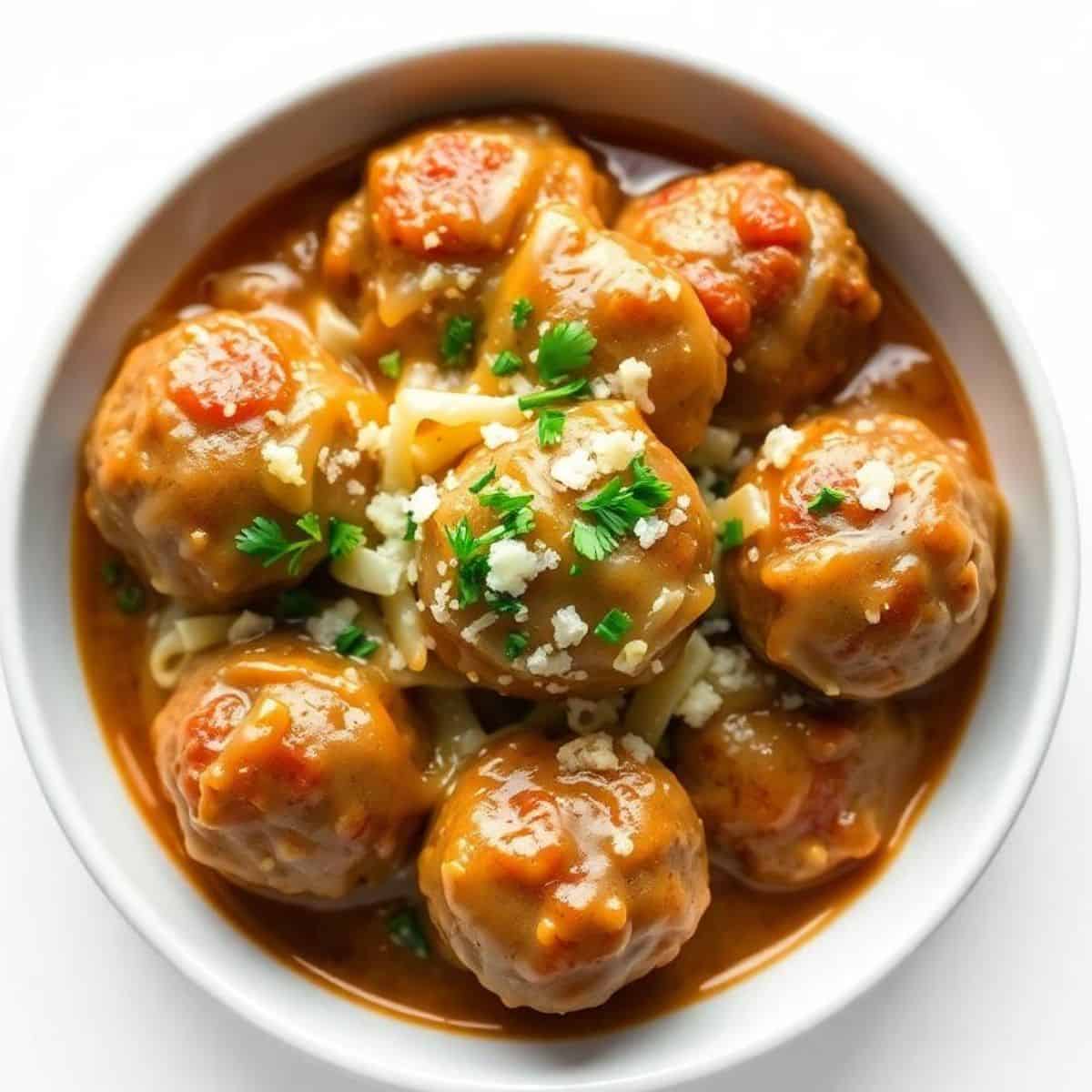
The dinner that combines two of the most beloved comfort food experiences in all of cooking — the hearty, deeply satisfying quality of a perfectly made meatball and the extraordinary richness of a French onion soup — into a single skillet that comes out of the oven with a golden, bubbling cheese top and an aroma that fills the entire house with the most compelling dinner smell imaginable — is this French onion meatball recipe: juicy, well-seasoned beef meatballs browned until golden, then simmered in a deeply caramelized onion gravy and finished under the broiler with a blanket of melted Gruyère cheese for a dinner that is as visually stunning as it is deeply satisfying.
What makes French onion meatballs genuinely special is the patience invested in the caramelized onion gravy — onions cooked low and slow for 25–30 minutes until they have transformed from sharp, pungent raw slices into deeply sweet, golden, jammy ribbons that contribute a complexity and depth of flavor to the gravy that no shortcut can replicate. The balsamic vinegar deglaze and the beef broth build on that caramelized onion base to produce a gravy that is rich, savory, slightly sweet, and deeply umami — the perfect vehicle for the meatballs to simmer in and absorb during the final cook.
This post covers the classic French onion meatballs in full detail — meatball mixing, browning technique, onion caramelization, gravy building, and the broiled cheese finish — plus seven variations including turkey, gluten-free, spicy, different cheeses, creamy gravy, slow cooker style, and a plant-based version. Find more French onion–inspired recipes in our easy French onion soup, our French onion stuffed potatoes, and our caramelized onion and Gruyère tart.
Let's make the most impressive, most deeply flavored skillet dinner your kitchen has ever produced!
WHY YOU WILL LOVE THIS RECIPE
- The Best of French Onion Soup and Meatballs in One Extraordinary Dish: French onion meatballs are the dinner that makes guests ask how you had time to make something this impressive on a weeknight — the combination of the deeply caramelized onion gravy that is the soul of French onion soup with the hearty, meaty satisfaction of well-made meatballs produces something that is genuinely greater than the sum of its parts. Every element of the classic French onion soup experience is present: the sweet, jammy onions; the rich, beefy broth; the golden, bubbly melted cheese on top — wrapped around the most satisfying protein vehicle possible.
- The Caramelized Onion Gravy Is Worth Every Minute of the 30-Minute Simmer: Caramelized onions are the heart of this recipe — they are not a background element but the primary flavor driver of the entire dish. The 25–30 minutes required to properly caramelize the onions is non-negotiable and cannot be rushed at higher heat (which produces browned but not caramelized onions that are bitter rather than sweet). The result of patient, low-heat caramelization is deeply sweet, golden, jammy onion ribbons that melt into the gravy and produce a sauce depth that no store-bought gravy or onion soup mix can approximate.
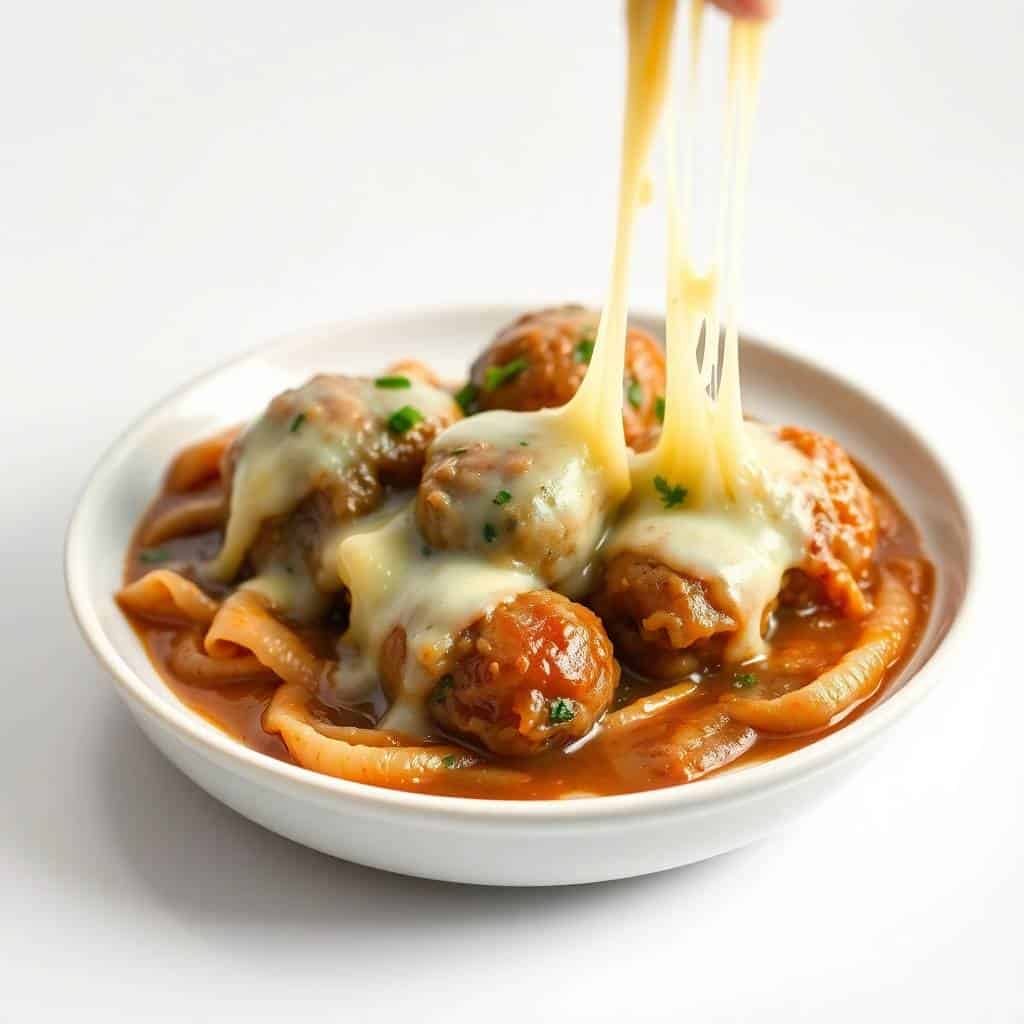
- The Broiled Gruyère Finish Creates a Spectacular Golden Crust: Transferring the meatballs and gravy to an oven-safe dish and broiling with Gruyère scattered over the top produces a golden, bubbly, slightly crisp cheese crust that is the most visually and texturally spectacular element of this dish. Gruyère is the ideal cheese for this application — its high fat content produces an exceptionally smooth, flowing melt; its nutty, slightly sweet flavor is the classic pairing with caramelized onions; and it browns to a beautiful golden color under the broiler without burning. The broiled version is genuinely on another level from the stovetop-only version.
- Versatile Serving Options — Mashed Potatoes, Noodles, or Crusty Bread: French onion meatballs are one of the most versatile main dishes available in terms of what they can be served over or alongside — spooned over creamy mashed potatoes, the gravy seeps into the potato and produces one of the most satisfying combinations in all of comfort food; served over egg noodles, the gravy coats each noodle and produces a dish that resembles a gourmet beef stroganoff; served with thick-cut crusty bread for scooping, the dish becomes a casual sharing meal with rustic character.
- Make-Ahead and Freezer-Friendly — Perfect for Batch Cooking: Both the meatballs and the onion gravy can be made ahead separately and refrigerated for up to 3 days before combining and finishing with cheese. The fully assembled dish (meatballs in gravy, without the cheese) freezes beautifully for up to 2 months — thaw overnight in the refrigerator, reheat covered in a 350°F oven for 20 minutes, then scatter cheese on top and broil as directed. This make-ahead approach makes French onion meatballs a completely practical weeknight dinner despite the 30-minute caramelization step.
INGREDIENTS
- For the Meatballs:
- 1 lb ground beef
- ½ cup breadcrumbs
- 1 large egg
- 2 cloves garlic, minced
- 1 teaspoon Worcestershire sauce
- 1 teaspoon salt
- ½ teaspoon black pepper
- ½ teaspoon onion powder
- For the Caramelized Onion Gravy:
- 2 tablespoons unsalted butter
- 2 large onions, thinly sliced
- 1 teaspoon granulated sugar
- 1 teaspoon fresh or dried thyme
- 1 tablespoon all-purpose flour
- 1 cup beef broth
- ½ cup shredded Gruyère or mozzarella cheese
- 2 tablespoons olive oil (for browning the meatballs)
DIRECTIONS
- Step No.1: Make and shape the meatballs
In a large mixing bowl, combine the ground beef, breadcrumbs, egg, minced garlic, Worcestershire sauce, salt, pepper, and onion powder. Mix gently with your hands until just combined — stop mixing the moment the ingredients are evenly distributed and no streaks of egg or breadcrumb remain visible. Overmixing ground beef makes the meatballs dense and tough. Roll the mixture into 1-inch balls — uniform size ensures even cooking. Place on a tray or plate and set aside.
- Step No.2: Brown the meatballs
Heat the olive oil in a large, oven-safe skillet over medium-high heat until it shimmers. Add the meatballs in batches — do not crowd the pan, which causes steaming rather than browning. Brown the meatballs on all sides for approximately 2–3 minutes per side until a deep golden crust has formed on the exterior. The meatballs do not need to be fully cooked through at this stage — they will finish cooking in the gravy. Remove the browned meatballs to a plate and set aside, leaving the rendered fat and brown bits in the skillet.
- Step No.3: Caramelize the onions
Reduce the heat to medium and add the butter to the same skillet. Once melted, add the thinly sliced onions and the sugar, along with a pinch of salt. Stir to coat the onions in the butter. Cook over medium-low heat, stirring occasionally, for 25–30 minutes until the onions are deeply golden, soft, and sweet — they should have reduced dramatically in volume and look like a jammy, caramel-colored mass. Do not rush this by increasing the heat; high heat produces browned onions with a bitter edge rather than the sweet, deeply caramelized result this recipe requires. Add the thyme in the final 5 minutes of cooking.
- Step No.4: Build the gravy
Sprinkle the flour over the caramelized onions and stir to coat evenly — cook for 1 minute to eliminate the raw flour taste. Gradually pour in the beef broth while stirring continuously to prevent lumps from forming. Stir and scrape up all the brown bits from the bottom of the skillet — those caramelized bits are concentrated flavor that enriches the gravy. Bring the gravy to a gentle simmer and cook for 2–3 minutes until slightly thickened and smooth.
- Step No.5: Simmer meatballs in gravy, add cheese, and broil
Return the browned meatballs to the skillet, nestling them into the onion gravy. Cover the skillet and simmer over low heat for 15–20 minutes until the meatballs are cooked through (internal temperature 165°F) and the gravy has thickened further around them. If the skillet is oven-safe, scatter the shredded Gruyère evenly over the top of the meatballs and gravy and place under the broiler for 2–3 minutes until the cheese is completely melted, golden, and bubbly. If the skillet is not oven-safe, transfer everything to an oven-safe dish before adding cheese and broiling. Garnish with fresh thyme sprigs and serve immediately.
TIPS FOR SUCCESS
- Use a Beef and Pork Mix for the Juiciest Meatballs: A combination of 70% ground beef and 30% ground pork produces noticeably juicier, richer meatballs than all-beef alone — the pork adds fat and a more complex flavor that the beef alone cannot provide. If ground pork is unavailable, use 80/20 ground beef rather than a leaner grind to ensure the meatballs retain moisture during both browning and simmering.
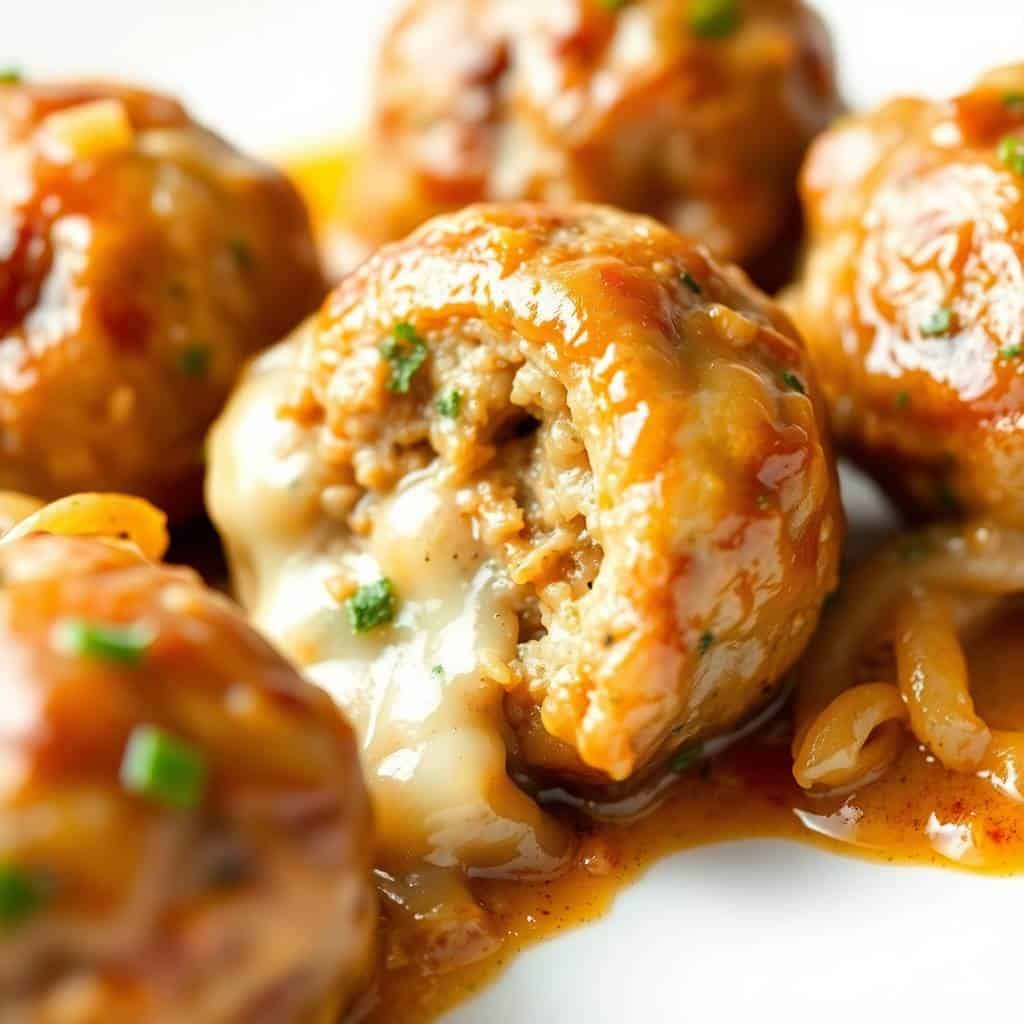
- Do Not Overmix the Meatball Mixture: Overmixing develops the proteins in the ground beef and produces meatballs that are dense, rubbery, and unpleasantly compact rather than tender and juicy. Mix only until the ingredients are just combined — stop the moment no streaks of egg, breadcrumb, or seasoning remain visible. The mixture will look slightly rough; this is correct and produces a better meatball than a smooth, thoroughly kneaded mixture.
- Caramelize the Onions Slowly — This Step Cannot Be Rushed: The caramelized onions are the entire flavor foundation of this dish. Cooking them over medium-low heat for 25–30 minutes produces deeply sweet, jammy, golden onions that dissolve into the gravy and create an extraordinary depth of flavor. Cooking them over medium-high heat for 10 minutes produces browned-but-not-caramelized onions that are sharply flavored and do not have the sweetness and complexity that make this dish genuinely special. There is no substitute for the patience this step requires.
- Deglaze Thoroughly — Scrape Every Bit of the Brown Fond: The brown bits on the bottom of the skillet after browning the meatballs are some of the most concentrated, most deeply flavored ingredients in this entire recipe. When adding the beef broth to build the gravy, scrape the bottom of the skillet thoroughly with a wooden spoon or spatula to dissolve every bit of this fond into the gravy. Not scraping these bits up leaves the best flavor in the pan rather than in the sauce.
- Broil Briefly for the Most Dramatic Cheese Finish: The 2–3 minutes under the broiler transforms the scattered Gruyère from melted cheese into a golden, slightly crisp, spotted cheese crust that is the visual signature of the dish and the element that makes it look genuinely restaurant-worthy. Watch the broiler carefully — the cheese goes from melted to burnt in under a minute at high broiler temperatures. Position the rack 6–8 inches from the broiler element and check every 30 seconds after the first minute.
VARIATIONS
- Turkey French Onion Meatballs: Substitute ground turkey for the beef meatballs — use a blend of dark and white ground turkey rather than all-white, which is too lean and produces dry meatballs. Add 1 tablespoon of olive oil to the turkey mixture before mixing to compensate for the reduced fat content. The turkey version has a lighter flavor that pairs particularly well with a mushroom-enhanced beef broth gravy. See our creamy spinach turkey meatballs for more turkey meatball inspiration.
- Gluten-Free French Onion Meatballs: Replace the regular breadcrumbs with an equal quantity of gluten-free breadcrumbs or almond flour as the meatball binder. Replace the all-purpose flour in the gravy with cornstarch — use 1 teaspoon of cornstarch whisked into 2 tablespoons of cold broth before adding to the onions, rather than sprinkling dry flour over the onions. Verify that the beef broth and Worcestershire sauce are labeled gluten-free, as these products sometimes contain wheat. The technique and timing are identical to the original.
- Spicy French Onion Meatballs: Add ¼ teaspoon of crushed red pepper flakes and ½ teaspoon of cayenne pepper to the meatball mixture, and add a dash of hot sauce to the gravy along with the beef broth. The heat adds a warmth that builds pleasantly through the rich onion gravy and makes every bite more complex and more interesting without overwhelming the caramelized onion flavor that is the defining characteristic of the dish.
- Different Cheese Variations: While Gruyère is the classic and best choice for the broiled cheese topping, provolone, Swiss, mozzarella, or sharp white cheddar all work as alternatives. Provolone produces the most dramatic, most stretchy melt; sharp white cheddar adds more pronounced sharpness; mozzarella produces the blandest but most beautiful golden pull. Use whichever cheese you love most or have available — all produce a genuinely excellent result.
- Creamy French Onion Meatballs: After the meatballs have simmered in the gravy and are fully cooked, stir in 3 tablespoons of heavy cream or sour cream directly into the gravy. The cream transforms the gravy from a French onion broth-style sauce into a richer, silkier, more indulgent sauce that is exceptional over egg noodles or mashed potatoes. The sour cream version adds a subtle tang that brightens the overall richness of the dish.
SERVING AND STORAGE
Serving
Serve French onion meatballs immediately from the skillet or baking dish while the cheese is still bubbling and the gravy is at its richest. Spoon generously over creamy mashed potatoes, egg noodles, or thick-cut crusty bread. Garnish with fresh thyme. Pair with our easy French onion soup and our French onion stuffed potatoes for a full French onion–themed dinner.
Storage
Refrigerate leftovers in an airtight container for up to 4 days. Reheat gently in a skillet over medium-low heat with a splash of beef broth added to loosen the gravy, stirring occasionally, until heated through. Freeze the meatballs and gravy (without the broiled cheese) in a freezer-safe container for up to 2 months — thaw overnight in the refrigerator, reheat in a 350°F oven covered with foil for 20 minutes, then scatter fresh cheese on top and broil to finish.
FAQ
Yes — shape and refrigerate the raw meatballs up to 24 hours in advance covered tightly on a tray. Alternatively, brown the meatballs completely, cool, and refrigerate them separately from the gravy for up to 3 days. When ready to serve, reheat the gravy in the skillet, add the browned meatballs, simmer for 10 minutes until heated through, then top with cheese and broil. The make-ahead approach makes this an entirely practical weeknight dinner despite the caramelization step.
Yes — freeze the meatballs and gravy (without the broiled cheese topping) in a freezer-safe container for up to 2 months. Thaw overnight in the refrigerator and reheat covered in a 350°F oven for 20 minutes until hot throughout, then scatter fresh shredded cheese over the top and broil for 2–3 minutes until melted and golden. The re-broiled version is genuinely excellent — the cheese finish always revives the dish and produces the same dramatic presentation as the freshly made version.
Gruyère is ideal — its nutty, slightly sweet flavor is the classic pairing with caramelized onions (it is the cheese used in traditional French onion soup), its high fat content produces an exceptionally smooth, flowing melt, and it browns to a beautiful golden color under the broiler. Swiss cheese is the most accessible substitute and produces a very similar result. Provolone adds more stretch; sharp white cheddar adds more pronounced sharpness; mozzarella produces the blandest but most visually beautiful golden pull.
Yes — store-bought frozen meatballs can be used as a significant time-saving shortcut. Thaw if frozen, then brown briefly in the skillet before proceeding with the caramelized onion gravy as directed. The finished dish will be good but noticeably less deeply flavored than the version made with homemade meatballs — the homemade meatball mixture seasoned with Worcestershire sauce, garlic, and onion powder contributes flavor to the gravy during simmering that plain store-bought meatballs typically cannot match.
Meatballs fall apart when there is insufficient binder (egg and breadcrumbs) or when the mixture is overworked. Ensure the full quantities of both the egg and breadcrumbs are included; mix the meatball mixture only until just combined; and allow the browned meatballs to rest for 2–3 minutes after browning before moving them, as the exterior crust needs to set briefly to hold its shape. Chilling the shaped meatballs in the refrigerator for 20 minutes before browning also significantly improves their structural integrity during cooking.
French onion meatballs are the dinner that delivers a genuine wow moment at the table — the golden bubbling cheese on top, the rich caramelized onion gravy coating every meatball, and the first bite that delivers all of French onion soup's best qualities wrapped around a perfectly cooked, juicy meatball. Make it once and it will immediately become one of the most requested dinners in your rotation.
Try the creamy gravy version for the most indulgent result, the spicy version for heat lovers, and always use Gruyère when available — nothing else broils quite the same way. Pair with our easy French onion soup, our French onion stuffed potatoes, our caramelized onion and Gruyère tart, and our creamy spinach turkey meatballs for the complete French onion and meatball collection. 🧅🧀🍖✨


FRENCH ONION MEATBALLS
Ingredients
For the Meatballs:
- 1 pound ground beef
- ½ cup breadcrumbs
- 1 egg
- 2 cloves garlic minced
- 1 teaspoon Worcestershire sauce
- 1 teaspoon salt
- ½ teaspoon black pepper
- ½ teaspoon onion powder
For the Sauce:
- 2 tablespoons butter
- 2 large onions thinly sliced
- 1 teaspoon sugar
- 1 teaspoon thyme fresh or dried
- 1 tablespoon flour
- 1 cup beef broth
- ½ cup shredded Gruyère or mozzarella cheese
Instructions
Make the Meatballs:
- In a bowl, combine ground beef, breadcrumbs, egg, garlic, Worcestershire sauce, salt, pepper, and onion powder. Mix and shape into 1-inch balls.
Brown the Meatballs:
- Heat oil in a skillet over medium heat. Brown meatballs on all sides until golden. Remove and set aside.
Caramelize the Onions:
- In the same pan, melt butter. Add onions and sugar, cooking slowly for 15–20 minutes until golden and caramelized.
Make the Sauce:
- Sprinkle flour over onions, stir, then add beef broth and thyme. Simmer until slightly thickened.
Combine and Serve:
- Return meatballs to the skillet, cover with sauce, and sprinkle cheese on top. Broil or cover until melted and bubbly. Serve hot.
Notes
- Make Ahead: Cook and store meatballs and sauce separately. Reheat together before serving.
- Customizing the Flavor: Add mushrooms or a splash of sherry for an extra-rich sauce.
- Serving Suggestions: Pair with mashed potatoes, egg noodles, or crusty bread.
- Allergy-Friendly Options: Substitute breadcrumbs with almond flour for a gluten-free version.
- Storage Tips: Store leftovers in an airtight container for up to 3 days. Reheat gently in a skillet or oven.





Comments
No Comments