
I made chicken cordon bleu for the first time about six years ago and completely botched it — the filling fell out, the cheese leaked everywhere, and the outside was somehow both pale and rubbery at the same time. I stood at the counter eating the wreckage with a fork and told myself I'd figure it out eventually. Turns out the fix was simpler than I thought: butterfly instead of pound, roll tight, chill before baking, and skip the frying altogether.
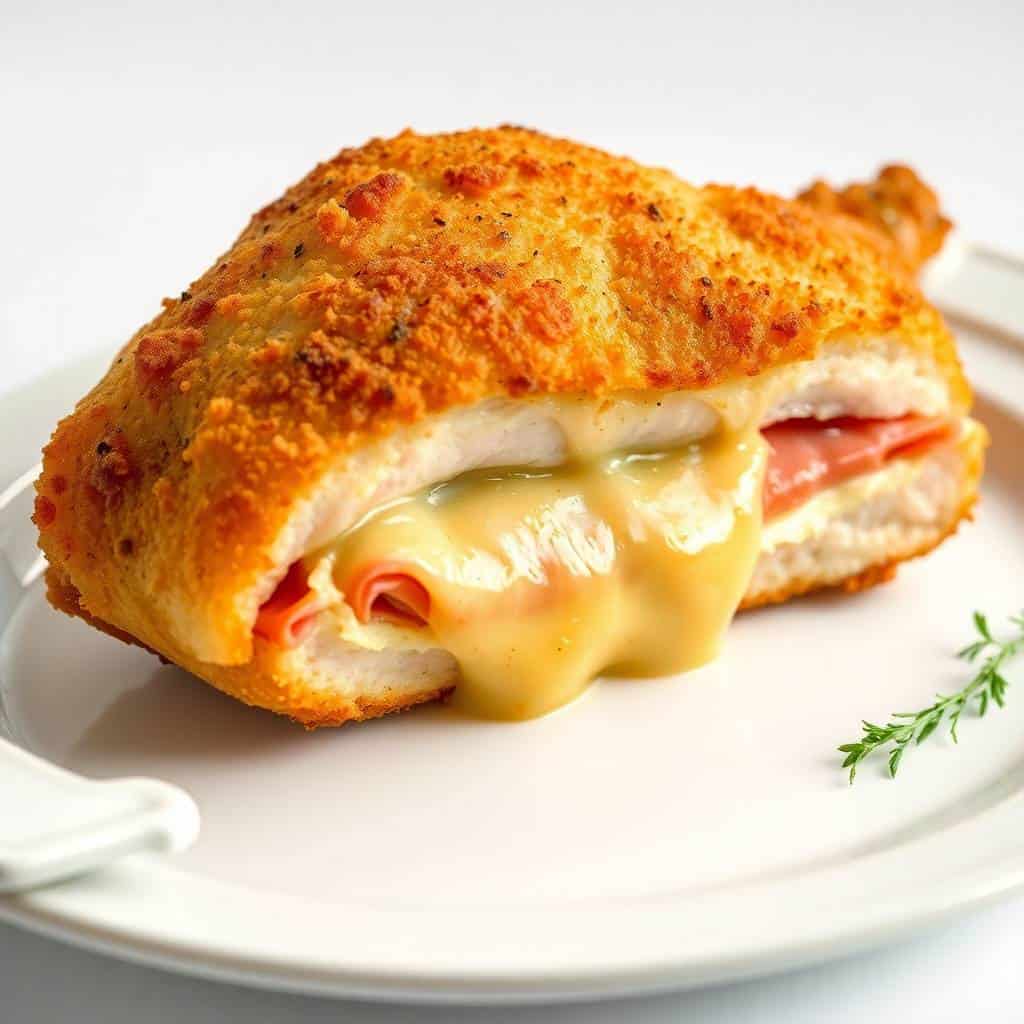
This baked version has become my go-to because it gives you that crispy, golden outside without standing over a pan of hot oil. The oven does the heavy lifting. I use panko breadcrumbs seasoned with garlic powder and paprika, which toast up beautifully at 375°F and give you a real crunch — not that soft, steamed-breadcrumb texture that can happen when you cover the pan. The ham and Swiss inside melt together into something rich and salty that makes every slice look like you really knew what you were doing.
My husband asks for this on special occasions — anniversaries, birthdays, nights when he's had a rough week. Zainab picks out the ham (she's going through a phase) but eats everything else happily. It's one of those dinners that looks like effort even when it wasn't that hard. I've also made it for guests alongside a spring vegetable sheet pan dinner and it always gets compliments.
One thing to set expectations on: this is not a weeknight-in-20-minutes situation. You've got some prep involved — butterflying the chicken, rolling, coating, chilling. But none of it is hard, and most of it can be done in the morning. By dinner time you just pop them in the oven and pour yourself something nice while you wait.
Why You'll Love This Recipe
- No frying required: The oven does everything here, which means no oil splatter, no babysitting a skillet, and no worrying about the inside being raw while the outside burns. I line my baking sheet with parchment, give everything a light spray of cooking oil, and the breadcrumbs brown on their own in about 28 minutes. It also means less cleanup, which I'm always grateful for.
- Looks way more impressive than it is: When you slice through and the cheese pulls and the ham is visible in layers — it looks like restaurant food. I've served this at dinner parties twice and both times people assumed I'd been cooking all day. In reality I had it assembled by noon and baked it 30 minutes before we sat down.
- Make-ahead friendly: You can roll and bread the chicken up to a day ahead, cover the tray with plastic wrap, and refrigerate until you're ready to bake. I actually think chilling helps — the rolls hold their shape better and the coating sticks more firmly. On days I know dinner will be hectic, having these ready in the fridge is a lifesaver.
- Simple ingredients, nothing specialty: Boneless chicken breasts, deli ham, Swiss cheese, flour, eggs, panko — everything here is at Walmart or Aldi. You don't need a specialty store, you don't need imported anything. The Swiss cheese is the most specific ingredient, and even that can be swapped out if you need to (more on that in Variations).
- Genuinely satisfying leftovers: Reheated in the oven at 325°F for about 12 minutes, the next day's chicken cordon bleu is still crispy on the outside and the cheese firms back up into something almost better than the night before. I eat mine cold sometimes over a quick salad and it works just as well.
Ingredients
- 4 boneless, skinless chicken breasts
- 4 slices deli ham (Black Forest or honey ham both work)
- 4 slices Swiss cheese (or Gruyère if you can find it)
- ½ cup all-purpose flour
- 2 large eggs, beaten
- 1 cup panko breadcrumbs (regular breadcrumbs work but panko gets crispier)
- 1 teaspoon garlic powder
- 1 teaspoon paprika
- Salt and black pepper, to taste
- 2 tablespoons butter, melted (or cooking spray)
Directions
- Preheat and prep your pan: Set your oven to 375°F (190°C). Line a baking sheet or dish with parchment paper and lightly grease it. Getting the oven fully preheated before the chicken goes in matters — I've rushed this and ended up with uneven browning on the bottom.
- Butterfly the chicken: Place each chicken breast on a cutting board and slice horizontally almost all the way through, then open it like a book. Season both sides with salt, pepper, garlic powder, and paprika. If any part is noticeably thicker, give it a gentle press with your palm or a few taps with a rolling pin to even it out.
- Add the filling: Lay one slice of ham and one slice of Swiss cheese inside each opened breast. Don't overfill — keep the ham and cheese away from the edges by about half an inch so they have room to seal. Fold the chicken back over the filling and press the edges down firmly.
- Coat the chicken: Set up three shallow bowls — flour in one, beaten eggs in the second, and panko mixed with a pinch of salt in the third. Dredge each stuffed breast in flour first (shake off the excess), dip in egg, then press firmly into the panko on all sides. The flour layer is what helps the egg stick; don't skip it.
- Chill (optional but worth it): Place the coated rolls seam-side down on your prepared pan and refrigerate for 10–15 minutes before baking. This helps them hold together and keeps the coating from sliding. I started doing this after my second batch unraveled in the oven.
- Bake: Drizzle or brush melted butter over the tops, or give them a good spray of cooking oil. Bake for 25–30 minutes until deep golden brown and the internal temperature reads 165°F (74°C) on a meat thermometer. Don't skip the thermometer check — chicken breasts vary in size and timing can shift by 5 minutes either way.
- Rest before slicing: Pull them out and let them sit for 5 minutes before cutting. This is the hardest part but it keeps the juices inside and gives the cheese time to settle slightly so it doesn't all pour out the moment you slice.

Tips for Success
- Use panko, not regular breadcrumbs: I tried this with the fine breadcrumbs I had on hand once and the outside came out soft and a little dense. Panko is coarser and drier, which means it toasts rather than steams in the oven. You can find it in the baking aisle at basically any grocery store — Walmart, Kroger, Target — usually right next to the regular breadcrumbs. It makes a real difference here.
- Don't overfill: More cheese sounds better but it actually causes problems — the filling has nowhere to go and it leaks out the sides and burns on the pan. One slice of ham, one slice of cheese, folded in with the edges sealed is exactly enough. If your cheese slices are large, tear them to fit rather than trying to fold the whole thing in.
- Chill the rolls before baking: Ten to fifteen minutes in the fridge after coating makes the difference between a roll that holds its shape and one that slowly unravels in the oven. The cold firms up the coating and tightens everything. I started doing this after my second batch and haven't had a blow-out since.
- Butter over the top before baking: A drizzle of melted butter (or a solid coat of cooking spray) on the panko before it goes in the oven is what gets you that deep golden color. Without it, the top can come out pale even when the chicken is fully cooked. I use about 2 tablespoons of melted butter brushed on, which is enough for four pieces.
- Use a meat thermometer: Chicken breasts differ wildly in size at the grocery store. Some are enormous (I'm looking at you, Costco), some are standard. A $10–$15 instant-read thermometer from any store takes the guesswork out completely. Pull the chicken when it hits 165°F (74°C) at the thickest part and you're done — no cutting it open to check, no dry overcooked chicken.
Variations
- Swap the cheese: Swiss is classic but provolone melts more smoothly if you want a creamier interior. Mozzarella gives you those long cheese pulls that look great when you slice it. My husband once requested it with sharp cheddar — it's not traditional at all but it was genuinely good. Use whatever you have or whatever your family prefers.
- Add a smear of Dijon mustard: Spread a thin layer of Dijon on the inside of the chicken before you add the ham and cheese. It adds a gentle sharpness that cuts through the richness of the cheese. This is probably my favorite variation — it takes 10 extra seconds and changes the flavor in a really good way. My husband prefers it this way now.
- Herb crust: Mix finely chopped fresh parsley or dried thyme into the panko before coating. It gives the outside a little color and an herby note that goes nicely with the ham and Swiss combination. This is a good move if you're serving it for guests and want it to look a bit more finished.
- Gluten-free version: Use a gluten-free all-purpose flour blend (Bob's Red Mill is easy to find at most stores) and gluten-free panko breadcrumbs for coating. The method stays exactly the same. I've made this for a guest with celiac disease and it worked well — just make sure your ham slices are also gluten-free, since some deli meats contain fillers.
- Spicy version: Use pepper jack cheese instead of Swiss and add ½ teaspoon of chili flakes to the breadcrumb mixture. This version is for adults in my house — Saad thinks it's too spicy, but my husband loves it. Pair it with something cooling like a simple cucumber salad or plain yogurt on the side.
Serving and Storage
Serving
I almost always serve this with mashed potatoes — the creaminess against the crispy chicken is exactly the right combination. Steamed green beans or roasted broccoli on the side keeps it from feeling too heavy. If I'm making it for guests I'll add a quick Dijon cream sauce: just a spoonful of Dijon whisked into a splash of cream with a little salt, warmed in a small pan. Takes five minutes and makes it feel like a proper restaurant plate. If you want something lighter alongside, the street corn chicken rice bowl style of pairing — bright, fresh, a little acidic — works beautifully to cut through the richness here too.
Storage
Leftovers keep in an airtight container in the refrigerator for up to 3 days. To reheat, put them on a baking sheet in a 325°F oven for 12–15 minutes — this keeps the coating crispy instead of turning it soggy like a microwave would. I've also sliced cold leftovers over a salad the next day and it works really well. I wouldn't freeze these after baking since the breading tends to get soft and wet when thawed, but you can freeze them before baking: assemble, bread, freeze on a tray, then transfer to a zip bag. Bake from frozen at 375°F for about 40–45 minutes, checking the internal temperature.

Frequently Asked Questions
Can I assemble chicken cordon bleu the night before?
Yes, and honestly I think it bakes better that way. Assemble and bread the rolls, place them seam-side down on your lined baking sheet, cover tightly with plastic wrap, and refrigerate overnight. The chilling time helps the coating adhere and keeps everything compact. Just pull the pan out while you preheat the oven so the chicken isn't ice-cold going in.
How do I stop the cheese from leaking out?
Three things: don't overfill, keep the cheese away from the edges of the chicken, and fold tightly. If you butterfly the breast correctly and press the edges together firmly before dredging, the flour and egg coating acts like a seal. Some cheese leakage is normal and honestly the crispy bits of cheese that caramelize on the pan are a cook's treat. But if yours is leaking a lot, try smaller cheese slices and a tighter roll.
Can I freeze chicken cordon bleu before baking?
Yes. After breading, place the rolls on a parchment-lined tray and freeze until solid, then transfer to a zip-top freezer bag. They'll keep for up to 2 months. Bake straight from frozen at 375°F for 40–45 minutes, checking that the internal temperature hits 165°F. The texture is slightly different from fresh but still good — the outside won't be quite as shatteringly crispy but it's close.
What's the best cheese to use if I can't find Swiss?
Provolone is my first substitute — it melts well and has a mild flavor that works with the ham. Mozzarella is another easy option available at any store. Gruyère is closer to the traditional version if you can find it (Trader Joe's and Whole Foods usually carry it, Walmart sometimes does). Avoid anything aged and crumbly like Parmesan on its own — it won't melt the way you want it to inside the roll.
Do I have to butterfly the chicken or can I pound it flat instead?
Either method works. Butterflying (slicing horizontally and opening like a book) keeps the chicken in one piece which makes rolling easier and more secure. Pounding flat between plastic wrap also works but you need to get it quite thin — about ¼ inch — otherwise it won't roll without tearing. I tried pounding in my early attempts and had more blow-outs. Butterflying is more forgiving if your knife skills are decent.

OVEN CHICKEN CORDON BLEU
Ingredients
- 4 boneless skinless chicken breasts
- 4 slices ham
- 4 slices Swiss or Gruyère cheese
- ½ cup all-purpose flour
- 2 large eggs beaten
- 1 cup breadcrumbs
- 1 teaspoon garlic powder
- 1 teaspoon paprika
- Salt and pepper to taste
- 2 tablespoons butter or cooking spray
Instructions
- Preheat Oven: Preheat oven to 375°F (190°C). Grease a baking dish or line with parchment paper.
- Prepare Chicken: Butterfly chicken breasts by slicing horizontally without cutting all the way through. Open like a book. Season with salt, pepper, garlic powder, and paprika.
- Add Filling: Place one slice of ham and one slice of cheese inside each breast. Fold chicken over to enclose filling.
- Coat Chicken: Dredge each stuffed breast in flour, dip in beaten eggs, and coat with breadcrumbs.
- Bake: Place chicken in prepared baking dish and dot with butter or spray lightly with cooking spray. Bake 25–30 minutes until golden and cooked through (internal temperature 165°F / 74°C).
- Serve: Let rest 5 minutes before serving. Slice to reveal the melted cheese inside.
Notes
- Make Ahead: Assemble chicken ahead of time and refrigerate; bake when ready to serve.
- Flavor Variations: Try adding Dijon mustard inside the chicken or using prosciutto instead of ham.
- Serving Suggestions: Serve with steamed vegetables, rice, or mashed potatoes.
- Storage Tips: Store leftovers in an airtight container in the refrigerator for up to 2 days; reheat gently in the oven.
This is one of those recipes I keep coming back to because it earns its place on the table every single time. The outside is genuinely crispy — not a soft, pale disappointment — and slicing through to find the melted cheese and ham inside never gets old. It's not a weeknight dash but it's not an all-day project either. Somewhere in the middle, which is exactly where I like my cooking to live.
If you're planning a dinner with multiple dishes, this pairs really well with something fresh and bright on the side. I've served it alongside a simple green salad with a lemon vinaigrette, or with my spring vegetable sheet pan dinner going in the oven at the same time — different temperatures, but you can adjust the veggies to 375°F and they're fine. Less washing up, more time at the table.
If you want to make it ahead for a dinner party, my advice is to assemble everything the morning of, refrigerate on the tray, and bake while your guests are having drinks. By the time you're sitting down it's rested and ready to slice. That's the version I've made most often and it's never let me down. For anyone who's nervous about it — don't be. The first time I got it right, I genuinely surprised myself. 🍗✨
If you liked this, here are a few more recipes from my kitchen worth trying:
- Street Corn Chicken Rice Bowl — a fresh, weeknight-friendly chicken dinner with big flavors
- Spring Vegetable Sheet Pan Dinner —






Comments
No Comments