
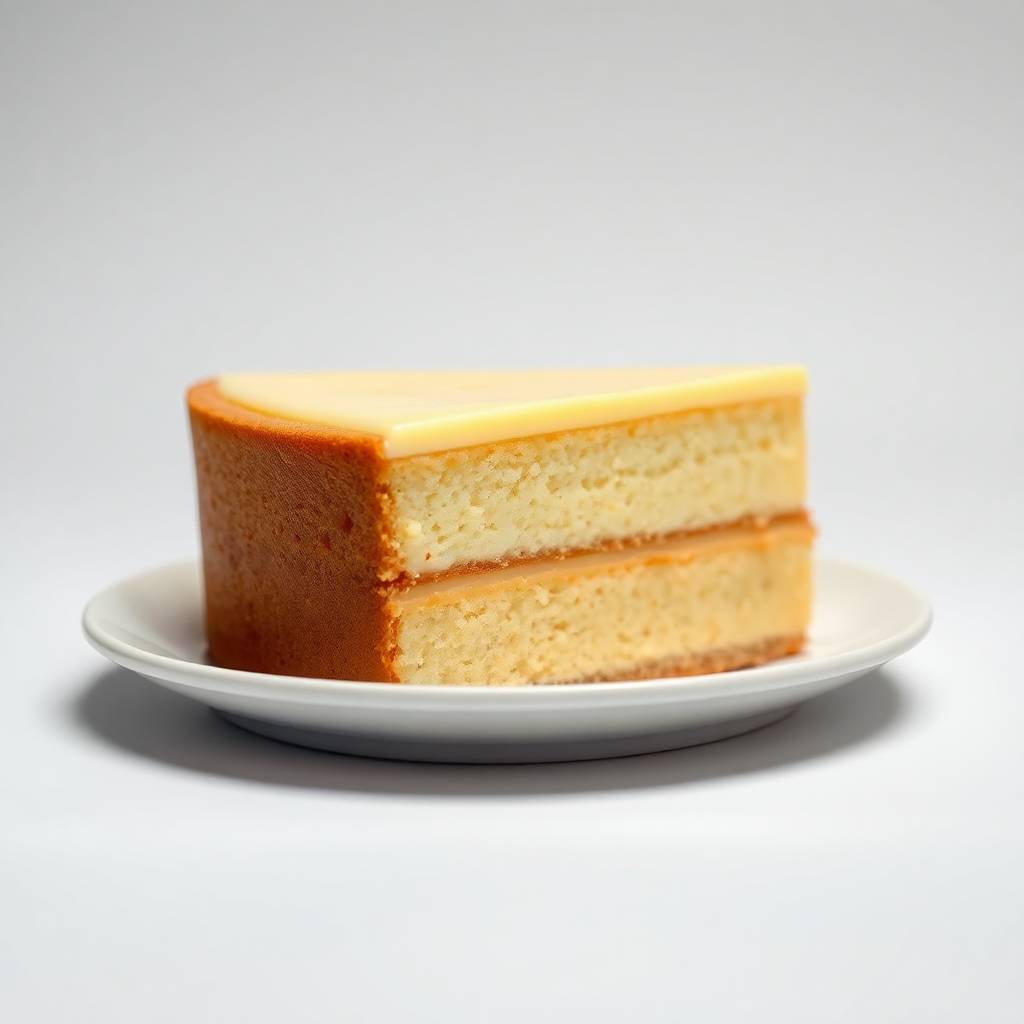
I've made a lot of lemon desserts over the years — lemon bars, lemon loaf, no-bake lemon cheesecake bars — but this lemon custard cake is the one that still surprises me every single time I pull it from the oven. You pour in one thin, slightly odd-looking batter, bake it at a low temperature, and somehow it separates into two completely different textures: a delicate sponge on top and a silky, wobbly custard underneath. I didn't fully believe it would work until I cut into my first one.
What makes this recipe work isn't magic — it's physics. The egg whites you fold in are lighter than the rest of the batter, so they float to the top and bake into a sponge while the heavier custard layer sinks and sets below. Understanding that actually helped me stop messing it up. My first two attempts, the layers didn't separate properly because I overwhipped my egg whites into dry, clumpy peaks and then folded too aggressively. Once I learned to stop at stiff-but-still-glossy and fold in three gentle passes, it worked every time.
My husband is not normally a cake person — he's more of a biryani-and-done kind of man — but he went back for a second slice of this one without saying a word, which in our house counts as a rave review. Zainab loves it cold straight from the fridge the next morning, which honestly I think is the best way to eat it too. It firms up nicely overnight and the custard layer gets even creamier.
One thing to set your expectations on: this cake is very soft and custardy in the middle. It won't slice like a dense pound cake. Use a thin spatula and don't rush it — let it cool fully before you cut in. If you try to slice it warm, you'll end up with a beautiful mess. Tasty, but messy.
Why You'll Love This Recipe
- One batter makes two textures: There's something genuinely satisfying about putting a single, thin batter into the oven and cutting into two distinct layers when it comes out. The sponge top is light and slightly springy; the custard bottom is smooth and creamy. It feels like you've done something clever, even though the chemistry does the work for you. My kids always want to watch me cut it because they like seeing the layers appear.
- Real lemon flavor throughout: Both the zest and the juice go into this batter, so the lemon isn't just a background note — it's the whole point. The custard layer especially carries a sharp, bright citrus flavor that balances the sweetness well. I've made this with bottled lemon juice in a pinch and it's noticeably flatter in taste. Fresh lemons are worth it here.
- No frosting, no fuss: A dusting of powdered sugar is all this needs. I've served it with a spoonful of whipped cream on the side for company and it looks like I put in way more effort than I did. If you've been intimidated by fancy layer cakes with elaborate frosting, this is a good one to start with — the presentation comes from the cake itself.
- Make it the day before: This cake is genuinely better on day two. The custard sets more firmly overnight in the fridge, the sponge softens slightly, and everything tastes more cohesive. I make it the evening before any time I'm having people over, which takes the pressure off the day entirely.
- Light enough after a big meal: This isn't a heavy, dense cake. The custard layer is more like a baked lemon pudding than a thick cheesecake, and the sponge layer is almost soufflé-like. After a big dinner, it lands well — you're not handing someone a brick of chocolate cake at the end of a meal.
Ingredients
- ½ cup unsalted butter, melted and slightly cooled
- 1 cup granulated sugar
- 4 large eggs, separated
- 1 tablespoon lemon zest (from about 2 lemons)
- ⅓ cup fresh lemon juice (from about 2–3 lemons)
- ¾ cup all-purpose flour
- 1½ cups milk, warmed to lukewarm (not hot)
- ¼ teaspoon salt
- Powdered sugar, for dusting
Directions
- Preheat the oven: Set your oven to 325°F (160°C). Grease an 8x8-inch baking dish well. I also line mine with parchment paper for clean lifting — this cake is soft and you'll thank yourself later when you don't have to dig it out.
- Beat the egg yolks and sugar: In a large bowl, beat the egg yolks and sugar together until the mixture is pale and slightly thickened — about 2 minutes by hand. Add the melted butter, lemon zest, and lemon juice and mix until combined. The lemon juice will loosen it up; that's fine.
- Add the flour and milk: Sift in the flour and salt, then gradually whisk in the warmed milk. The batter will be very thin and runny — this is correct and it's what allows the layers to form. Don't let the thinness worry you.
- Whip the egg whites: In a separate, completely clean bowl, beat the egg whites until they form stiff, glossy peaks. Dry and crumbly peaks means you've gone too far — you want them firm but still shiny. Any trace of yolk or grease in the bowl will prevent them from whipping properly.
- Fold the egg whites into the batter: Add the egg whites in three additions, folding gently each time with a spatula. The batter will look lumpy and streaky — that's expected. Stop folding the moment you don't see large white clumps. Overmixing deflates the whites and you lose your layers.
- Bake: Pour the batter into the prepared dish and place it in the oven. Bake for 45–50 minutes, until the top is lightly golden and the center has just a slight jiggle when you gently shake the pan. It should not be liquid-sloshy, but a small wobble in the center is fine — that's your custard layer setting.
- Cool completely before slicing: Let the cake cool to room temperature, then refrigerate for at least 1–2 hours before slicing. Dust with powdered sugar just before serving. A thin spatula or fish slice helps get clean pieces out.

Tips for Success
- Warm your milk before adding it: Cold milk added to the butter-and-sugar base can cause the butter to seize and the batter to go lumpy. I warm mine in the microwave for about 45 seconds — just enough to take the chill off, not hot. This small step keeps the batter smooth and helps the custard layer form correctly during baking.
- Stop whipping your egg whites at glossy stiff peaks: I overwhipped mine the first time I made this and ended up with dry, cottage-cheese-like whites that didn't fold in smoothly. Glossy and stiff is the target — they should hold their shape when you lift the beaters but still look smooth and shiny, not dry. A hand mixer on medium-high gets you there in about 3 minutes.
- Don't skip the three-addition folding method: Adding all the egg whites at once and stirring them in is the fastest way to kill the airy structure you just built. I add them in three additions — first loosens the batter a bit, second incorporates most of the whites, third finishes it off with the lightest touch. The whole folding process takes about 90 seconds and it makes a real difference.
- Use a water bath if your oven runs hot: My oven is not perfectly calibrated and the first time I made this it cracked on top and the custard layer was grainy instead of silky. Placing the baking dish inside a larger roasting pan with an inch of hot water in it insulates the custard and keeps it from curdling. It's an extra step but worth it if your oven tends to run high.
- Chill before slicing — no shortcuts: I know it's tempting to cut in while it's still warm because it smells incredible. But the custard layer needs time to firm up or your slice will collapse into a puddle. Room temperature first, then at least an hour in the fridge. The texture after chilling is completely different — cleaner, silkier, easier to plate.
Variations
- Lime custard cake: Swap the lemon zest and juice for the same quantities of fresh lime. The flavor is sharper and more tropical — almost like a key lime version of this cake. I've made it this way in summer when I had limes sitting around and no lemons, and it was genuinely great. Top with a little toasted coconut if you're going that direction.
- Orange custard cake: Use fresh orange zest and juice for a sweeter, softer citrus flavor. Blood orange works beautifully here if you can find it — the color of the custard turns a pale blush. This version is slightly less tart than the lemon, which makes it a good option if you're serving it to kids who find lemon too sharp.
- Coconut lemon version: Stir 3–4 tablespoons of unsweetened shredded coconut into the batter before folding in the egg whites. It adds a subtle chew and a tropical note that pairs really well with the lemon. If you enjoy the coconut cloud cake I posted a while back, you'll love this combination.
- Dairy-free version: I've tested this with full-fat oat milk and it works reasonably well — the custard layer is slightly less firm but still forms. Use plant-based butter in the same quantity. Almond milk is thinner and gives a less creamy custard, so I'd go for oat or full-fat coconut milk if you want the best result.
- Mini individual cakes: Divide the batter between 6 greased ramekins and reduce the bake time to about 28–32 minutes. Individual portions are easier to serve at a dinner party and everyone gets their own clean custard layer. I dust each one separately just before serving, which looks nice on the table.
Serving and Storage
Serving
Serve this cake cold or at room temperature — both work, but I prefer it cold. Dust with powdered sugar right before serving so it doesn't absorb into the surface. A spoonful of lightly whipped cream alongside is a nice touch, or a handful of fresh raspberries or blueberries if you have them. In Pakistan we don't really have a custard cake tradition, so I just serve this as a Western-style dessert after a meal — but it also works well as part of a brunch spread. Cut it with a thin, sharp knife and use a flat spatula to lift the pieces out cleanly.
Storage
Cover the dish with plastic wrap or transfer leftovers to an airtight container and refrigerate. It keeps well for up to 3 days, though the texture is best within the first two. I don't recommend freezing this one — the custard layer goes grainy and watery when thawed, and it's not worth it. Since it comes together in about an hour from start to finish, I'd rather just make a fresh one.
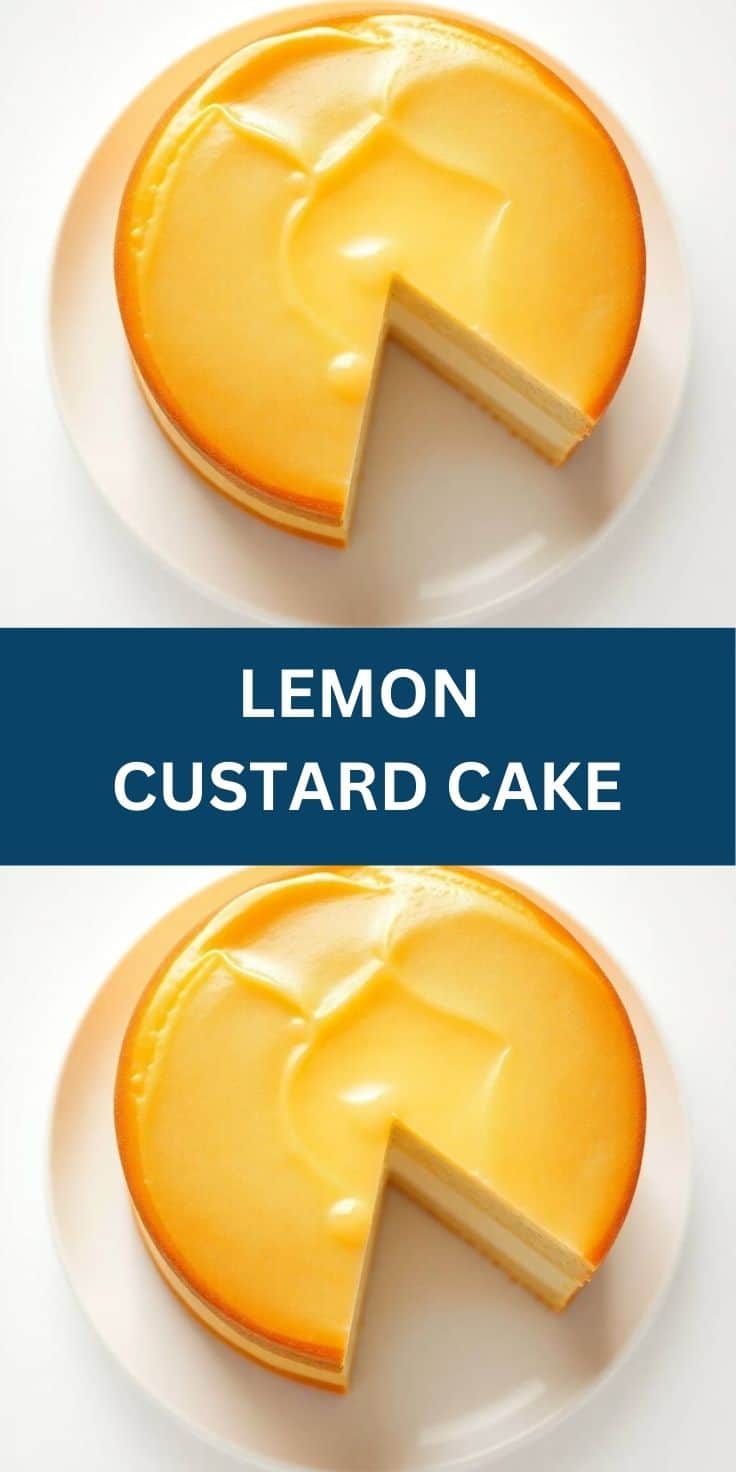
Frequently Asked Questions
Why didn't my cake form two separate layers?
This usually comes down to one of three things: egg whites that were over or underwhipped, milk that was too cold, or folding too aggressively. The batter needs the egg whites intact and airy to float to the top. Make sure your milk is lukewarm, your whites are at stiff glossy peaks, and your folding is gentle. Also check that your oven isn't running too hot — too high a temperature can cook everything together before the layers have time to separate.
Can I make this cake the day before?
Yes, and I actually recommend it. The custard layer firms up nicely overnight in the fridge and the whole cake tastes more cohesive the next day. Just hold off on dusting the powdered sugar until right before you serve it — if you add it the night before, it soaks in and disappears.
Can I freeze lemon custard cake?
I wouldn't. The custard layer has a high egg and milk content, which means it turns grainy and releases water when frozen and thawed. It's still technically edible but the texture suffers noticeably. This cake keeps well in the fridge for 3 days, so I'd just plan to eat it fresh rather than freeze it.
What can I use instead of fresh lemon juice?
Fresh is really better here — bottled lemon juice is more acidic and lacks the brightness that makes this cake taste the way it should. That said, if you're in a pinch, bottled will work. What you can't substitute is the zest — please don't skip it. The zest carries the essential oils that give the cake its punchy lemon aroma, and without it the flavor falls flat even with plenty of juice.
Can I reduce the sugar in this recipe?
You can reduce it slightly — maybe down to ¾ cup — without wrecking the structure. The sugar does more than sweeten here; it helps balance the tartness of the lemon, and it plays a small role in the custard texture. I wouldn't go below ¾ cup or you'll find the cake quite sharp and the custard slightly looser than ideal.
LEMON CUSTARD CAKE
Ingredients
- ½ cup unsalted butter melted and cooled
- 1 cup granulated sugar
- 4 large eggs separated
- 1 tablespoon lemon zest
- ⅓ cup fresh lemon juice
- ¾ cup all-purpose flour
- 1 ½ cups milk warmed
- ¼ teaspoon salt
- Powdered sugar for dusting
Instructions
Preheat the Oven:
- Preheat oven to 325°F (160°C). Grease an 8x8-inch baking dish and set aside.
Prepare Egg Yolks:
- In a large bowl, beat the egg yolks and sugar until light and fluffy. Add the melted butter, lemon zest, and lemon juice, mixing until combined.
Mix the Batter:
- Sift in the flour and salt. Gradually add the warmed milk, whisking until the batter is smooth and thin.
Whip Egg Whites:
- In a separate clean bowl, beat the egg whites until stiff peaks form. Gently fold the egg whites into the lemon batter in three additions.
Bake:
- Pour the batter into the prepared dish. Bake for 45–50 minutes, until the top is lightly golden and the centre still has a slight jiggle.
Cool and Serve:
- Allow the cake to cool completely before dusting with powdered sugar. Slice and serve.
Notes
Bake the cake a day in advance and refrigerate. Dust with powdered sugar just before serving. Customizing the Flavour:
For a twist, add a bit of vanilla extract or a splash of orange juice along with the lemon. Serving Suggestions:
Serve chilled or at room temperature, topped with fresh berries or a dollop of whipped cream. Allergy-Friendly Options:
Use a dairy-free milk substitute, like almond milk, and plant-based butter for a dairy-free version. Storage Tips:
Store covered in the refrigerator for up to 3 days. Best enjoyed within the first two days for the creamiest texture.
This lemon custard cake has become one of those recipes I come back to a few times a year — whenever I want something that feels a little special without requiring a full afternoon in the kitchen. It takes about 15 minutes of active work and then the oven does everything interesting. I've brought it to two different friends' houses and been asked for the recipe both times, which is honestly the best review I can give anything.
The thing I keep appreciating about it is how honest the flavor is. It tastes like lemons because there are a lot of lemons in it. The custard layer is rich from the egg yolks and butter. The sponge is light because of the egg whites. Nothing is masked or overloaded. It's a simple formula that works cleanly, and once you understand why each step matters, you can make it without even looking at the recipe. If you're on a lemon dessert run, my no-bake lemon cheesecake bars are another good one to have in the rotation — different texture entirely, but the same bright citrus payoff.
If you make this, chill it properly, dust it right before serving, and cut with a thin knife. It'll hold together better than you expect. 🍋✨
If you liked this recipe, here are a few more from the site you might want to try next:
- No-Bake Lemon Cheesecake Bars — creamy, bright, and no oven required
-
{"@context":"https://schema.org","@type":"Article","headline":"LEMON CUSTARD CAKE","description":"This Lemon Custard Cake is light, fluffy, and bursting with bright citrus flavour, making it a perfect refreshing dessert anytime!","datePublished":"2025-04-28T10:43:29+00:00","dateModified":"2026-05-04T03:54:16+00:00","author":{"@type":"Person","name":"Sana Umer","url":"https://forfoodiefriends.com/about/","description":"Self-taught home cook with 10+ years of kitchen experience. Mom of two who develops every recipe in her own kitchen.","jobTitle":"Recipe Developer & Food Blogger","image":"https://forfoodiefriends.com/wp-content/uploads/sana-umer-author-photo.jpg"},"publisher":{"@type":"Organization","name":"For Foodie Friends","url":"https://forfoodiefriends.com/","logo":{"@type":"ImageObject","url":"https://forfoodiefriends.com/wp-content/uploads/forfoodiefriends-logo.png"}},"mainEntityOfPage":{"@type":"WebPage","@id":"https://forfoodiefriends.com/lemon-custard-cake/"},"image":"https://forfoodiefriends.com/wp-content/uploads/2025/04/LEMON-CUSTARD-CAKE.jpg"}



Comments
No Comments