
My husband doesn't really love sweet breads — except for this one. Every Easter for the past three years, he's stood in the kitchen watching me braid the dough and asked if it was almost done. Pane di Pasqua is an Italian Easter tradition, but in my house it's become our tradition, and honestly I think the colorful eggs nestled into the braid are half the reason the kids care about it at all.
What makes this bread different from regular enriched dough is the double citrus zest — both lemon and orange — which gives it this warm, fragrant quality you notice the second it comes out of the oven. The dough itself is soft and a little pillowy, somewhere between a brioche and a dinner roll in texture. It's not too sweet, which means it works with butter and jam at breakfast just as well as it works on its own.
I'll be honest: this isn't a quick weeknight recipe. There are two rises and a braiding step, so plan for a few hours from start to finish. I usually make it the morning of Easter Sunday while everyone is still in pajamas — the first rise happens while we're having tea, and by the time we're dressed it's ready to shape. If you want to get ahead, I've got a make-ahead option in the FAQ below. If you enjoy baking for holidays, you might also like my Dutch Christmas Stollen — a similar enriched holiday bread that's worth bookmarking for December.
One thing I want to flag before you start: the dyed eggs go in raw and cook inside the bread. I know that sounds odd the first time you read it. It works. I'll explain more in the tips section, but just trust the process — those eggs come out fully cooked and look absolutely beautiful in the finished loaf.

Why You'll Love This Recipe
- The dough is genuinely soft: The combination of eggs, butter, and warm milk produces a crumb that stays tender even the next day. I was surprised the first time I sliced into a day-old loaf and it still pulled apart like fresh bread. The enriched dough is forgiving — it doesn't go stale fast, which matters when you're making something this involved.
- It looks like it came from a bakery: The braid alone is already impressive. Add five colorful eggs and a scatter of sprinkles and suddenly you have something that looks like it took professional skill. I've brought this to Easter gatherings twice and both times people asked if I bought it.
- Dyeing the eggs is a family activity: Zainab has helped me dye the eggs for this bread since she was four. We use the little fizzy dye tablets from the grocery store — nothing fancy. She picks the colors and takes it very seriously. By the time the bread comes out of the oven she feels like she made it herself, which I love.
- It works for breakfast or dessert: With butter and tea it's a perfectly reasonable Easter morning breakfast. With a drizzle of powdered sugar glaze it tips into dessert territory. Either way it doesn't need much — the citrus and vanilla in the dough carry it.
- You can make the dough the night before: After the first rise, you can refrigerate the shaped dough overnight and bake it in the morning. I've done this twice and it worked well both times. Cold fermentation actually improves the flavor slightly — the citrus comes through more clearly.
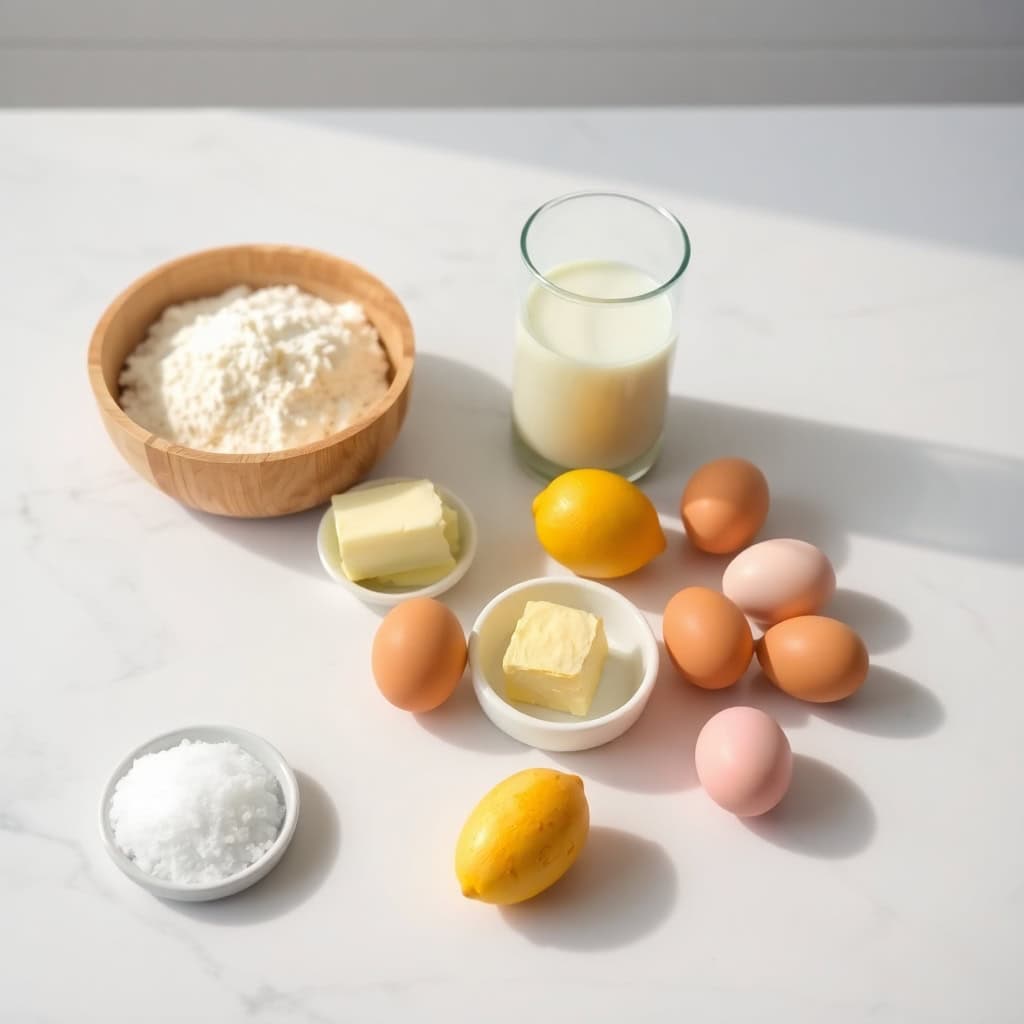
Ingredients
- For the Dough:
- 3½ cups all-purpose flour (plus a little more for kneading)
- ½ cup granulated sugar
- 1 packet (2¼ teaspoons) active dry yeast
- ½ teaspoon salt
- ⅔ cup warm milk, about 110°F (not hot — warm to the touch)
- 2 large eggs
- ¼ cup unsalted butter, melted and slightly cooled
- 1 teaspoon vanilla extract
- 1 teaspoon lemon zest (from about half a lemon)
- 1 teaspoon orange zest (from about half an orange)
- For Decoration:
- 3–4 dyed raw eggs (uncooked — they bake inside the bread)
- 1 tablespoon milk (for brushing the dough before baking)
- 2 tablespoons sprinkles (optional, but festive)
Directions
- Activate the yeast: Combine the warm milk and yeast in a small bowl and let it sit for 5–10 minutes. You're looking for it to go frothy and puffy — that tells you the yeast is alive. If nothing happens after 10 minutes, your milk was too hot or the yeast is old. Start over with fresh yeast before you go any further.
- Mix the dough: In a large bowl, whisk together the flour, sugar, and salt. Add the yeast mixture, eggs, melted butter, vanilla, lemon zest, and orange zest. Stir until a shaggy, sticky dough forms. It will look rough at this stage — that's fine.
- Knead the dough: Turn the dough out onto a lightly floured surface and knead for 8–10 minutes until it becomes smooth and elastic. If it's sticking badly to your hands, add flour one tablespoon at a time — but don't over-flour it. A slightly tacky dough makes softer bread than a dry one.
- First rise: Shape the dough into a ball, place it in a lightly greased bowl, and cover with a clean kitchen towel. Let it rise in a warm spot for 1 to 1½ hours, or until doubled in size. I put mine near the oven if I've been baking, or in an oven with just the light on — that gentle warmth is enough.
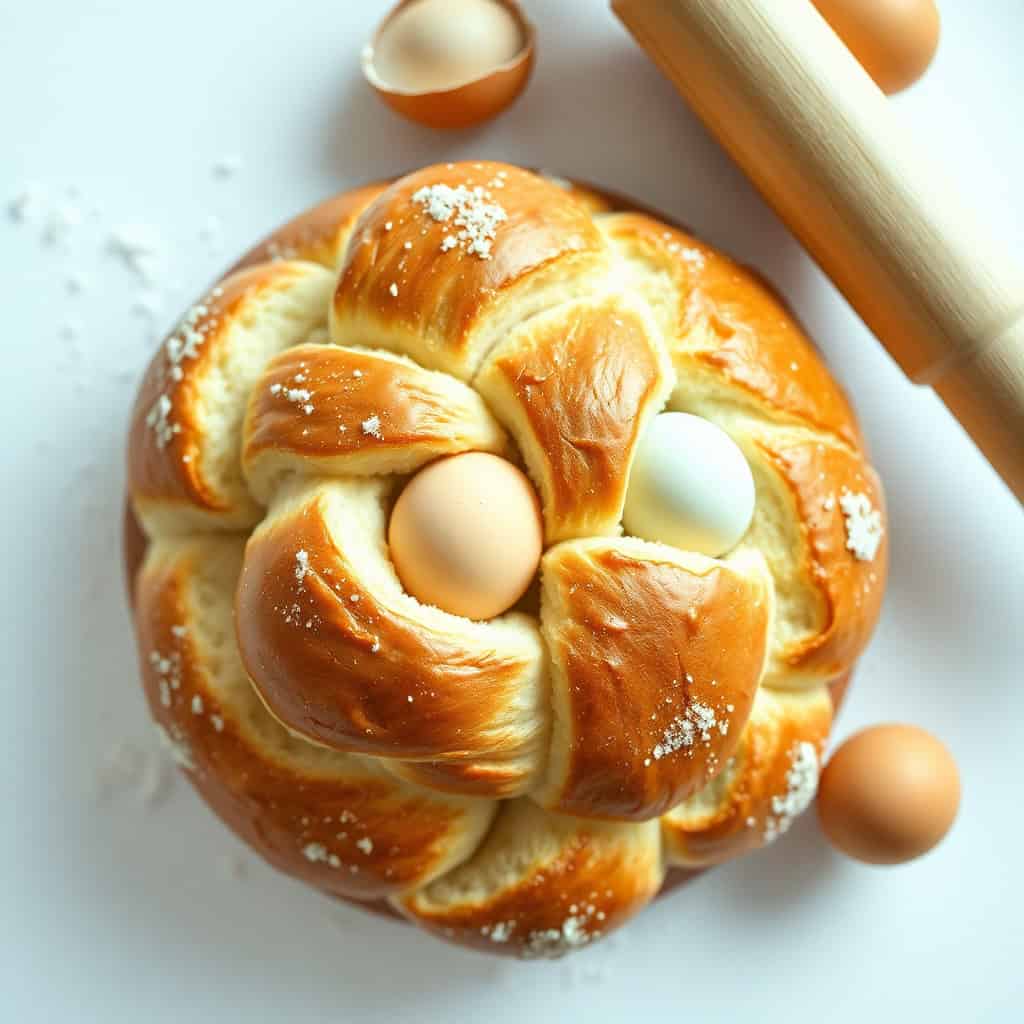
- Shape the braid: Punch down the risen dough and divide it into three equal pieces. Roll each piece into a rope about 18–20 inches long. Braid the three ropes together, then bring the ends around to form a wreath or ring shape and pinch them firmly to seal. Place the braid on a parchment-lined baking sheet.
- Tuck in the eggs: Gently press the dyed raw eggs into the gaps in the braid, spacing them evenly around the ring. They should sit nestled but not buried. Cover the shaped dough loosely and let it rise again for 30–45 minutes while you preheat the oven to 350°F (175°C).
- Brush and bake: Brush the risen dough all over with the tablespoon of milk — this gives it that golden color. If you're using sprinkles, scatter them on now and press them very gently so they stick. Bake for 25–30 minutes until the bread is deep golden brown all over.
- Cool before slicing: Transfer the bread to a wire rack and let it cool for at least 20 minutes before cutting. I know it's hard to wait. But if you cut into it too early the inside is still a little gummy. Give it time.
Tips for Success
- Check your milk temperature before adding the yeast: The first time I made an enriched dough like this, I killed the yeast with milk that was too hot. 110°F feels warm when you dip your wrist in — like bath water, not boiling. If you have a kitchen thermometer (I have a cheap one I use for candy and bread both), use it. If not, err on the side of cooler rather than hotter.
- Don't rush the rises: I tried to speed up the first rise once by putting the dough in a slightly warm oven. I set it too warm, the yeast died partway through, and the bread came out dense. Let the dough rise at its own pace. If your kitchen is cold, just give it more time — it will get there eventually.
- The raw eggs really do cook through: I get asked this every time I make this. Yes, the eggs go in raw. Yes, they are fully cooked by the time the bread comes out. At 350°F for 25–30 minutes, the eggs reach a safe internal temperature inside the bread. I tested this with a thermometer the first time because I was nervous too. They're fine.
- Make the ropes even length: When you roll your three dough pieces into ropes, try to get them close to the same length and thickness. If one rope is much thicker than the others, that section of the braid bakes unevenly. I weigh the dough pieces on a kitchen scale if I have the patience — three pieces of roughly the same weight makes a tidier braid.
- Press sprinkles in gently before baking: If you just scatter sprinkles on top without pressing them slightly into the milk-brushed dough, half of them roll off during baking or fall when you move the loaf. A light press with your fingertips is all it takes — they'll stay put.
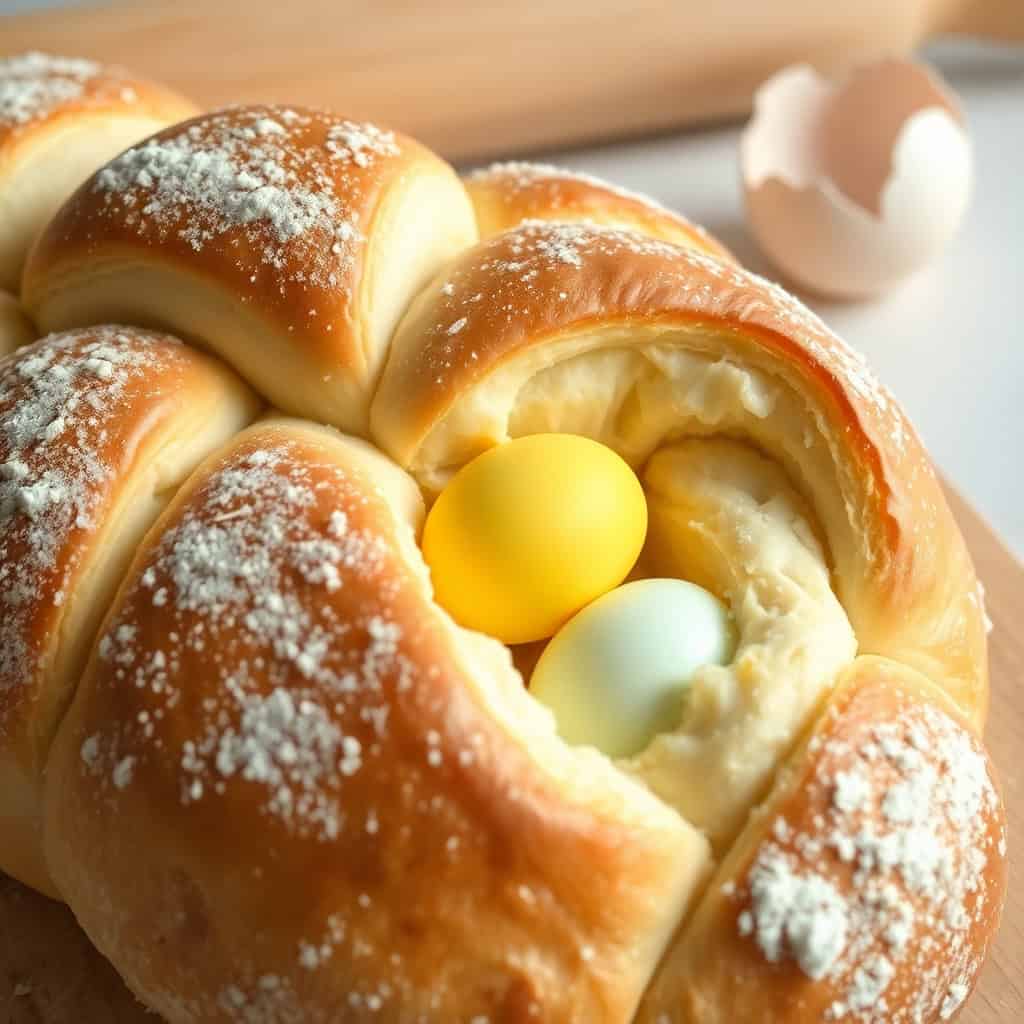
Variations
- Glazed Easter Bread: After the bread cools completely, mix 1 cup of powdered sugar with 2–3 tablespoons of milk until you get a pourable glaze, and drizzle it over the top. It adds sweetness and makes the bread look even more festive. My husband prefers it glazed. I prefer it plain. We make one of each when I have energy.
- Chocolate Chip Version: Fold ½ cup of mini chocolate chips into the dough just before the first rise. They distribute better than regular chips because they're small enough not to tear the dough structure. This version is Saad's request every year — he doesn't care about the eggs, he cares about the chocolate.
- Almond Easter Bread: Swap the vanilla extract for ½ teaspoon of almond extract and keep everything else the same. The almond flavor pairs really well with the citrus zest — it's a subtle change that makes the bread taste slightly more Italian bakery than homemade kitchen. A good option if you want something a little different.
- Mini Individual Rings: Instead of one large braided wreath, divide the dough into smaller portions and make 4–5 individual rings. Tuck one egg into each. These work well if you're giving this as an Easter gift or if you have young kids who want their own personal bread ring. Reduce the bake time to about 18–20 minutes and watch the color carefully.
- Skip the egg decoration: If you just want a beautiful braided sweet bread without the Easter egg element — maybe for a spring brunch that isn't specifically Easter — leave the eggs out entirely. Brush generously with milk, top with pearl sugar instead of sprinkles, and bake as written. It's a lovely everyday bread that way. Similar in spirit to my Pie Crust Cinnamon Rolls — different technique, same cozy energy.
Serving and Storage
Serving
Serve this bread slightly warm or at room temperature. It's good on its own, better with salted butter, and excellent with a good strawberry jam. For Easter brunch I put it in the center of the table whole and let people tear pieces off — it makes more of a moment that way than slicing it in the kitchen. It goes well with tea or coffee in the morning, and if you've glazed it, it holds up as a dessert alongside fresh fruit.
Storage
Keep leftovers in an airtight container at room temperature for up to 3 days. After that it starts to dry out, but a 10-second warm in the microwave with a damp paper towel over it brings it back nicely. For longer storage, wrap individual slices tightly in plastic wrap and freeze for up to 2 months. Thaw at room temperature or warm gently in a 300°F oven for about 8 minutes. Note that the baked eggs don't freeze particularly well in texture — if you're planning to freeze most of it, remove the eggs before freezing and slice around them.

Frequently Asked Questions
Do I have to boil the eggs before putting them in the bread?
No — the eggs go in completely raw and cook during baking. The bread bakes at 350°F for 25–30 minutes, which is more than enough time to fully cook the eggs through. I know it feels counterintuitive, but this is how traditional Pane di Pasqua has always been made. The eggs come out with a fully set white and yolk.
Can I make the dough the night before?
Yes, and it actually works really well. After the first rise, punch down the dough, shape the braid, press in the eggs, then cover the whole thing tightly with plastic wrap and refrigerate overnight. The next morning, take it out and let it come to room temperature and complete its second rise — about 45 minutes to an hour depending on how cold your kitchen is — then bake as directed.
My dough isn't rising. What went wrong?
Almost always it's the yeast. Either the milk was too hot and killed it, or the yeast was old and inactive. Before you add the yeast to the dough, make sure it foamed up in the warm milk after 5–10 minutes — that's your signal it's alive. If it didn't foam, don't continue. Get fresh yeast and try the activation step again with cooler milk.
Can I use bread flour instead of all-purpose flour?
You can, and it gives the bread a slightly chewier, more structured texture. All-purpose flour produces a softer, more pillowy crumb which I personally prefer for this bread. If you only have bread flour, go ahead and use it — the recipe works fine either way, the texture is just a little different.
Can I freeze Easter Bread?
Yes — freeze slices wrapped tightly in plastic wrap for up to 2 months. I'd recommend removing the baked eggs before freezing since their texture changes a bit after thawing. The bread itself freezes and reheats well. Warm slices in a 300°F oven for about 8 minutes or just let them thaw at room temperature for an hour.
EASTER BREAD (PANE DI PASQUA)
Ingredients
For the Dough:
- 3 ½ cups all-purpose flour
- ½ cup granulated sugar
- 1 packet 2 ¼ teaspoons active dry yeast
- ½ teaspoon salt
- ⅔ cup warm milk about 110°F/43°C
- 2 large eggs
- ¼ cup unsalted butter melted
- 1 teaspoon vanilla extract
- 1 teaspoon lemon zest
- 1 teaspoon orange zest
For Decoration:
- 3-4 dyed raw eggs uncooked, as they bake in the oven
- 1 tablespoon milk for brushing
- 2 tablespoons sprinkles optional
Instructions
Step No.1: Activate the Yeast
- In a small bowl, combine warm milk and yeast. Let it sit for 5-10 minutes until it becomes frothy.
Step No.2: Mix the Dough
- In a large bowl, whisk together flour, sugar, and salt. Add the yeast mixture, eggs, melted butter, vanilla, lemon zest, and orange zest. Mix until a sticky dough forms.
Step No.3: Knead the Dough
- Transfer the dough to a lightly floured surface and knead for 8-10 minutes until smooth and elastic. If the dough is too sticky, add a little more flour, one tablespoon at a time.
Step No.4: First Rise
- Place the dough in a greased bowl, cover it with a kitchen towel, and let it rise in a warm place for 1-1.5 hours or until it doubles in size.
Step No.5: Shape the Bread
- Punch down the dough and divide it into three equal pieces. Roll each piece into a long rope and braid them together. Form the braid into a circle or wreath shape and pinch the ends together.
Step No.6: Second Rise
- Place the braided dough on a parchment-lined baking sheet. Gently press the dyed eggs into the dough. Cover and let it rise again for 30-45 minutes.
Step No.7: Bake the Bread
- Preheat the oven to 350°F (175°C). Brush the dough with milk and sprinkle with sprinkles if using. Bake for 25-30 minutes until golden brown.
Step No.8: Cool and Serve
- Let the bread cool on a wire rack. Slice and enjoy this soft and slightly sweet Easter Bread with butter or jam!
Notes
- Raw Eggs are Safe: The dyed eggs will cook in the oven while the bread bakes.
- Soft Texture: For an extra soft texture, use bread flour instead of all-purpose flour.
- Storage: Store in an airtight container at room temperature for 2-3 days or refrigerate for up to a week.
- Chocolate Chip Easter Bread: Add ½ cup mini chocolate chips to the dough.
- Almond Easter Bread: Stir in ½ teaspoon almond extract for a nutty flavor.
- Glazed Easter Bread: Drizzle with powdered sugar glaze after baking.
- Coconut Easter Bread: Sprinkle shredded coconut on top before baking.



Comments
No Comments