
The soup that has been warming homes and feeding families for generations — the one that fills the kitchen with the most deeply comforting aroma of slow-simmered vegetables and smoky ham, the one that thickens from a thin vegetable broth into a rich, velvety, almost porridge-like consistency over ninety unhurried minutes on the stovetop, the one that tastes better the next day than the day it was made — is this classic split pea soup: green split peas dissolved into a silky, herb-seasoned broth with tender carrots, celery, onion, and garlic, enriched with smoky ham, and finished into the most deeply satisfying bowl of comfort food available from a handful of inexpensive pantry ingredients.
What makes split pea soup genuinely remarkable is the transformation that happens during the long, low simmer — the dried split peas dissolve almost completely into the broth, thickening it from within and producing a naturally creamy texture without any cream, butter, or blending required. The ham bone (or diced smoked ham) infuses the entire pot with a deep, woodsy smokiness that carries through every spoonful and turns a simple vegetable soup into something that tastes slow-cooked and intentional. Every ingredient in this soup exists in service of the final bowl, and nothing is wasted.
This post covers the classic split pea soup in full detail — stovetop method, slow cooker adaptation, blending technique — plus four variations including a vegetarian version, a spicy version, an herbaceous upgrade, and a chunky vegetable version. All versions freeze beautifully for up to 3 months. Find more soup inspiration in our ham and bean soup, our best homemade potato soup, and our fall soup recipes.
Let's make the most comforting, most satisfying bowl of split pea soup your kitchen has ever produced!
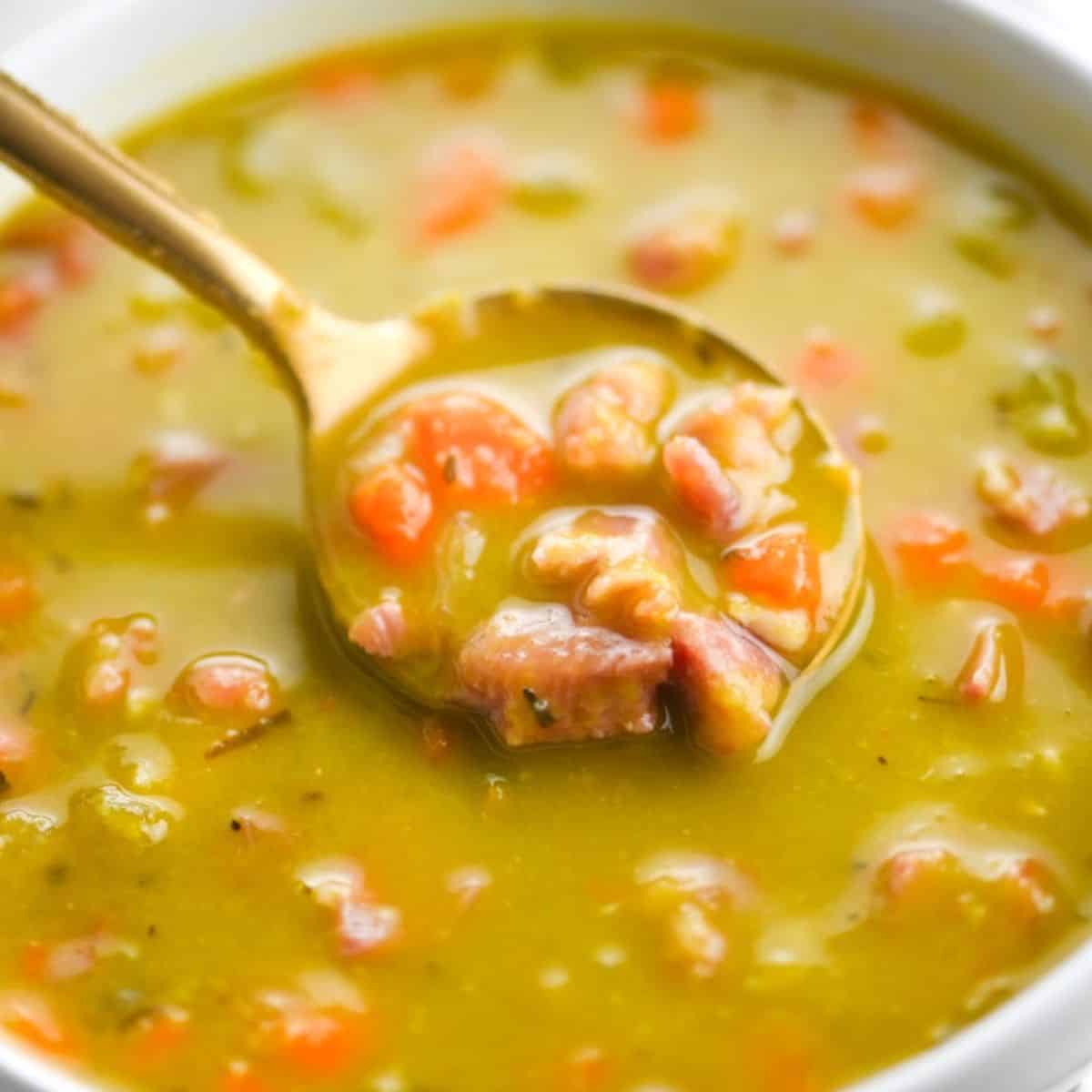
WHY YOU WILL LOVE THIS RECIPE
- Split Peas Thicken the Broth Naturally — No Cream or Thickener Needed: One of the most remarkable things about split pea soup is that it requires absolutely no cream, no flour roux, no cornstarch, and no blending to achieve its characteristic thick, velvety consistency. The split peas dissolve almost completely during the long simmer, releasing their starch directly into the broth and thickening it from within into a naturally creamy texture that is rich and satisfying without being heavy. This natural thickening means the soup is both lighter in calories than cream-based soups and genuinely more satisfying than thinner broths — a genuinely remarkable combination.
- Better Every Day — the Ultimate Make-Ahead and Leftover Soup: Split pea soup is one of the most reliably improving soups available — on the day it is made the flavor is good; on the second day after refrigeration the flavors have melded together into something significantly more complex, the smokiness of the ham has deepened and permeated every spoonful, and the soup has thickened further as the split peas continue to absorb the broth overnight. The third-day version of split pea soup is often the best of all. I regularly make this soup specifically to eat it across 3–4 days throughout the week, knowing that each bowl will be better than the last.
- One of the Most Budget-Friendly Filling Meals Available: Dried split peas are among the least expensive ingredients available in any supermarket — a one-pound bag costs very little and produces 6 generous servings of a soup that is genuinely filling as a complete meal. Combined with vegetables, a ham bone or a small amount of diced ham, and broth, the total cost of a full pot of split pea soup that feeds a family of six is remarkably low. This is the soup I make at the end of the month when the grocery budget is tight, and it always produces results that feel genuinely indulgent despite the minimal investment.
- Hands-Off Cooking After the First 10 Minutes: Beyond the initial 10 minutes of sautéing the aromatics and adding the remaining ingredients, split pea soup requires almost no active attention — it simmers covered over low heat for 60–90 minutes with nothing required from the cook beyond an occasional stir. This hands-off cooking time makes it ideal for a Sunday afternoon when you want to be home but not standing over the stove — put the soup on, do whatever else needs doing, and come back to a fully cooked, spectacular pot of soup. See our easy meal prep ideas for more low-effort, high-reward cooking ideas.
- Works in a Slow Cooker for Completely Hands-Free Preparation: The same split pea soup that requires 90 minutes of stovetop simmering can be made in a slow cooker with 6–8 hours on Low or 4–5 hours on High — combine all the ingredients in the slow cooker insert in the morning, set it to Low, and come home to a fully cooked, deeply flavored pot of soup that has been cooking all day without requiring any attention whatsoever. The slow cooker version produces an even more deeply infused flavor than the stovetop version since the extended cooking time allows more thorough melding of the ham, peas, and aromatics.
- Freezer-Friendly — Cook Once, Eat for Months: Split pea soup freezes perfectly for up to 3 months. The starch from the dissolved peas keeps the soup stable through freezing and thawing without any separation or textural degradation. I regularly make a double batch specifically to freeze half — individual frozen portions of split pea soup represent some of the best freezer meals available, producing a complete, warming, nourishing dinner from 10 minutes of reheating any day of the week. See our best freezer meals for more freezer inspiration.
INGREDIENTS
- 1 lb (450g) dried green split peas, rinsed
- 1 tablespoon olive oil
- 1 medium onion, diced
- 2 carrots, diced
- 2 celery stalks, diced
- 3 cloves garlic, minced
- 6 cups chicken or vegetable broth
- 1 ham bone or 2 cups diced smoked ham (optional but highly recommended)
- 1 bay leaf
- 1 teaspoon dried thyme
- Salt and black pepper, to taste
DIRECTIONS
- Step No.1: Rinse the split peas and prepare ingredients
Place the dried split peas in a fine-mesh strainer and rinse under cold running water, stirring with your hand, until the water runs clear — approximately 60 seconds. The rinsing removes surface starch and any dust or debris from processing and ensures the soup develops a clean, clear-tasting broth rather than a cloudy or slightly bitter one. Unlike dried beans, split peas do not need to be soaked before cooking — they soften and dissolve completely during the simmer without any pre-soaking. While the peas drain, dice the onion, carrots, and celery into roughly equal ½-inch pieces and mince the garlic.
- Step No.2: Sauté the aromatics
Heat the olive oil in a large, heavy-bottomed pot or Dutch oven over medium heat until it shimmers. Add the diced onion, carrots, and celery and cook, stirring occasionally, for 5–6 minutes until the vegetables have softened and the onion is translucent. Add the minced garlic and cook for 1 minute more, stirring continuously — garlic burns quickly at this stage and must be watched carefully. Taking the full time to soften the aromatics properly builds a more flavorful soup base; a rushed 2-minute sauté produces a noticeably thinner, less developed flavor in the finished soup compared to a full 6-minute sauté.
- Step No.3: Add the remaining ingredients
Add the rinsed split peas, broth, ham bone (or diced ham), bay leaf, and dried thyme to the pot. Stir everything together to combine, scraping up any browned vegetable bits from the bottom of the pot — those caramelized bits are concentrated flavor and dissolving them into the broth adds depth. Bring the mixture to a full boil over medium-high heat, then immediately reduce the heat to low.
- Step No.4: Simmer low and slow
Cover the pot partially — leave a small gap to allow steam to escape — and simmer over low heat for 60–90 minutes, stirring every 15–20 minutes. During the first 30 minutes the soup will look thin and the peas will still be distinct and whole; during the next 30 minutes the peas will begin to dissolve and the broth will start thickening noticeably; by 60–90 minutes the peas should have dissolved almost completely into the broth and the soup should be thick, creamy, and deeply fragrant. The exact time depends on the age and specific variety of your split peas — older split peas from a bag that has been in the pantry for more than a year may take the full 90 minutes or slightly longer.
- Step No.5: Finish and serve
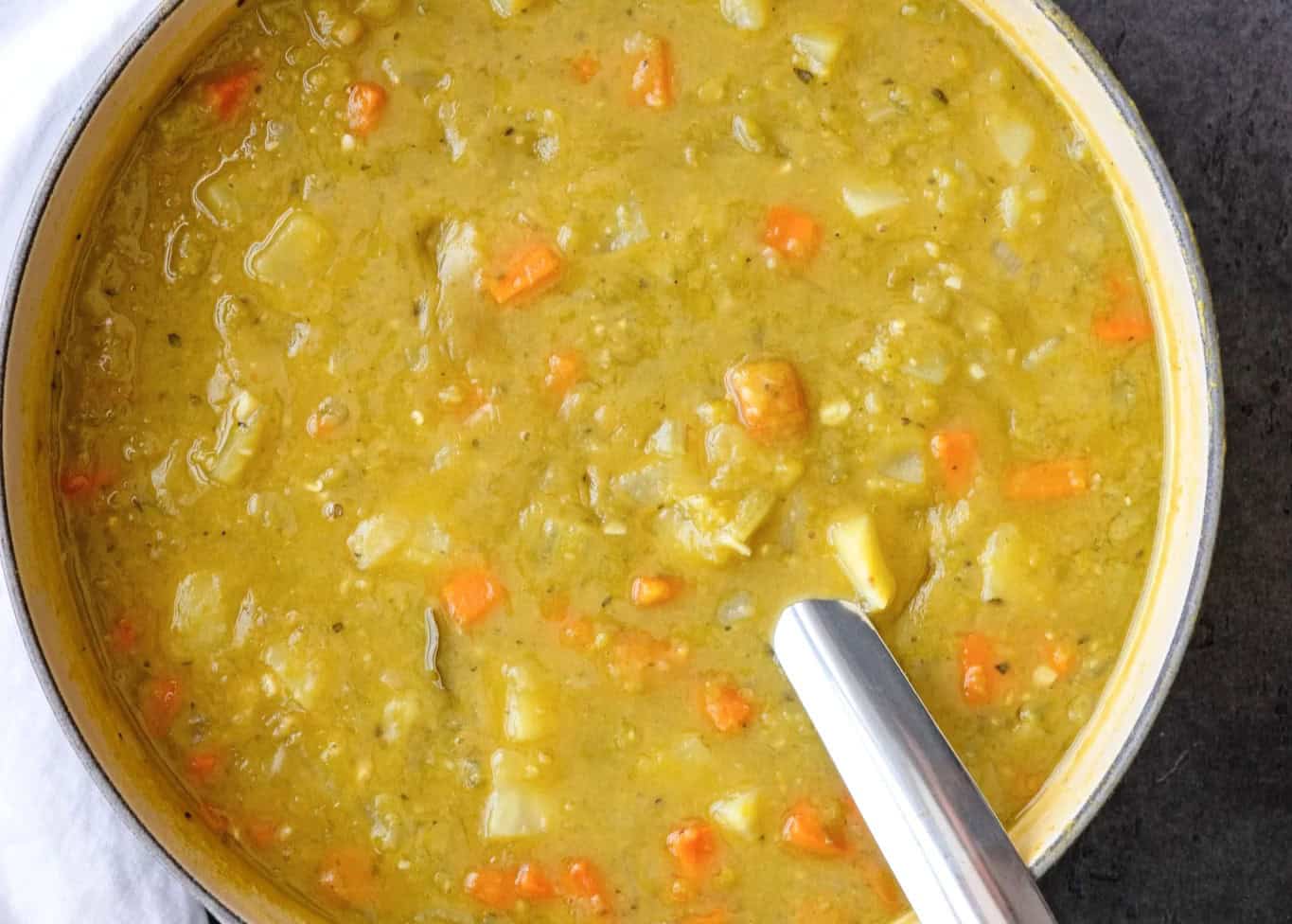
Remove and discard the bay leaf. If you used a ham bone, use tongs to lift it from the soup, shred any tender meat remaining on the bone with two forks, and stir the shredded ham back into the pot. Taste the soup and adjust the salt and pepper — remember that the ham and broth have already contributed salt, so season conservatively and taste after each addition. For a completely smooth, creamy soup, use an immersion blender to blend the entire pot until silky; for a partially smooth version with some texture, blend approximately half the soup and stir back in; for a naturally chunky version, leave it unblended and enjoy the whole pieces of vegetables against the thick, pea-enriched broth. Ladle into warm bowls and serve with crusty bread.
TIPS FOR SUCCESS
- Always Rinse the Split Peas Before Cooking: Rinsing removes surface starch and any debris from processing and is the difference between a clear-tasting, clean-flavored broth and one that is slightly murky or bitter. It takes 60 seconds and meaningfully improves the finished soup. Unlike dried beans, split peas do not need any soaking — rinse and add directly to the pot.
- Use a Ham Bone for Maximum Flavor Depth: A leftover ham bone — particularly from a holiday baked ham — produces a soup with a depth of smoky, meaty flavor that diced ham simply cannot replicate. The bone releases collagen and gelatin into the broth during the long simmer, enriching the liquid and producing a body and richness that elevates the soup from good to extraordinary. If you do not have a ham bone, smoked ham hocks are available at most supermarkets and produce a similarly excellent result; diced smoked ham is a good option but produces a somewhat lighter soup.
- Control Consistency with Broth and Blending: Split pea soup thickens dramatically as it cools and continues to thicken during refrigerator storage. What is a perfectly pourable, creamy soup hot from the pot may become very thick — almost porridge-like — after overnight refrigeration. This is completely normal and desirable; simply stir in additional broth or water when reheating to return it to your preferred consistency. For a thicker soup, simmer uncovered for the last 15 minutes; for a thinner soup, add an extra cup of broth at the start.
- Blend Partially for the Best Texture: Fully blended split pea soup is smooth and luxurious but loses the textural interest of the vegetable pieces. Fully unblended soup has wonderful texture but a slightly less silky broth. The optimal approach is partial blending — remove 2 cups of soup, blend until completely smooth, and stir back into the pot. This produces a soup that is thick and creamy throughout while still containing identifiable pieces of carrot and celery in every bowl. The partial blend approach is the restaurant technique and produces the most satisfying result.
- Season at the End — Broth and Ham Are Already Salty: The chicken broth and smoked ham both contribute significant salt to the pot before any additional seasoning is added. Adding salt at the beginning of cooking and then tasting again at the end often produces an oversalted soup that cannot be corrected. Always wait until the soup is fully cooked and the flavors have concentrated before making the final salt adjustment — many batches of this soup need very little or no additional salt beyond what the ham and broth already provide.
VARIATIONS
- Vegetarian Split Pea Soup: Skip the ham entirely and use vegetable broth in place of chicken broth. To replace the smoky depth that ham provides, add 1 teaspoon of smoked paprika and ¼ teaspoon of liquid smoke (optional) to the pot along with the other seasonings. The vegetarian version is genuinely excellent — the smoked paprika provides a convincing approximation of the ham's smokiness and the soup tastes fully satisfying without any meat. For extra body and protein, add 1 can of drained white beans along with the split peas. See our vegetarian dinner recipes for more plant-forward ideas.
- Spicy Split Pea Soup: Add ¼ teaspoon of red pepper flakes and ½ teaspoon of smoked paprika to the pot along with the thyme. The heat from the pepper flakes builds gently through the long simmer and is fully integrated into the soup's flavor by the time it is done — present and warming without being sharp or unpleasant. For a more assertive heat, add ½ teaspoon of cayenne along with the red pepper flakes. This is the variation to make on the coldest days when you want the soup to warm you from the inside out as thoroughly as possible.
- Herbaceous Split Pea Soup: Add a fresh rosemary sprig along with the bay leaf during simmering (remove before serving), and stir in 2 tablespoons of finely chopped fresh thyme leaves and 1 tablespoon of fresh parsley immediately before serving. The fresh herbs added at the end provide a brightness and vibrancy that dried herbs cannot deliver and make the finished soup taste remarkably fresh and vibrant despite the long cook time. This is the most elegant version of split pea soup and the one I serve to guests.
- Chunky Split Pea Soup with Potatoes: Add 2 cups of diced Yukon gold potato (½-inch cubes) to the pot along with the split peas and broth. The potato adds starchiness, body, and satisfying chunks that make the soup even more substantial as a complete dinner. Do not blend this version — the whole potato pieces are the point and they provide a textural contrast against the smooth pea-thickened broth that makes every bowl more interesting. Add diced smoked sausage instead of ham for a different protein profile that pairs particularly well with the potato. See our best homemade potato soup for another potato-forward soup idea.
SERVING AND STORAGE
Serving
Serve split pea soup hot in warm bowls, garnished with a drizzle of good olive oil, a sprinkle of fresh parsley, crispy croutons, or a small dollop of sour cream for richness. Pair with our garlic bread rolls or thick-cut crusty sourdough for dipping — the combination of creamy, smoky soup and chewy, crusty bread is one of the most satisfying simple meals available. For a more substantial dinner, pair with a simple green salad and call it a complete, deeply nourishing weeknight meal.
Storage
Store cooled split pea soup in an airtight container in the refrigerator for up to 4 days — the soup thickens significantly overnight as the pea starch continues to gel. When reheating, add a splash of broth or water and stir over medium-low heat until the desired consistency is restored. To freeze, cool completely and portion into freezer-safe containers for up to 3 months. Thaw overnight in the refrigerator and reheat on the stovetop with additional broth as needed. The frozen-and-thawed soup is genuinely excellent and one of the best freezer meal options available.
FAQ
No — split peas are unique among legumes in that they do not require any soaking before cooking. Unlike whole dried beans (kidney, black, chickpeas), split peas have had their outer hull removed and the pea split, which allows water to penetrate and cook them quickly without pre-soaking. Simply rinse them under cold water for 60 seconds and add them directly to the pot. They will dissolve almost completely into the soup during the 60–90 minute simmer without any pre-treatment.
Yes — the slow cooker is an excellent method for split pea soup. Sauté the vegetables in a skillet first (this step significantly improves the flavor over skipping the sauté entirely), then transfer to the slow cooker with all remaining ingredients. Cook on Low for 6–8 hours or on High for 4–5 hours until the peas have dissolved and the soup is thick and creamy. The slow cooker version is slightly more deeply infused in flavor than the stovetop version due to the extended cooking time. Remove the bay leaf and ham bone before serving and adjust seasoning as directed.
Split peas absorb liquid aggressively during and after cooking — the soup thickens dramatically both during the simmer and during refrigerator storage. If the soup is too thick while cooking, simply stir in additional broth or water ½ cup at a time until the consistency is right. If it thickens too much during overnight refrigeration (which is very common and normal), stir in broth or water when reheating. The soup never thickens beyond recovery — it always returns to a pourable consistency with the addition of liquid.
Yes — the soup is fully excellent without ham. For the vegetarian version, use vegetable broth and add 1 teaspoon of smoked paprika to replace the smoky depth the ham provides. The split peas, aromatics, and herbs produce a genuinely satisfying soup entirely on their own, and the smoked paprika bridges the gap between the vegetarian and ham versions convincingly. Many guests who typically prefer ham-based soups have expressed genuine surprise at how satisfying the vegetarian version is when the smoked paprika is included.
Yes — split pea soup is one of the best soups for freezing. The dissolved pea starch keeps the soup stable through freezing and thawing without separation or textural degradation. Cool the soup completely, portion into freezer-safe containers leaving an inch of headspace for expansion, and freeze for up to 3 months. Thaw overnight in the refrigerator and reheat gently on the stovetop with additional broth as needed — the thawed soup will be very thick and will need liquid added during reheating, which is completely normal.
Classic split pea soup is the recipe that reminds me why simple food made with patience and good ingredients is the most satisfying cooking of all — a one-pound bag of dried peas, a handful of vegetables, a ham bone, and ninety unhurried minutes produces something that tastes like it has been cooking all day in someone's grandmother's kitchen, and that is precisely the kind of comfort a great bowl of soup should deliver.
Try the spicy version for cold winter nights, the herbaceous version for the most vibrant result, and always use a ham bone when you have one — the difference it makes is extraordinary. Pair with our ham and bean soup, our best homemade potato soup, our garlic bread rolls, and our fall soup recipes for the complete cozy dinner collection. 🫛🥣✨
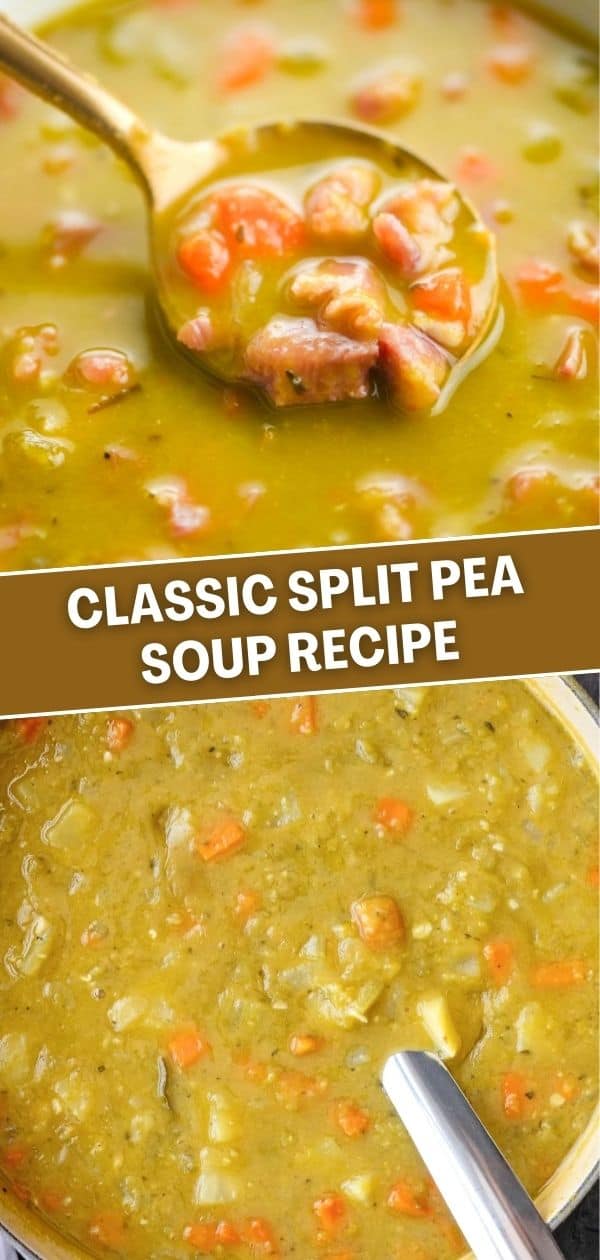
CLASSIC SPLIT PEA SOUP RECIPE
Ingredients
- 1 lb dried split peas, rinsed
- 1 tablespoon olive oil
- 1 onion, diced
- 2 carrots, diced
- 2 celery stalks, diced
- 3 garlic cloves, minced
- 6 cups chicken or vegetable broth
- 1 ham bone or 2 cups diced ham (optional)
- 1 bay leaf
- 1 teaspoon dried thyme
- Salt and black pepper to taste
Instructions
- Prepare Ingredients: Rinse the split peas under cold water and set aside. Dice the onion, carrots, and celery.
- Sauté Vegetables: In a large pot, heat olive oil over medium heat. Sauté onion, carrots, celery, and garlic until softened, about 5 minutes.
- Add Ingredients: Add the split peas, broth, ham bone (if using), bay leaf, and thyme. Stir to combine.
- Simmer Soup: Bring to a boil, then reduce the heat to low. Cover and simmer for 1 hour, stirring occasionally.
- Adjust Seasoning: Remove the ham bone and bay leaf. Shred any meat from the bone and return to the soup. Season with salt and pepper to taste.
- Blend (Optional): For a smoother texture, use an immersion blender to blend part of the soup, leaving some chunks for texture.
- Serve: Ladle into bowls, garnish as desired, and enjoy!
Notes
- Make Ahead: Split pea soup tastes even better the next day. Store in the refrigerator for up to 3 days or freeze for up to 3 months.
- Customizing the Flavor: For a smoky flavor, use smoked ham or add smoked paprika. For a vegetarian option, skip the ham and add extra vegetables like potatoes or zucchini.
- Serving Suggestions: Serve warm with crusty bread or a side salad. Garnish with fresh parsley, croutons, or a dollop of sour cream.
- Storage Tips: Let the soup cool before storing in an airtight container. Reheat gently on the stove or in the microwave, adding water if it thickens too much.



Comments
No Comments