
My husband's brothers visit our house several times a year for extended weekend stays, and when they all show up at the same time it turns our kitchen into a marathon cooking operation because Pakistani-American hospitality means feeding everyone constantly and feeding them well.
During one of those marathon weekends three summers ago, I needed a make-ahead side dish that could feed 8 adults plus our kids without requiring last-minute cooking attention while the main meal was happening on the grill outside.
This Italian pasta salad emerged as the winner of that scramble and has become my standard make-ahead side for every family gathering since — I prep it the night before, refrigerate overnight while the flavors meld, and pull it out cold from the fridge just before serving with no last-minute work required.
Saad genuinely loves the mozzarella pearls (he picks them out first before eating the rest), my husband appreciates how the cold tangy salad balances the heavy grilled meats he's cooking outside, and even Zainab eats it as long as I keep the red onions on her plate small enough to ignore.
My mother in Pakistan would recognize the underlying principle of this make-ahead pasta dish because Pakistani cooks have used similar overnight-rest techniques for things like seekh kebab marinades and bhuna gosht preparations — the rest period transforms ingredients in ways that fresh-made cooking simply cannot replicate.
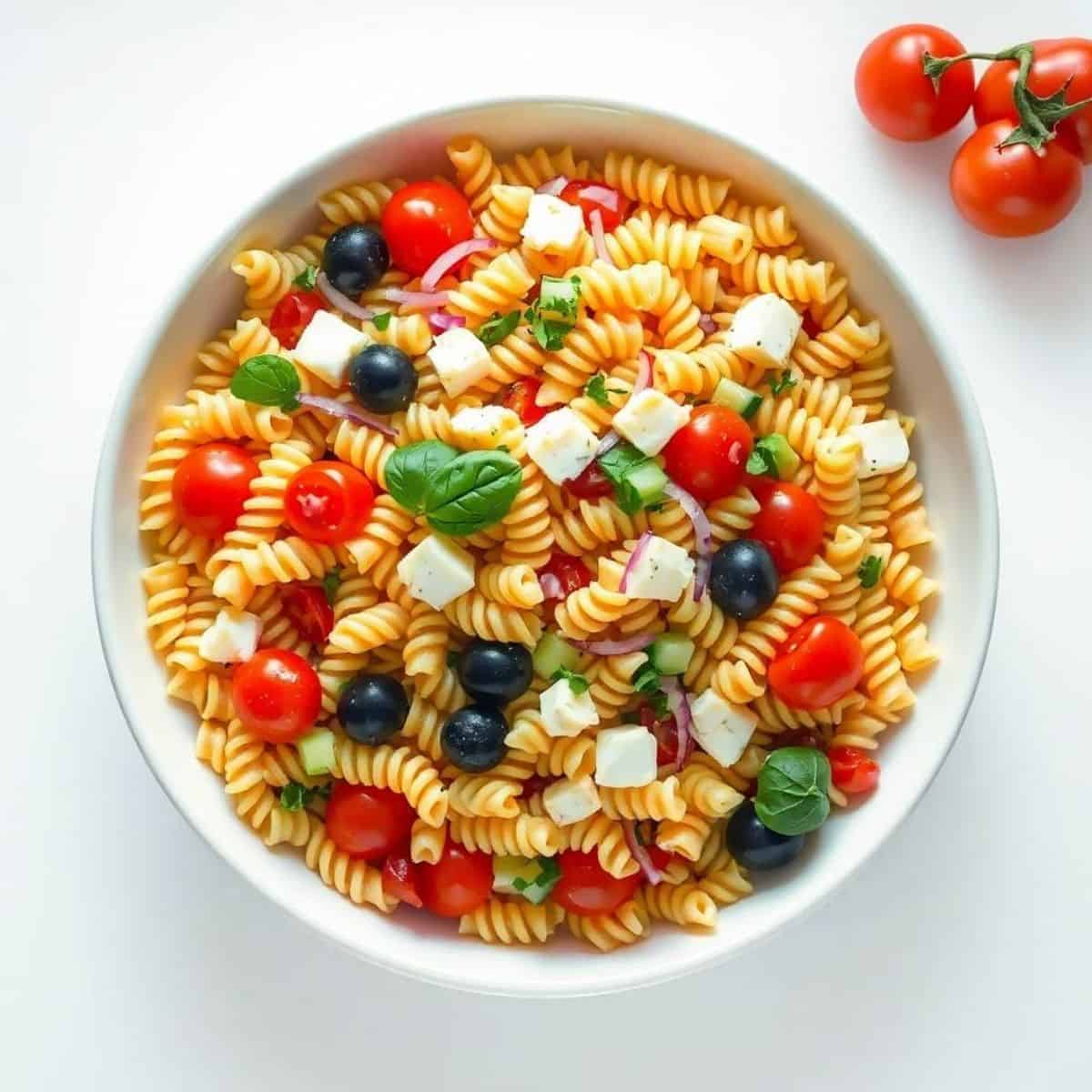
Why You'll Love This Recipe
- Make-ahead friendly — actually tastes BETTER the next day: This is the rare recipe where overnight refrigeration genuinely improves the final result rather than degrading it. The pasta absorbs the dressing more deeply, the vegetables release subtle flavors into the salad, the herbs infuse the entire dish with their aroma, and the mozzarella firms up to a more pleasant texture. For party-hosting realism, this means you can prep the entire salad the night before, refrigerate overnight, and pull it out cold from the fridge just before guests arrive — with NO last-minute work required. For the actual host who has 20 other tasks happening simultaneously on party day, this make-ahead advantage is genuinely the recipe-deciding factor.
- Bright, fresh, summer-perfect flavor profile: The combination of tangy red wine vinaigrette, fresh basil, juicy cherry tomatoes, cool cucumber, briny black olives, and creamy mozzarella creates a balanced summer flavor profile that feels indulgent and refreshing simultaneously. The acid from the vinaigrette and the brightness from the basil cut through the heaviness of pasta and cheese, which means this salad doesn't feel heavy even when you're serving it alongside grilled meats and other rich BBQ foods. For warm-weather entertaining, the flavor profile matches the season perfectly without requiring fancy ingredients or complicated technique.
- Crowd-pleasing across age groups — kids and adults both enjoy it: Saad picks out the mozzarella pearls first (he's been calling them "tiny cheese balls" since age 4) but eats the entire serving once he's processed his cheese intake. Zainab eats it minus the red onions. My husband appreciates the savory-tangy balance. My in-laws compliment it at every family gathering. For mixed-age, mixed-palate gatherings where serving one dish that everyone enjoys is its own daily victory, this recipe is the kind of universal-acceptance win that earns permanent rotation status. The mild base recipe accommodates everyone; spice-loving adults can add red pepper flakes to their individual portions.
- Travels and holds beautifully — perfect for potlucks and picnics: Unlike mayonnaise-based pasta salads that become risky in warm weather, this oil-and-vinegar based salad holds at room temperature for 2-3 hours without food safety concerns. It travels well in a covered container without leaking, doesn't get soggy or weep liquid into the bottom of the dish, and doesn't change texture significantly during transit. For potluck-bringing, picnic-packing, beach-day food, road-trip eating, or any scenario where the salad needs to travel from your kitchen to another location, this recipe is the reliable choice that arrives looking and tasting like it just left the kitchen.
- Endlessly customizable — same template, infinite variations: Same base technique (cooked short pasta + Mediterranean vegetables + cheese + olives + red wine vinaigrette + fresh herbs) accommodates infinite variations through the year — protein-packed version with grilled chicken or salami, vegetarian deluxe with chickpeas and roasted peppers, spicy version with pepperoncini and red pepper flakes, Pakistani-American hybrid with fresh mint and pomegranate seeds. The template scales with what's in season, what's on sale at the grocery store, and what your specific gathering needs that week. One basic recipe becomes a permanent foundation for dozens of seasonal variations.
Ingredients
- For the Pasta Salad:
- 1 lb short pasta (rotini, fusilli, penne, or farfalle — see Tips for shape selection)
- 2 pints cherry tomatoes, halved
- 1 large English cucumber, diced (peeled if waxy, unpeeled if organic)
- 1 cup pitted black olives (Kalamata or California), halved if large
- ½ medium red onion, very finely diced
- ½ cup fresh basil leaves, torn (do NOT chop with a knife — see Tips)
- 8 oz fresh mozzarella pearls (or cubed fresh mozzarella, drained)
- For the Red Wine Vinaigrette:
- ½ cup good-quality olive oil (extra virgin)
- ¼ cup red wine vinegar
- 1 tablespoon Italian seasoning (or 1 teaspoon each dried oregano, basil, thyme, and rosemary)
- 2 garlic cloves, finely minced or grated
- 1 teaspoon Dijon mustard (acts as emulsifier)
- 1 teaspoon honey (balances acidity — optional but recommended)
- 1 teaspoon salt + ½ teaspoon freshly cracked black pepper
- ¼ teaspoon red pepper flakes (optional, for mild heat)
- Optional Add-Ins (to suit gathering):
- ½ cup grated Parmigiano-Reggiano
- ¼ cup sliced sun-dried tomatoes
- 1 cup quartered artichoke hearts (canned, drained)
- ½ cup sliced pepperoncini (for tangy heat)
- 1 cup cubed salami or pepperoni (for meat lovers)
Directions
- Step 1: Cook the pasta properly al dente (10 minutes). Bring a large pot of HEAVILY salted water to a rolling boil (1 tablespoon kosher salt per quart of water — the water should taste like sea water). Add pasta and cook according to package directions, but pull it 1 MINUTE BEFORE the package's "al dente" time. The pasta will continue cooking from residual heat after draining, and it will absorb dressing during the overnight rest, so slightly under-cooking now produces perfect texture later. Drain the pasta but do NOT rinse — the starchy surface helps the dressing cling. Spread the drained pasta on a sheet pan to cool quickly.
- Step 2: Prepare the vegetables while pasta cools (10 minutes). Halve the cherry tomatoes through their equator (not stem-to-bottom — the equator cut releases less juice). Dice the cucumber into ¼-inch pieces. Halve the larger olives. Finely dice the red onion (smaller than the other vegetables to distribute its strong flavor evenly). Tear the basil leaves with your hands into rough pieces. Set everything aside on the cutting board — you'll combine in one big step.
- Step 3: Make the red wine vinaigrette (3 minutes). In a small bowl or measuring cup, whisk together the olive oil, red wine vinegar, Italian seasoning, minced garlic, Dijon mustard, honey, salt, pepper, and red pepper flakes (if using). Whisk vigorously for 30 seconds until the dressing is slightly emulsified and uniform. Taste and adjust — more vinegar if it tastes flat, more honey if it tastes too sharp, more salt if it tastes one-dimensional. The dressing should taste assertive on its own; it will mellow when tossed with the pasta.
- Step 4: Combine pasta with dressing FIRST (2 minutes). Transfer the cooled pasta to a large mixing bowl. Pour ABOUT ⅔ of the dressing over the pasta (reserve the rest for adding just before serving). Toss thoroughly to coat every piece. This pasta-and-dressing-first step is the proper technique — pasta absorbs dressing more readily than vegetables do, and dressing the pasta separately produces a more even flavor distribution than dumping everything in at once.
- Step 5: Add vegetables and gently fold in (3 minutes). Add the cherry tomatoes, diced cucumber, olives, red onion, and torn basil to the bowl with the dressed pasta. Gently fold everything together using a large rubber spatula or two big spoons — do NOT vigorously toss like you would a green salad, because aggressive tossing breaks the tomatoes and bruises the basil. The goal is even distribution with intact ingredients. Add the mozzarella pearls last and fold once or twice more.
- Step 6: Cover and refrigerate AT LEAST 30 minutes (preferably overnight). Cover the bowl tightly with plastic wrap or transfer to an airtight container. Refrigerate for at least 30 minutes (minimum time for basic flavor melding), 2-4 hours (good), or overnight (best). The flavors deepen dramatically with extended rest time, and the pasta absorbs the dressing more deeply. For party hosting, the overnight-rest approach is genuinely the recipe winner because it eliminates day-of work entirely.
- Step 7: Refresh just before serving (5 minutes). Remove the salad from the fridge 15-20 minutes before serving to take the harsh chill off. Drizzle the reserved ⅓ of dressing over the top and gently fold to refresh — pasta absorbs dressing during refrigeration, so adding fresh dressing at serving time brings back the bright flavor. Taste and adjust seasoning if needed (overnight rest can mute salt and acid). Garnish with a few additional fresh basil leaves, a sprinkle of extra mozzarella pearls, and grated Parmigiano-Reggiano if desired. Serve cold or at slightly cool room temperature.
Tips for Success
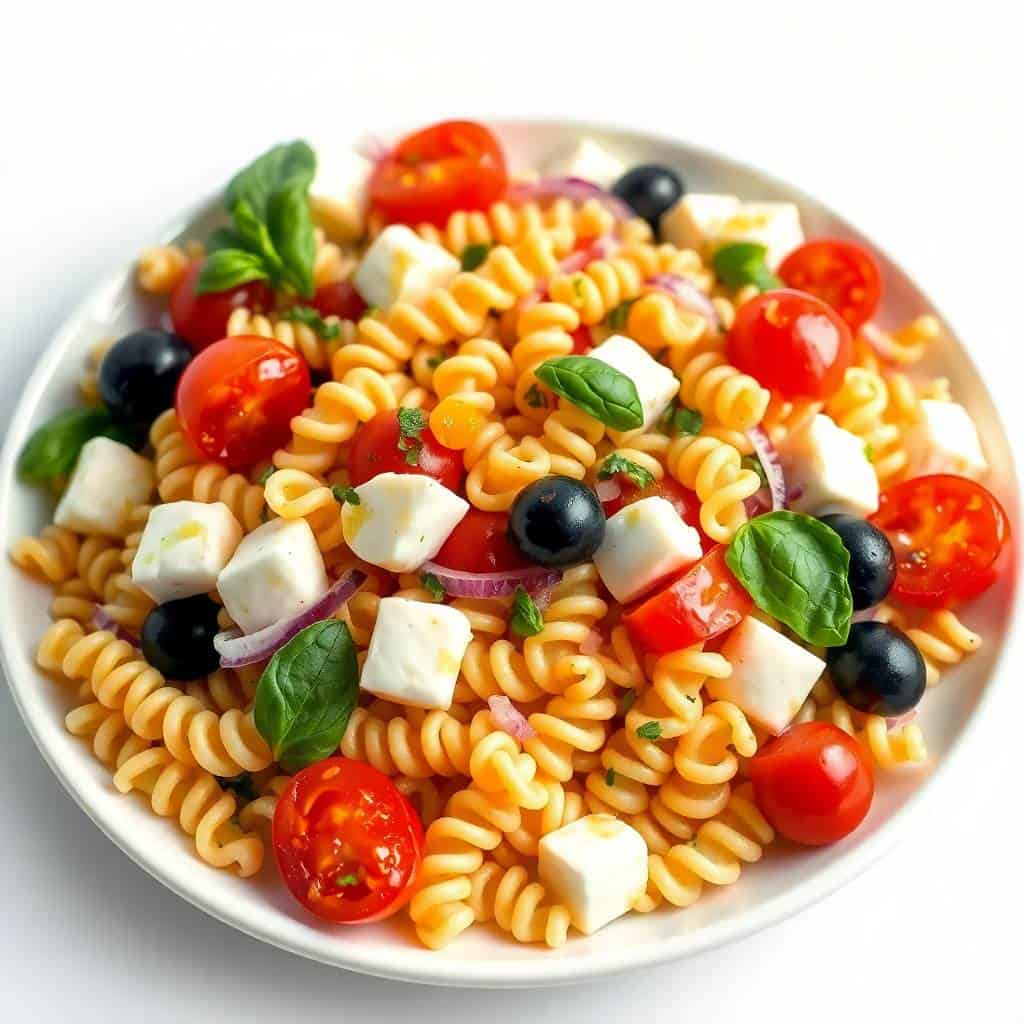
- Use SHORT pasta shapes that hold dressing — not long noodles. The single biggest mistake home cooks make with pasta salad is using long noodles like spaghetti or linguine. Long noodles don't hold dressing in cold applications and they're awkward to eat with a fork at a picnic or potluck. The proper choice is short pasta shapes with ridges or twists that capture dressing and other ingredients — rotini, fusilli, cavatappi, penne rigate, and farfalle all work beautifully. Rotini is my personal favorite because the spiral shape catches every drop of dressing and balances perfectly with the size of the vegetables. Avoid: spaghetti, linguine, fettuccine, lasagna sheets, or any long flat pasta — all wrong choices for cold salad applications.
- Salt the pasta water HEAVILY — this is the only chance to season the pasta itself. The pasta itself absorbs salt during cooking, and this is the only opportunity to season the pasta from the inside out. After cooking, no amount of dressing or surface salt can penetrate the cooked pasta. The proper salt amount is 1 tablespoon kosher salt per quart of water — the water should taste like sea water. Most home cooks under-salt their pasta water dramatically, which produces bland pasta that no amount of vinaigrette can fully compensate for. Heavily salted cooking water is the difference between great pasta salad and mediocre pasta salad.
- Tear basil with your hands — NEVER chop with a knife. This is a small detail that makes a noticeable difference. Knife-cut basil leaves oxidize rapidly and turn black at the cut edges within 1-2 hours, which makes the salad look unappetizing especially at parties. Hand-torn basil stays green longer (4-6 hours visible vs 1-2 hours for cut basil) because the tearing process compresses the cells slightly and reduces oxidation surface area. Hand-torn pieces also have more natural-looking ragged edges that contribute to the rustic Italian aesthetic. The 30 seconds it takes to tear instead of chop is genuinely worth the visual difference at serving time.
- Reserve ⅓ of the dressing to add just before serving. Pasta absorbs dressing during refrigeration, which means a perfectly-dressed salad immediately after mixing can taste dry and bland after overnight rest. The proper technique is to dress the salad with ⅔ of the dressing initially, refrigerate, then drizzle the reserved ⅓ of dressing over the top just before serving. The fresh dressing at serving time brings back the bright vinaigrette flavor that's essential to the dish. This 2-stage dressing approach is the difference between vibrant pasta salad and sadly-soggy pasta salad.
- Use English cucumber, not regular cucumber — fewer seeds, less water release. Regular American cucumbers have large seeds and high water content, which causes them to release liquid during refrigeration and dilute the dressing. English cucumbers (the long, plastic-wrapped variety) have small seeds, thin skin that doesn't need peeling, and significantly lower water content — they hold their texture and don't water down the dressing during overnight rest. Persian cucumbers (the small ones) work as a substitute. If you only have regular cucumbers, peel them, halve lengthwise, and scoop out the seeds with a spoon before dicing. The English cucumber upgrade costs about $0.50 more and produces significantly better pasta salad.
Variations
- Protein-packed version (substantial main dish): Add 2 cups of cooked diced grilled chicken, 1 cup of cubed Italian salami or pepperoni, OR 1 lb of cooked sliced shrimp to transform this pasta salad from a side dish into a complete main course. Add a few extra tablespoons of dressing to compensate for the additional ingredients. The result is a hearty, protein-rich main course that works for picnic lunches, weeknight dinners, and casual entertaining. For halal households, use halal beef sausage or grilled chicken — both work beautifully with the Italian flavor profile. My husband requests this protein version specifically for his lunch boxes during the workweek.
- Pakistani-American hybrid (Sana's adaptation): Add ½ cup fresh mint leaves alongside the basil, ½ cup pomegranate seeds for tart sweetness, and 2 tablespoons of toasted slivered almonds. Replace the Italian seasoning with 1 tablespoon dried oregano + 1 teaspoon dried thyme + 1 teaspoon sumac (the Middle Eastern tart spice). The result is a Pakistani-American take on Italian pasta salad that bridges the Mediterranean flavor profile with the mint-pomegranate-spice tradition my mother in Pakistan would recognize from her own salad preparations. My husband requests this version specifically for family gatherings where his Pakistani-American cousins are visiting.
- Vegetarian deluxe version (substantial without meat): Add 1 (15 oz) can of chickpeas (drained and rinsed) for protein, 1 cup of roasted red peppers from a jar (drained and sliced), and 1 cup of quartered marinated artichoke hearts (drained). The chickpeas add protein and satiety, the roasted peppers add sweetness and depth, and the artichokes add briny umami. The result is a vegetarian-meal-worthy pasta salad that doesn't feel like "missing the meat" — it stands proudly on its own merits. This is the version I make when Saad's vegetarian friend from school comes to our family events.
- Spicy adult version (bold flavor for spice lovers): Add 1 cup sliced pepperoncini peppers (the pickled Italian variety, drained), 1 teaspoon red pepper flakes (instead of the optional ¼ teaspoon), and 2 tablespoons of finely diced pickled jalapeños. Replace ½ the olive oil with chili-infused olive oil if available. The result is a spicier, more assertive version perfect for adults who appreciate heat. Skip this version when serving kids — pepperoncini and chili flakes are too spicy for most children. For adults who love heat in their pasta salad, this earns "best pasta salad I've ever had" compliments.
- Caprese-inspired minimalist version (focus on three ingredients): Skip the olives, cucumber, and red onion entirely. Use only cherry tomatoes (3 pints — more than the base recipe), fresh mozzarella pearls (1 lb — more than the base recipe), and fresh basil leaves (1 cup — significantly more). Make the dressing with extra-virgin olive oil and aged balsamic vinegar (instead of red wine vinegar) plus a touch of honey. The result is a minimalist caprese-style pasta salad that highlights the three ingredients in their purest form. This is the version I make when I want the pasta salad to feel especially elegant for adult-only dinner parties.
Serving and Storage
How to Serve
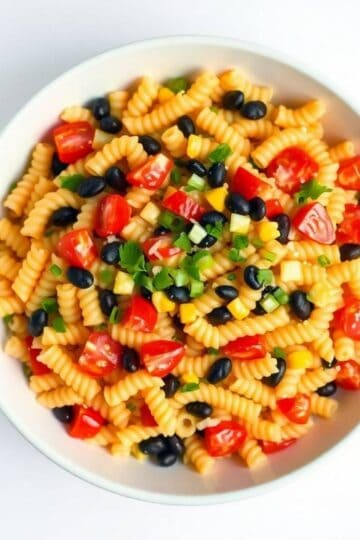
Serve chilled or at slightly cool room temperature (remove from fridge 15-20 minutes before serving to take the harsh chill off). Transfer to a large shallow serving bowl that showcases the colors — white pasta and mozzarella, red tomatoes, dark olives, green basil, and the slight purple-pink of the red onion all visible. Garnish with a few extra basil leaves on top and a sprinkle of freshly grated Parmigiano-Reggiano if desired. For drinks: iced tea, lemonade, sparkling water with lemon for kids; chilled white wine, rosé, sparkling water with lime, or beer for adults. For multi-dish spreads: pair this pasta salad alongside grilled meats (chicken, steak, sausages), a simple green salad with vinaigrette, crusty Italian bread, and fresh fruit for a complete Italian-inspired summer meal. For potluck-bringing or picnic-packing: this salad holds beautifully at room temperature for 2-3 hours without food safety concerns (oil-vinegar based dressing, not mayonnaise). For party hosting: scale the recipe up to 1.5x or 2x for larger gatherings (the recipe scales linearly without any technique changes). For lunch-pack applications: portion into individual containers with a piece of crusty bread on the side for a complete portable lunch.
How to Store
Store leftovers in an airtight container in the refrigerator for up to 3 days. The flavors actually IMPROVE on days 2-3 as the dressing penetrates deeper into the pasta. To refresh leftovers: drizzle with a tablespoon or two of fresh olive oil and a splash of red wine vinegar, then gently fold to redistribute moisture. Add a few fresh basil leaves at serving time for visual appeal. Skip freezing — the texture of cucumber and tomatoes becomes mushy after thawing, and the basil turns black. For meal-prep applications, this pasta salad transforms into multiple weekday meal applications: portion into individual containers for weekday lunches (the salad gets better with each day of rest, so day 3 lunches can be even tastier than day 1), serve alongside leftover grilled chicken or fish for quick dinners, fold cold leftovers into wraps with hummus and greens for portable lunches, top with a fried egg for breakfast-for-dinner applications. One batch easily transforms into 5-6 different meal applications across the week. For party hosting where you've made a large batch and have significant leftovers: send guests home with portioned containers — pasta salad is universally appreciated as a take-home gift, and your fridge doesn't get overwhelmed with leftover salad you can't finish.
Related Recipes You Might Like
If you loved this easy Italian pasta salad, here are more curated summer entertaining and family-friendly side dish collections from the site that pair beautifully with cookouts, potlucks, and casual gatherings:
- Best Memorial Day Pasta Salad — another summer cookout pasta salad winner
- Mexican Street Corn Pasta Salad — bold-flavored summer pasta side
- 31 Best Salad Recipes — more summer salad inspiration
- Caprese Skewers 10-Minute Appetizer — Italian-inspired starter
- 35 Easy Dip Recipes — appetizer companion for pasta salad meals
Frequently Asked Questions
Can I make Italian Pasta Salad ahead of time?
Absolutely yes — and it's actually the recommended approach. This salad genuinely tastes BETTER after overnight refrigeration than it does immediately after mixing. The pasta absorbs the dressing more deeply, the vegetables release subtle flavors into the salad, the herbs infuse the entire dish, and the mozzarella firms up to a more pleasant texture. Prep the complete salad the night before, refrigerate overnight, drizzle with reserved fresh dressing just before serving, and garnish with extra basil. For party hosting, this make-ahead approach is genuinely the best way to reduce day-of stress because it eliminates last-minute work entirely. The salad can be made up to 24 hours in advance for peak flavor and texture.
Which pasta shape works best for Italian pasta salad?
Short pasta shapes with ridges or twists work best — they capture dressing and balance proportionally with the vegetables. Rotini (the spiral shape) is my personal favorite because every twist catches dressing and the size matches perfectly with cherry tomato halves and mozzarella pearls. Fusilli (similar to rotini), penne rigate (with ridges), cavatappi (corkscrew shape), and farfalle (bow tie) all work beautifully. Avoid: spaghetti, linguine, fettuccine, or any long flat pasta — these are wrong choices for cold salad applications because they don't hold dressing well and are awkward to eat with a fork. For visual variety, you can use a mix of two shapes (rotini + farfalle works well together).
Can I use bottled Italian dressing instead of homemade vinaigrette?
Yes, but homemade vinaigrette is genuinely worth the 3 minutes it takes to whisk together. Bottled dressings often contain corn syrup, soybean oil (instead of olive oil), preservatives, and excessive sodium that compromise the final flavor of the pasta salad. The homemade red wine vinaigrette uses just olive oil, red wine vinegar, Italian seasoning, garlic, Dijon, honey, salt, and pepper — all pantry staples or easily acquired. If you must use bottled, choose a high-quality oil-and-vinegar Italian dressing (not creamy), reduce the salt in the recipe (bottled is salty), and add 1 teaspoon of fresh minced garlic and 2 tablespoons of fresh herbs to refresh the bottled flavor. For best results, make the homemade version once and you'll never go back.
Is this recipe served cold or warm?
This recipe is best served cold or at slightly cool room temperature — never hot. The Italian pasta salad concept is fundamentally a cold-served dish, like a Caprese salad with pasta added. To serve: remove from refrigerator 15-20 minutes before serving to take the harsh chill off (very cold food mutes flavors). The texture and flavor are optimized for cold serving — the dressing has thickened slightly during refrigeration, the pasta has firmed up to perfect bite, and the cold vegetables provide refreshing contrast to whatever warm dishes you're serving alongside. If you accidentally let it warm to true room temperature for more than 2-3 hours during a long outdoor party, return it to the fridge briefly to chill before continuing service.
How do I keep pasta from drying out during overnight refrigeration?
Three techniques together prevent dry-pasta-salad syndrome. First, cook the pasta 1 MINUTE BEFORE the package's al dente time — slightly under-cooked pasta absorbs dressing during the rest period without becoming mushy, while fully-cooked pasta becomes soggy. Second, reserve ⅓ of the dressing to add just before serving — this brings back the bright vinaigrette flavor that the pasta absorbed during refrigeration. Third, store the salad in an airtight container or tightly cover with plastic wrap to prevent moisture loss to the dry refrigerator air. With all three techniques together, the pasta stays beautifully tender and well-dressed for up to 3 days of refrigerator storage. If leftovers still seem dry after 2+ days, drizzle with a tablespoon of fresh olive oil and a splash of red wine vinegar to refresh.
This easy Italian pasta salad has earned its permanent rotation status in our household because of how perfectly it solves the actual problem most home hosts face — needing a make-ahead crowd-pleasing side dish that doesn't require last-minute work while the main meal is happening on the grill or in the oven.
My husband's brothers' visits introduced this recipe into my repertoire three summers ago, and it has become the dish my in-laws specifically request whenever they visit our house — which is the kind of family endorsement that matters more than any food blog praise.
Saad's nickname for the mozzarella pearls ("tiny cheese balls") has been permanent family vocabulary since he was 4, and he still picks them out first from every batch before eating the rest — a reliable kid endorsement that confirms this recipe genuinely works across age groups.
My mother in Pakistan's principle that "the best gathering food is the food made the day before" applies more universally than she could have imagined when she taught it to me while watching her prep biryani components the day before Eid celebrations — and this Italian pasta salad is the Mediterranean cousin of that principle. The Pakistani-American hybrid variation with mint and pomegranate deserves special mention because it bridges the Italian Mediterranean flavor profile with the South Asian dessert sensibility my husband and I grew up with, creating a cross-cultural fusion that works beautifully when serving mixed audiences. 🍝🍅🌿✨
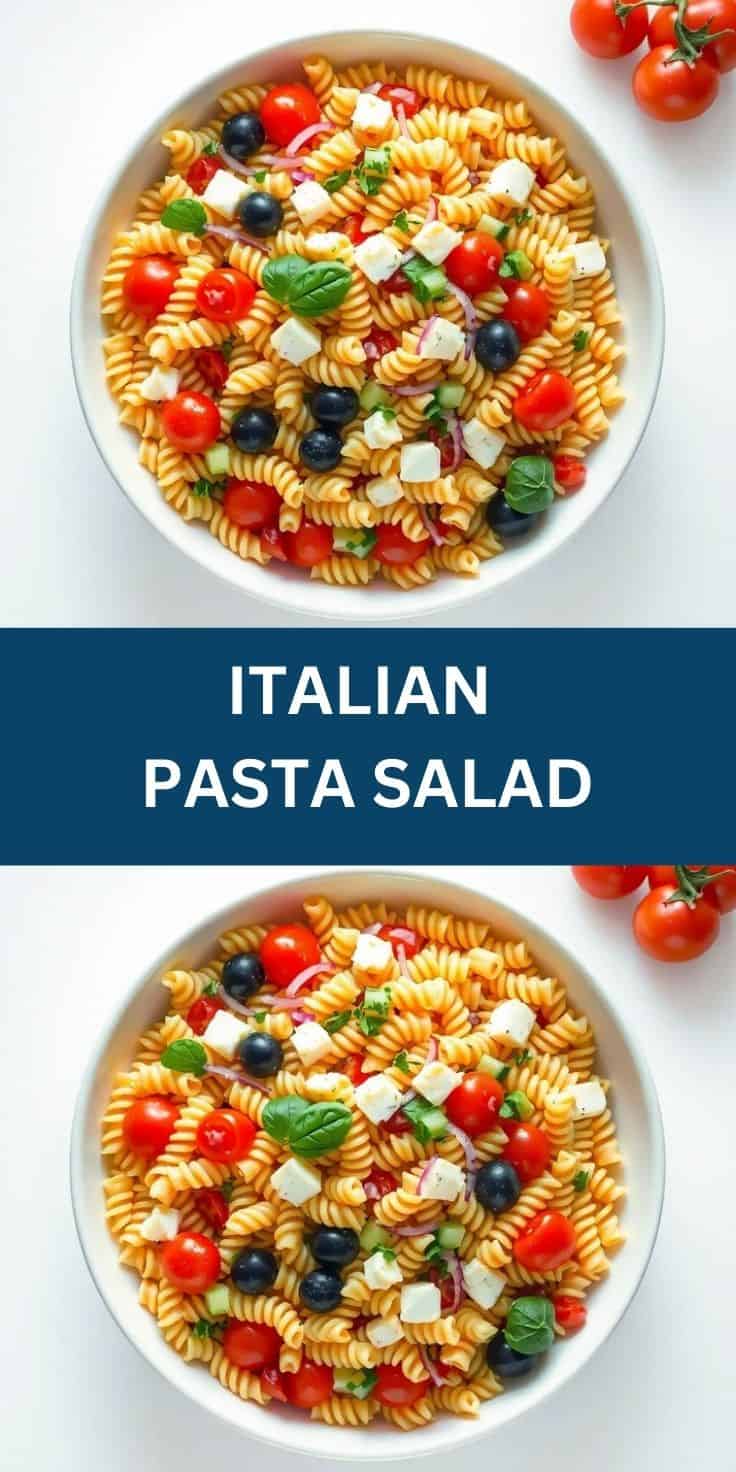
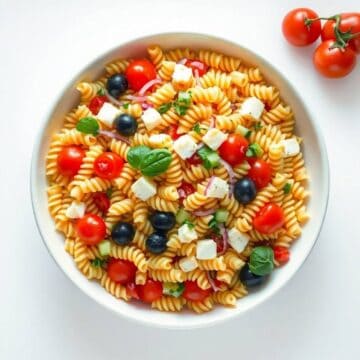
Easy Italian Pasta Salad Recipe (Fresh, Make-Ahead, Crowd-Pleasing)
Ingredients
For the Pasta Salad
- 1 pound rotini or fusilli pasta or any short pasta shape
- 2 cups fresh cherry tomatoes halved
- 1 cup fresh mozzarella pearls or diced fresh mozzarella
- 1 cup black olives sliced or whole
- ½ cup red onion thinly sliced
- ¼ cup fresh basil leaves torn or chopped
- ¼ cup fresh parsley chopped
For the Dressing
- ½ cup extra virgin olive oil
- ¼ cup red wine vinegar or balsamic vinegar
- 2 cloves garlic minced
- 1 teaspoon dried Italian seasoning
- ½ teaspoon salt
- ¼ teaspoon black pepper
- 1 teaspoon sugar optional, to balance acidity
Instructions
Cooking the Pasta
- Bring a large pot of salted water to a boil. Add the rotini pasta and cook according to package directions until al dente, usually 8 to 10 minutes. Drain the pasta thoroughly and rinse it under cold water until completely cooled. This prevents the pasta from sticking and stops the cooking process.
- Transfer the cooled pasta to a large mixing bowl and set aside while you prepare the remaining ingredients.
Making the Dressing and Assembling
- In a small bowl, whisk together the olive oil, red wine vinegar, minced garlic, Italian seasoning, salt, black pepper, and sugar if using. Taste and adjust seasonings as needed. The dressing should be tangy and well-balanced.
- Add the halved cherry tomatoes, mozzarella pearls, black olives, red onion, basil, and parsley to the cooled pasta. Pour the dressing over the entire mixture and toss gently but thoroughly until all ingredients are evenly coated with the dressing.
- Transfer the pasta salad to a serving bowl or cover and refrigerate overnight, or at least 2 hours before serving. The longer it sits, the better the flavors meld together. If preparing the night before, stir once or twice while it chills to keep the dressing evenly distributed.
- Remove from the refrigerator about 10 minutes before serving if you prefer it slightly less cold, or serve directly from the fridge for a very refreshing salad. Toss once more and taste to adjust seasoning before serving to your guests.
Notes

Comments
No Comments