
Cold weather hits differently when you've got a pot of beef barley soup going on the stove. The whole kitchen fills up with this deep, savory smell — onions, beef, thyme — and my family starts showing up in the kitchen asking how long until dinner. That doesn't happen with just any recipe.
What I love about this soup is that it's genuinely hands-off once everything is in the pot. You brown the beef, soften the vegetables, throw in the barley and broth, and then you just let time do the work. The pearl barley soaks up all that savory broth and turns this into something that eats more like a stew than a soup. It's thick, it's filling, and it uses cheap ingredients — beef stew meat, a couple of carrots, a box of broth. Nothing fancy.
My husband is the one who really pushed me to nail this recipe. He likes big, stick-to-your-ribs meals, and he eats this over rice sometimes, which I find a little excessive, but I'm not going to argue with a man who finishes every bowl. I usually make a double batch because a single pot is gone within two days in this house. If you need a reliable weeknight dinner that also works for lunch the next day, this is it. Leftovers keep beautifully — it actually tastes better the next morning when the barley has absorbed even more of the broth. If you like hearty one-pot meals, my Mini Meatloaf Muffins with Mashed Potato Frosting are another family favorite on cold nights.
One thing to know going in: don't rush the simmer. I made that mistake the first time — gave it only 30 minutes because I was in a hurry, and the beef was still tough and the barley was chalky. This soup needs a good 45 minutes to an hour on low heat. Plan for it. Put it on early, let it do its thing, and don't lift the lid every five minutes.
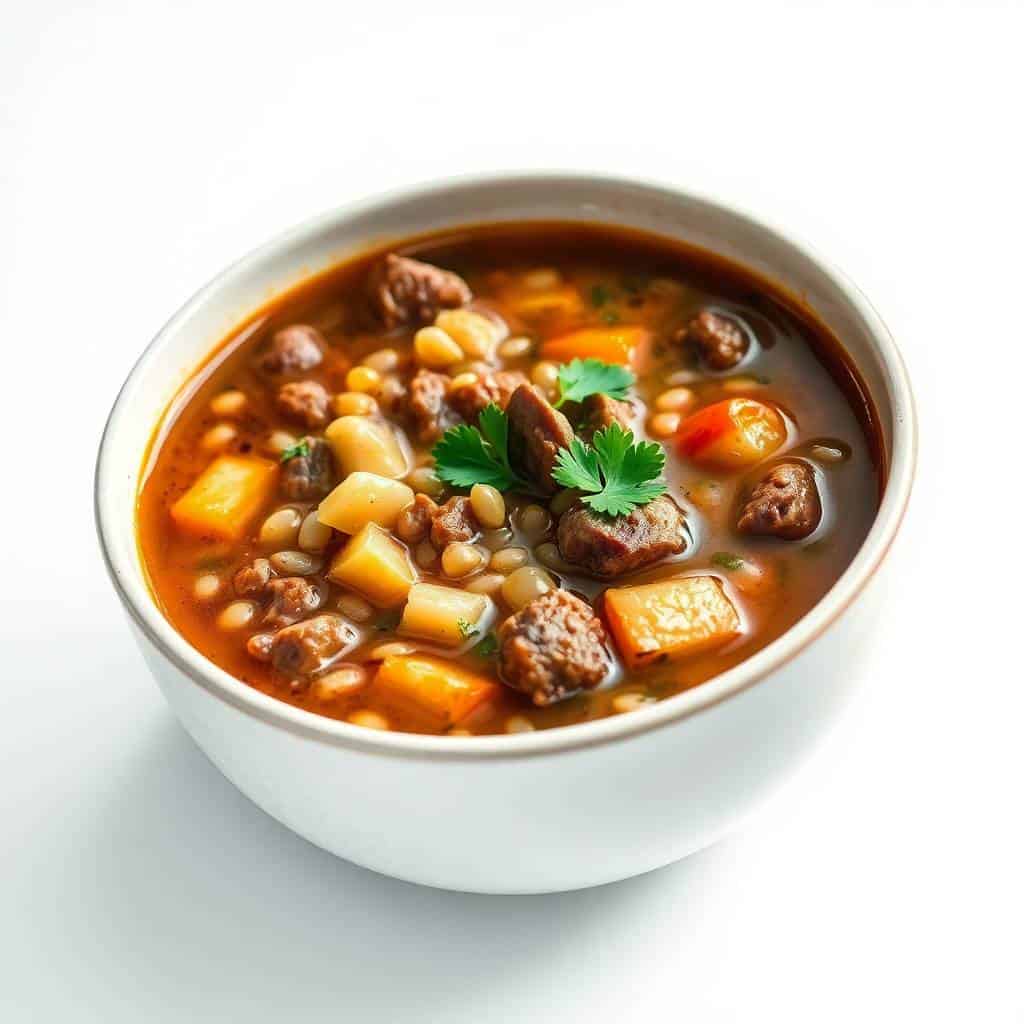
Why You'll Love This Recipe
- One pot, no drama: Everything happens in a single pot — the browning, the sautéing, the simmering. I use my big Dutch oven and it handles everything without complaint. Less to wash at the end, which matters when dinner is already late and the kids are tired.
- It stretches your grocery budget: Beef stew meat is one of the cheaper cuts you'll find at the butcher counter or Walmart. Combined with pearl barley — which is usually under $2 a bag — and a handful of vegetables, you're feeding a family of four for very little. I've made this on tight weeks and it never feels like a budget meal.
- The leftovers are better than the first bowl: I genuinely mean this. After a night in the fridge, the barley absorbs more broth and the flavors come together in a way that the fresh pot just doesn't match. I make it Sunday afternoon and eat it for lunch on Monday and Tuesday without getting bored.
- The beef gets genuinely tender: If you've ever had a beef soup where the meat was chewy and unpleasant, it's because it didn't cook long enough. With this recipe, the low-and-slow simmer breaks down the connective tissue in the stew meat until it's almost falling apart. It's the kind of tender that makes you keep reaching for another spoonful.
- Completely freezer friendly: I portion leftovers into containers and freeze them regularly. On nights when I have nothing planned, I pull out a container in the morning to thaw, and dinner is basically done. It reheats perfectly on the stovetop with a splash of extra broth if it's thickened up too much.
Ingredients
- 1 tablespoon olive oil
- 1 lb beef stew meat or chuck roast, cut into cubes
- 1 large onion, chopped
- 3 garlic cloves, minced
- 2 large carrots, diced
- 2 celery stalks, chopped
- 1 cup pearl barley, rinsed
- 1 teaspoon dried thyme
- 1 teaspoon dried rosemary
- 1 bay leaf
- 6 cups beef broth
- 1 cup diced tomatoes, optional (canned works fine)
- Salt and pepper to taste
- Fresh parsley, chopped, for garnish (optional)
Directions
- Brown the beef: Heat olive oil in a large pot or Dutch oven over medium-high heat. Season your beef cubes with salt and pepper, then add them to the pot in a single layer. Let them sit without stirring for 2–3 minutes so they actually develop color, then turn. You're looking for a deep brown crust on most sides — this takes about 6–8 minutes total. Don't skip this step; the browned bits left in the pot are where all the flavor starts. Remove the beef and set it aside.
- Sauté the vegetables: In the same pot, add the chopped onion, garlic, carrots, and celery. Cook over medium heat for about 5–7 minutes, stirring occasionally, until the onion is soft and translucent. Scrape up any browned bits from the bottom of the pot as the vegetables release their moisture — that's flavor going back into your soup.
- Add the barley and seasonings: Stir in the rinsed pearl barley, thyme, rosemary, and bay leaf. Let everything cook together for about 2 minutes, stirring so the barley gets coated in the oil and the herbs bloom slightly. This brief step helps build a little more depth before the liquid goes in.
- Return the beef and add the broth: Add the browned beef back to the pot. Pour in the beef broth and diced tomatoes if you're using them. Stir everything together, then bring the soup to a boil over high heat.
- Simmer low and slow: Once boiling, reduce the heat to low, cover the pot partially (leave a small gap for steam to escape), and let it simmer for 1 hour, stirring occasionally. The beef should be tender enough to break apart with a spoon and the barley should be cooked through but still have some chew to it.
- Adjust and serve: Remove the bay leaf. Taste the broth and adjust salt and pepper as needed. If the soup has thickened up more than you like, stir in a splash more broth to loosen it. Ladle into bowls and garnish with fresh parsley if you have it.
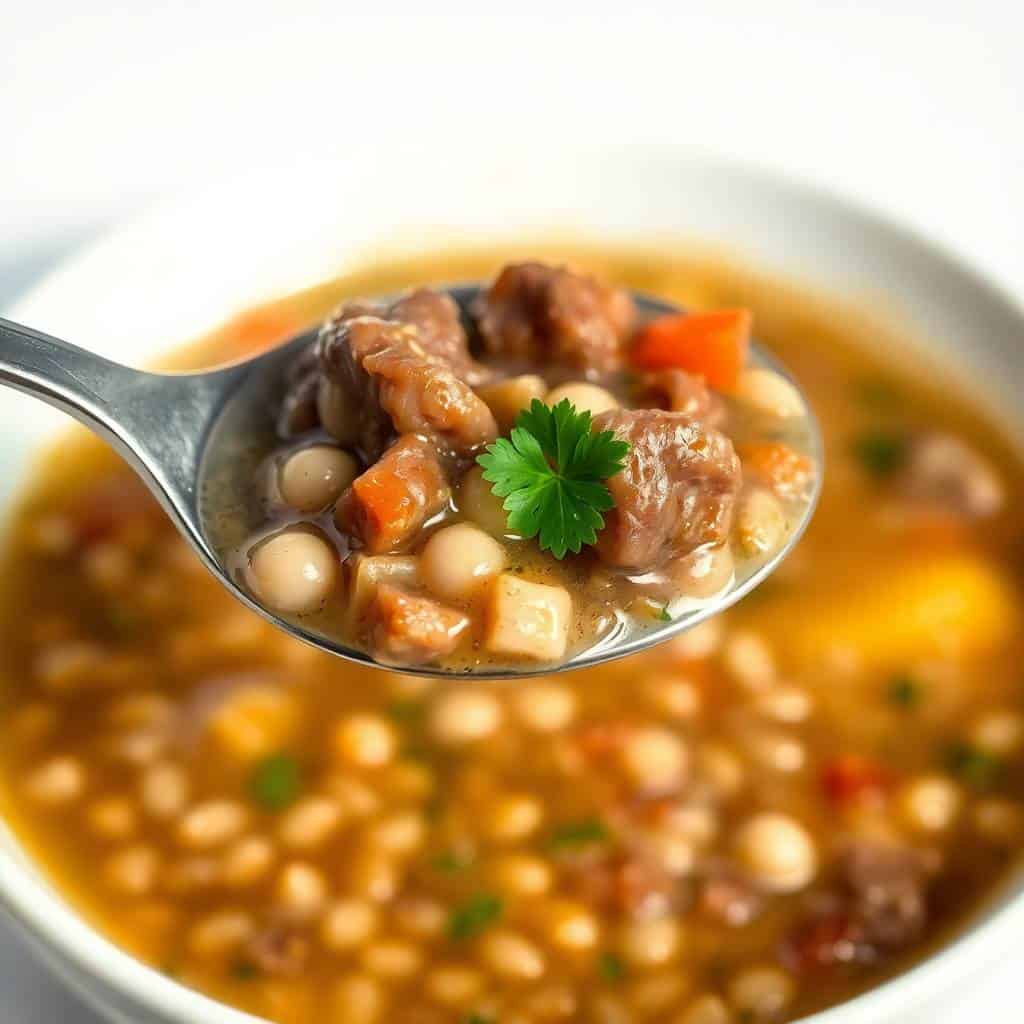
Tips for Success
- Actually brown the meat — don't just gray it: The first time I made this, I was impatient and just cooked the beef until it lost its pink. That's not browning, that's steaming. You need real color on the outside of those cubes, which means high heat and not crowding the pot. If your pot isn't big enough to fit all the beef in a single layer with space around each piece, cook it in two batches. It takes an extra five minutes and makes a real difference to the final flavor.
- Rinse the barley before it goes in: I always rinse pearl barley under cold water in a fine mesh strainer. It takes thirty seconds and removes excess starch that can make your broth cloudy and gummy. If you don't have a fine mesh strainer, just use a regular colander — it'll do the job well enough.
- Keep the lid slightly open during the simmer: If you fully cover the pot, the soup can get too thick as the barley absorbs liquid and the steam has nowhere to go. I rest a wooden spoon across the top of the pot and put the lid on at an angle. It lets just enough steam out to keep the consistency right. If you forget and come back to a pot that's too thick, just add more broth — it fixes itself.
- Taste the broth before you add salt: Beef broth varies a lot in saltiness depending on the brand. I usually use low-sodium broth so I can control the seasoning myself. Costco carries a good low-sodium beef broth in bulk that I keep on hand for soups like this. Add salt at the end when you can taste the full flavor of the finished soup.
- Don't walk away at the end: The last 10 minutes of simmering are when the barley can go from perfectly chewy to overcooked and mushy very quickly. I check it around the 50-minute mark and taste a few grains. You want them tender but with a slight bite — similar to how you'd test pasta for al dente. Once they're there, pull the pot off the heat.
Variations
- Add mushrooms for extra depth: Sliced cremini or button mushrooms go in with the vegetables and add a really nice earthy richness to the broth. I add about 8 ounces when I have them on hand. My husband prefers this version — he says it tastes more like restaurant soup, which I'll take as a compliment.
- Throw in some greens at the end: A couple of big handfuls of spinach or chopped kale stirred in during the last five minutes of cooking adds color and nutrition without changing the flavor much. Zainab actually doesn't notice the spinach when it's in there, which is the only vegetable win I've had with her this year.
- Make it gluten-free: Swap the pearl barley for long-grain white rice or brown rice. The cooking time stays roughly the same with white rice; brown rice needs an extra 15–20 minutes. Quinoa also works if you want something with a little more protein — add it in the last 20 minutes so it doesn't get mushy.
- Use diced tomatoes for a slightly tangy broth: The original recipe lists them as optional, but I nearly always add them. A cup of canned diced tomatoes gives the broth a little more body and a subtle acidity that balances the richness of the beef. It's not a tomato soup — you barely notice them — but the broth tastes more complete with them in.
- Slow cooker version: Brown the beef in a skillet first (don't skip this), then transfer everything to a slow cooker with the broth and remaining ingredients. Cook on low for 7–8 hours or high for 4–5. The barley absorbs a lot of liquid in the slow cooker, so start with 7 cups of broth instead of 6 and check the consistency before serving. This pairs well with a simple side like Honey-Glazed Roasted Brussels Sprouts if you want something green on the table.
Serving and Storage
Serving
Ladle the soup into wide, deep bowls and top with fresh chopped parsley if you have it — it adds a nice pop of color and a little brightness against the rich broth. Crusty bread on the side is the obvious move, something with a thick crust that you can tear and dip. A simple green salad works if you want to round it out into a more complete dinner. In Pakistan I'd probably serve something like this alongside flatbread, but most of my readers seem to go for sourdough or a baguette, which works just as well for scooping up the thick, barley-filled broth.
Storage
Let the soup cool completely before transferring to airtight containers. It keeps in the refrigerator for up to 4 days, and the flavor genuinely improves by day two. When reheating, add a splash of broth or water — the barley continues to absorb liquid as it sits, so the soup thickens quite a bit overnight. For freezing, portion into individual containers and freeze for up to 3 months. Thaw overnight in the fridge, then reheat gently on the stovetop over medium-low heat, stirring occasionally and adding a little extra broth to restore the consistency.
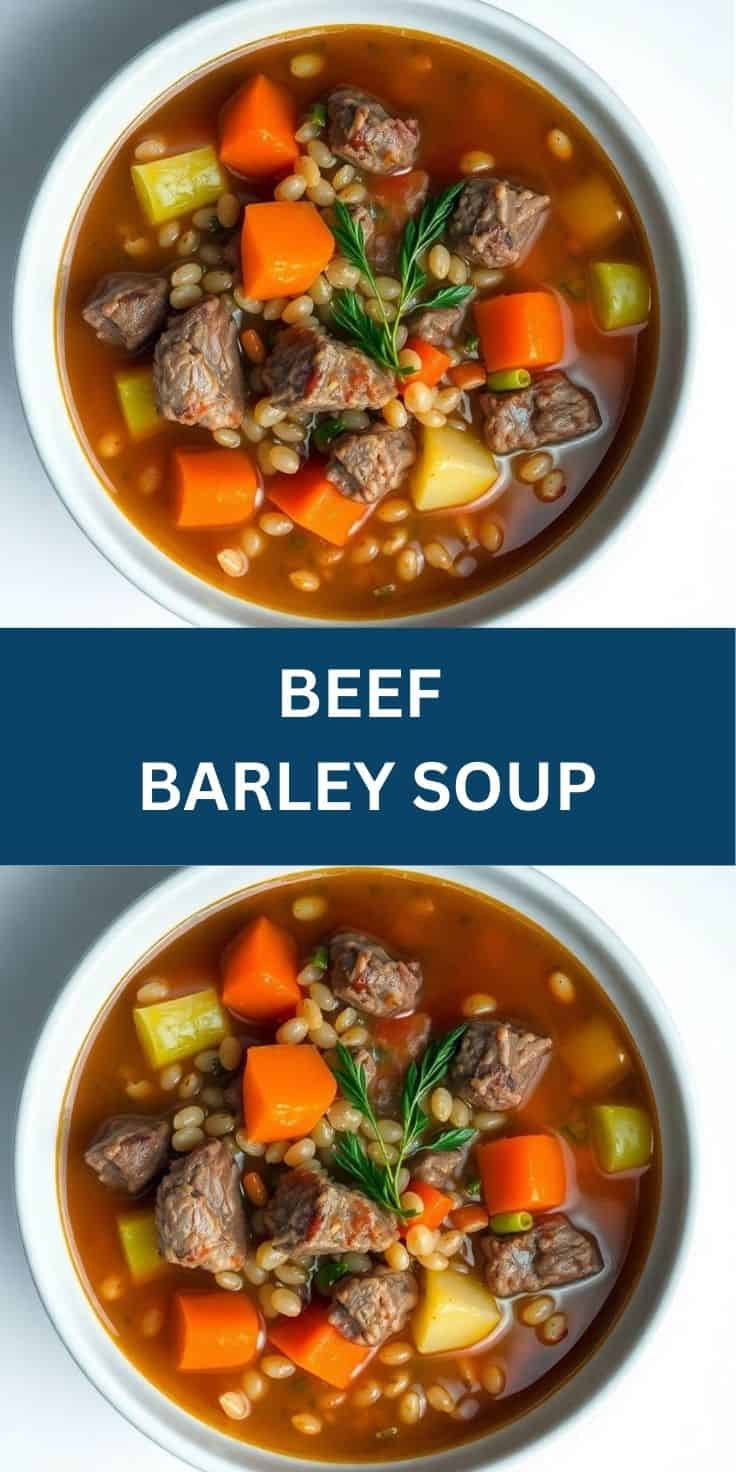
Frequently Asked Questions
Can I use quick-cooking barley instead of pearl barley?
You can, but watch it carefully. Quick-cooking barley is done in about 10–12 minutes, so don't add it at the beginning with everything else. Add it in the last 15 minutes of simmering and start checking the texture around the 10-minute mark. It won't have quite the same chew as pearl barley, but it works in a pinch.
My barley turned out mushy — what went wrong?
It cooked too long, most likely. Pearl barley can go from perfectly tender to overly soft pretty quickly. I start checking it at the 45-minute mark by fishing out a few grains and biting into them. You want them cooked through with just a little chew remaining — not crunchy, not completely soft. If you're reheating leftovers and the barley got mushy in the fridge, that's also normal; it just absorbs more broth overnight.
Can I make this soup ahead of time?
Absolutely — and honestly, you should. I make it on Sunday and eat it through the week. The flavor deepens significantly after the first day, and the barley and beef meld into the broth in a way that tastes like it's been simmering for hours all over again. Just store it in the fridge in a sealed container and reheat with a little extra broth to loosen it up.
Can I freeze beef barley soup?
Yes, and it freezes really well. Cool it completely first, then transfer to freezer-safe containers or zip-lock bags. It keeps for up to 3 months. One thing to note: the barley will absorb more liquid as it freezes and thaws, so the soup will be thicker when you reheat it. Just add a cup of broth when you're warming it up and it comes back to the right consistency.
What's the best cut of beef to use?
Beef stew meat or chuck roast are both great here. They're tough cuts with a lot of connective tissue that breaks down during the long simmer and becomes tender and almost silky. Don't use a lean cut like sirloin — it'll dry out and turn tough. The tougher the cut, the better it does in a long-cooked soup like this.
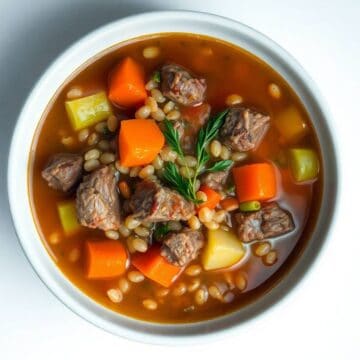
BEEF BARLEY SOUP
Ingredients
- 1 tablespoon olive oil
- 1 lb beef stew meat or chuck roast cubed
- 1 large onion chopped
- 3 garlic cloves minced
- 2 large carrots diced
- 2 celery stalks chopped
- 1 cup pearl barley rinsed
- 1 teaspoon dried thyme
- 1 teaspoon dried rosemary
- 1 bay leaf
- 6 cups beef broth
- 1 cup diced tomatoes optional
- Salt and pepper to taste
Instructions
Brown the Beef:
- In a large pot or Dutch oven, heat the olive oil over medium-high heat. Add the beef cubes and cook, turning occasionally, until browned on all sides (about 6–8 minutes). Remove beef from the pot and set aside.
Sauté the Vegetables:
- In the same pot, add the chopped onion, garlic, carrots, and celery. Sauté for 5–7 minutes until softened.
Add the Barley and Seasoning:
- Stir in the rinsed pearl barley, thyme, rosemary, and bay leaf. Cook for 2 minutes to allow the flavors to combine.
Add Broth and Beef:
- Return the browned beef to the pot. Add the beef broth and diced tomatoes (if using). Stir to combine. Bring to a boil, then reduce the heat to low. Cover and simmer for 1 hour, stirring occasionally.
Final Adjustments:
- After the soup has simmered, remove the bay leaf. Season with salt and pepper to taste. If the soup is too thick, you can add more broth to reach your desired consistency.
Serve:
- Ladle the soup into bowls and serve warm. Enjoy with a side of crusty bread for a complete meal!
Notes
This soup can be made ahead of time and stored in the refrigerator for up to 3 days. It also freezes well for up to 3 months. Customizing the Flavor:
Add other vegetables like parsnips, potatoes, or peas for a heartier soup. You can also adjust the seasonings to your preference. Serving Suggestions:
Serve with fresh bread or a sprinkle of grated Parmesan cheese for added flavor.
This soup has become one of those recipes I come back to every winter without really thinking about it. When the weather drops and I don't want to spend a lot of time deciding what to cook, this is what goes on the stove. It requires patience more than skill — you brown the beef, you build the base, and then you let it simmer. That's really it.
What keeps me making it is how reliably satisfying it is. It's not trying to be anything other than what it is: a bowl of beef, barley, and vegetables in a deeply savory broth. It reheats well, it freezes without any issues, and it feeds a family without costing a lot. If you're in a weeknight dinner rut, this is a good way out of it. And if you want something different for the weekend, my Garlic Parmesan Chicken Tortellini is another one-pan dinner that comes together fast and always gets finished at the table.
Make a big pot, set some aside for tomorrow, and freeze the rest. You'll be glad you did the next time dinner needs to happen and you have no energy to cook from scratch. 🥣❤️
If you liked this recipe, here are a few more you might want to try:





Comments
No Comments