
I made this soup for the first time on a rainy Tuesday when I had half a pack of egg noodles, three tomatoes going soft on the counter, and a piece of leftover flank steak from the night before. I was not expecting much. Forty minutes later my husband was standing at the stove eating directly from the pot, which I take as the highest compliment.
This is my version of the tomato egg soup you find all over Chinese home cooking — I'm not claiming it's traditional, and a cook from Sichuan would probably have notes. But the bones are the same: tomatoes cooked down into a tangy broth, eggs streamed in at the end to form silky ribbons, and noodles that soak up every bit of flavor. Adding beef is my own preference. It makes the soup feel like a full meal instead of a light starter, and it uses up leftover steak beautifully.
My husband asks for this soup at least twice a month, usually when the weather turns cold or when we're all just tired and want something warm without a lot of fuss. It's also become my go-to when I've got odds and ends in the fridge. If you're the kind of cook who likes to have a reliable weeknight soup in rotation — something like my Cajun Shrimp and Sausage Alfredo Pasta for pasta nights — this one deserves a permanent spot on your list.
One thing to know before you start: the egg ribbons only work if you add them at low heat with a slow, steady pour. The first time I made this I rushed that step because I was impatient, turned the heat too high, and ended up with scrambled eggs floating in soup. Still tasted fine, but the texture was wrong. Slow and gentle is the move.
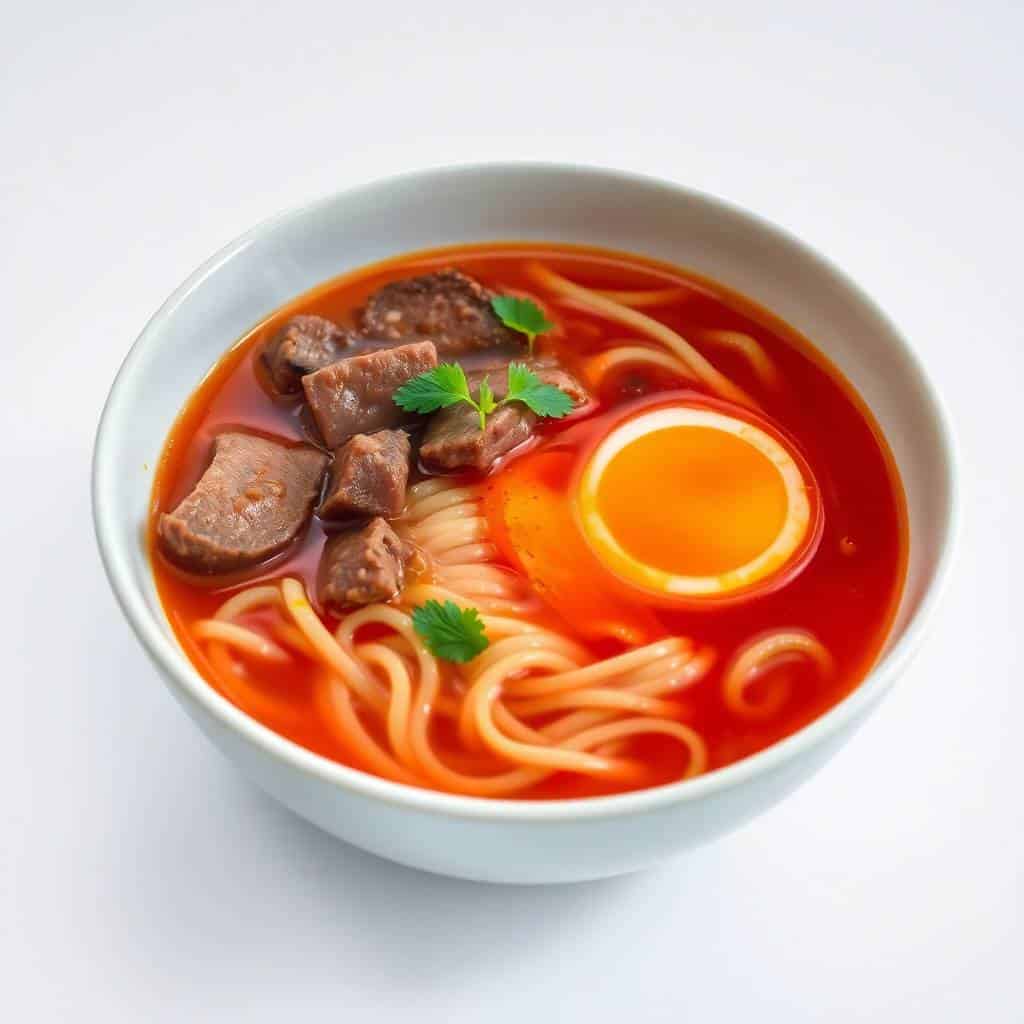
Why You'll Love This Recipe
- It comes together in under 35 minutes: I can have this on the table on a weeknight without starting before my husband gets home. The tomatoes take about five minutes to soften, the broth simmers for ten, and the egg ribbons take less than two minutes at the end. Everything happens in one pot, which also means minimal cleanup — and on school nights that matters.
- The broth has real depth without any fancy stock: Tomatoes breaking down in the pot with soy sauce, ginger, and garlic create a broth that tastes like it's been going for hours. I use store-bought beef broth (the Swanson cartons from Walmart work fine) and the flavor is still genuinely good. A tiny pinch of sugar helps balance the tomato acidity — it sounds odd but it works.
- Leftover beef is practically the point: I've made this with fresh flank steak I seared specifically for the soup, and I've made it with the tail end of a Sunday roast sitting in the fridge. Both work. The leftover version might actually be better because the beef has already been seasoned and just needs to warm through. It's one of those rare recipes that rewards you for having leftovers.
- The egg ribbons make it feel restaurant-quality: This is the part that surprises people who've never made it before. You beat the eggs, reduce the heat, and pour in a thin, slow stream while stirring gently. The eggs set into soft, silky threads throughout the broth. It looks impressive and it's genuinely not difficult once you've done it once.
- It works with whatever noodles you have: Egg noodles, ramen, rice noodles, even spaghetti in a pinch — I've tried them all. Egg noodles are my preference because they hold up well and have a satisfying chew. Rice noodles are good if you need a gluten-free option. Just cook them separately so they don't turn to mush sitting in the broth.
Ingredients
- 7 oz (200g) beef, thinly sliced (flank steak, sirloin, or leftover roast beef)
- 1 tablespoon vegetable oil
- 3 medium tomatoes, chopped
- 2 large eggs, beaten
- 4 cups beef broth (or water with 2 bouillon cubes)
- 5 oz (150g) egg noodles (or ramen, rice noodles — your call)
- 1 tablespoon soy sauce
- 1 teaspoon sugar
- 2 teaspoons cornstarch mixed with 2 tablespoons water (optional, for thickening)
- Salt and pepper to taste
- 2 cloves garlic, minced
- 1 teaspoon fresh ginger, minced (or ¼ teaspoon ground ginger in a pinch)
- Chopped green onions, for garnish
- Fresh cilantro, for garnish (optional)
- A few drops of sesame oil, for finishing (optional but good)
Directions
- Cook the noodles: Bring a separate pot of water to a boil. Cook your noodles according to the package instructions, drain, and set aside. I keep them in a bowl with a tiny drizzle of oil so they don't clump while I finish the soup.
- Sear the beef: Heat the vegetable oil in a large pot over medium-high heat. Add the sliced beef and cook for about 3 to 4 minutes until just browned. Remove and set aside on a plate. Don't overcook it here — it'll go back into the broth and finish cooking there.
- Sauté aromatics: In the same pot, reduce heat to medium and add the garlic and ginger. Stir for about one minute until fragrant. Don't let them burn or the broth will taste bitter.
- Cook the tomatoes: Add the chopped tomatoes to the pot and cook for about 5 minutes, stirring occasionally, until they've broken down and started releasing their juices. This step builds the base of the broth — don't rush it.
- Build the broth: Pour in the beef broth. Add soy sauce, sugar, salt, and pepper. Bring to a boil, then reduce heat and simmer for 10 minutes. Taste it at this point and adjust — more soy sauce if it needs depth, a little more sugar if the tomatoes are too acidic.
- Add noodles and beef: Add the cooked noodles and the reserved beef back to the pot. Stir gently and let it all simmer together for another 3 to 5 minutes. If you want a thicker broth, stir in the cornstarch slurry now.
- Stream in the eggs: Reduce heat to low. This part requires patience. Slowly pour the beaten eggs in a thin stream while stirring the broth gently in a circular motion. The eggs should form soft ribbons, not clumps. Let the pot sit undisturbed for about one minute to let the ribbons fully set.
- Finish and serve: Turn off the heat. Ladle into deep bowls. Top with green onions, a few cilantro leaves if you like them, and a tiny drizzle of sesame oil if you have it. Eat immediately.
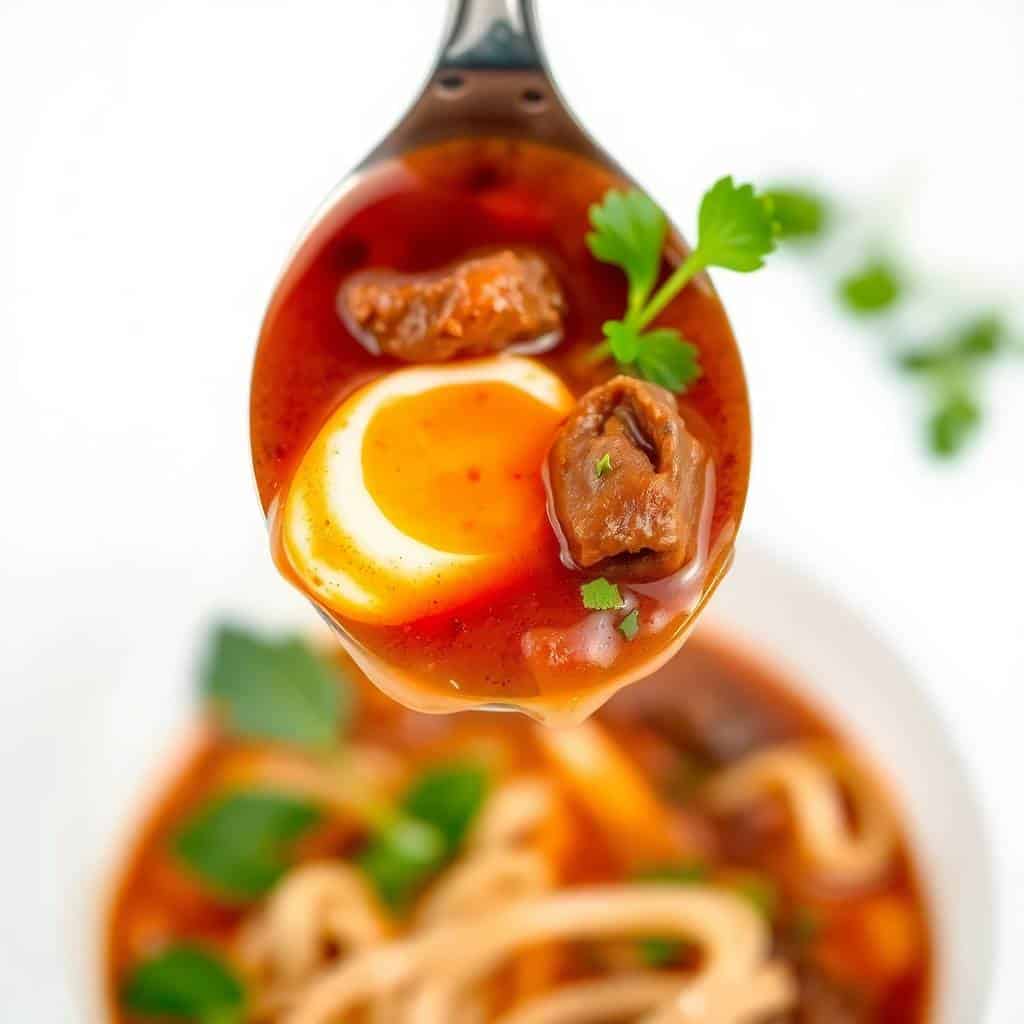
Tips for Success
- Slice the beef as thin as you can: Thin slices cook through in minutes and stay tender in the broth. The easiest way to get thin slices is to pop the beef in the freezer for 20 minutes before cutting — it firms up just enough to slice cleanly. I learned this after my first attempt produced chunks that were still chewy in the soup.
- Don't add the eggs over high heat: This was my mistake the first few times. High heat turns beaten eggs into scrambled eggs the second they hit the broth. Reduce to low, pour slowly, and stir gently. The ribbons form because the egg cooks gradually in the moving liquid. If you're nervous about it, take the pot off the heat entirely before you pour.
- Use ripe tomatoes — or canned ones: Underripe tomatoes don't break down well and the broth ends up tasting flat. If your tomatoes are pale and hard, swap them for a 14 oz can of diced or whole peeled tomatoes. Canned tomatoes are often riper than out-of-season fresh ones, so don't feel like you're cutting corners.
- Keep the noodles separate until serving: If you're making a big batch or planning to eat it over two days, store the noodles separately and add them to each bowl as you serve. Noodles sitting in hot broth overnight absorb all the liquid and turn soft and thick. I keep the soup base in one container and the noodles in another — five seconds of extra effort that makes reheated portions taste almost as good as fresh.
- Taste and season right before the egg step: Once the eggs go in, you can't really stir aggressively anymore without breaking them apart. So taste the broth before that final step and fix the seasoning then — a little more salt, a splash more soy sauce, whatever it needs. It's much easier to adjust at that point than after the eggs are in.
Variations
- Make it spicy: My husband adds chili oil to his bowl every single time without fail. You can also stir a teaspoon of gochujang or a spoonful of chili paste directly into the broth when you add the soy sauce. Sriracha works in a pinch. The tomato and egg base handles heat really well — it doesn't disappear, it just gets more interesting.
- Go vegetarian: Skip the beef and use vegetable broth instead. Add a handful of sliced mushrooms (shiitake or cremini both work) when you cook the tomatoes, or drop in some firm tofu cubes with the noodles. The tomato-egg combination carries enough flavor on its own that you won't feel like something's missing.
- Add greens: Stir in a few handfuls of baby spinach, bok choy, or napa cabbage in the last two minutes of cooking. They wilt quickly and add color and a little freshness. In Pakistan I'd probably use methi or spinach. My kids don't notice greens when they're wilted into a broth, which is a parenting win I'll take every time.
- Try a poached or soft-boiled egg instead of ribbons: If you want a runny yolk situation, skip the beaten egg step entirely. Soft-boil an egg separately (6 minutes from boiling water, then ice bath), peel it, slice it in half, and place it in the bowl when you serve. The yolk breaks into the hot broth and makes everything richer. This is Saad's preferred version — he thinks the ribbons look "weird."
- Use it as a steak leftover strategy: If I've made loaded steak quesadillas the night before and there's leftover steak in the fridge, this is where it goes. Just slice it thin and add it directly to the broth at the noodle stage — no searing needed since it's already cooked. The broth reheats the beef gently and it stays tender.
Serving and Storage
Serving
Serve immediately in deep bowls — this soup cools down faster than you'd expect, especially in winter, so don't let it sit. I always put the green onions and cilantro on the table separately so everyone can add what they want. My husband piles on the green onions. Saad picks out the cilantro with the focus of a surgeon. A small dish of chili oil on the side is a good move if you have spice lovers at the table. You can pair it with a side of Caprese pinwheels if you want something to nibble alongside — the brightness of the fresh mozzarella and tomato works surprisingly well next to a savory broth.
Storage
The soup base (broth, tomatoes, beef) keeps well in the fridge for up to 3 days in an airtight container. Store noodles separately so they don't absorb all the broth overnight. When reheating, warm the broth on the stove over medium-low heat and add fresh noodles — this takes an extra few minutes but the texture is much better than soggy day-old noodles. I wouldn't try to freeze the soup with eggs or noodles in it, but the broth and beef freeze fine for up to a month. Thaw in the fridge overnight, reheat gently, then cook fresh noodles and stream in fresh eggs.
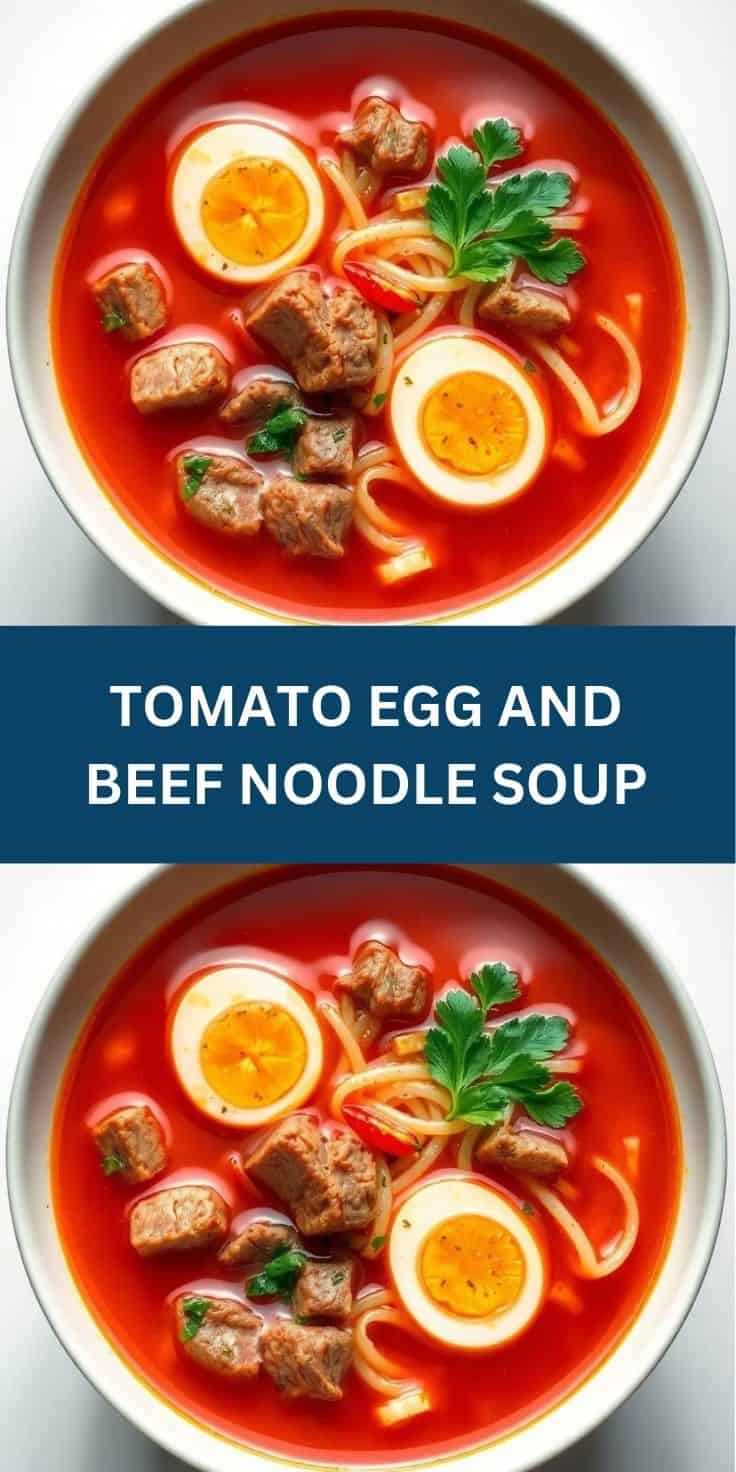
Frequently Asked Questions
Can I use canned tomatoes instead of fresh?
Yes, and honestly sometimes I prefer it. A 14 oz can of whole peeled tomatoes works really well — break them up with the back of your spoon as they cook down. Canned tomatoes are often riper and more consistent than out-of-season fresh ones, so if your fresh tomatoes are pale and hard, go with the can.
What kind of beef works best for this soup?
Flank steak and sirloin are my top choices because they slice thin easily and cook quickly without getting tough. Leftover roast beef or steak from the night before also works great — just add it directly to the broth at the noodle stage since it's already cooked. Avoid anything too thick or marbled with a lot of fat, since those cuts need longer cooking time than this soup allows.
How do I get silky egg ribbons instead of scrambled eggs?
Two things: low heat and a slow pour. Reduce the heat before the eggs go in — the broth should be steaming but not at a rolling boil. Then pour the beaten eggs in a thin, steady stream while stirring the broth gently in circles. The eggs cook gradually and form soft ribbons instead of clumping up. If you're nervous, pull the pot off the heat entirely before you pour — the residual heat is usually enough.
Can I make this soup ahead of time?
Yes — make the soup base (broth, tomatoes, beef, aromatics) up to a day ahead and refrigerate it. When you're ready to eat, reheat the broth on the stove, cook fresh noodles, and add the eggs at the very end. Don't add the noodles or eggs to the soup if you're storing it, because noodles get mushy and the egg ribbons don't hold up well on reheating.
Can I freeze this soup?
The broth and beef freeze well for up to a month — pour into freezer-safe containers, leave a little room at the top, and thaw overnight in the fridge when you need it. I wouldn't freeze it with the noodles or eggs already in it. When reheating from frozen, warm it gently on the stove and cook the noodles and eggs fresh. It takes an extra ten minutes but the texture is worth it.
TOMATO EGG AND BEEF NOODLE SOUP
Ingredients
For the Soup:
- 200 g beef thinly sliced, preferably flank or sirloin
- 1 tablespoon vegetable oil
- 3 medium tomatoes chopped
- 2 large eggs beaten
- 4 cups beef broth or water with bouillon cubes
- 150 g egg noodles or your choice of noodles
- 1 tablespoon soy sauce
- 1 teaspoon sugar
- 2 teaspoons cornstarch mixed with 2 tablespoons water optional for thickening
- Salt and pepper to taste
For Garnish (Optional):
- Chopped green onions
- Fresh cilantro leaves
Instructions
Cook the Noodles:
- Bring a pot of water to a boil. Add the noodles and cook according to the package instructions. Drain and set aside.
Prepare the Soup Base:
- In a large pot, heat the vegetable oil over medium heat. Add the sliced beef and cook until browned, about 3–4 minutes. Remove the beef and set aside.
Cook the Tomatoes:
- In the same pot, add the chopped tomatoes and cook until softened, about 5 minutes, stirring occasionally. Add the soy sauce, sugar, and beef broth to the pot, bringing the mixture to a boil. Reduce the heat and simmer for 5 minutes to combine the flavours.
Add the Eggs:
- Slowly pour the beaten eggs into the simmering soup, stirring gently to create silky egg ribbons in the broth.
Finish the Soup:
- Add the cooked beef back into the pot and stir in the cooked noodles. If you prefer a thicker soup, stir in the cornstarch mixture. Let the soup simmer for another 5 minutes.
Serve:
- Taste the soup and adjust seasoning with salt and pepper as needed. Ladle the soup into bowls and garnish with chopped green onions and cilantro, if desired.
Notes
You can prepare the soup base (without the noodles and eggs) a day in advance and refrigerate it. When ready to serve, reheat the broth, cook the noodles, and add the eggs for the final step. Customizing the Flavour:
For a spicier soup, add chili paste or fresh sliced chilies to the broth. You can also experiment with different types of noodles like rice noodles or ramen. Serving Suggestions:
Serve this soup with a side of steamed vegetables or some crispy spring rolls for a complete meal. Allergy-Friendly Options:
For a gluten-free version, use gluten-free noodles and ensure the soy sauce is tamari or gluten-free. Storage Tips:
Store leftovers in an airtight container in the fridge for up to 2 days. Reheat gently over the stove and avoid overcooking the eggs.





Comments
No Comments