
I grew up eating Pakistani food, so A1 steak sauce wasn't exactly in my pantry growing up — but the first time I tried it at a friend's house in Karachi years ago, I understood immediately why Americans are obsessed with it. That deep, tangy, slightly smoky flavor that makes a good steak taste like it came from a proper steakhouse. When I started cooking seriously, I wanted to figure out how to make it at home rather than keep buying bottles at the store. It took me a few tries, but once I cracked it, I stopped buying the bottled version entirely.
What makes this version work is the combination of both yellow and Dijon mustard together. The first time I made it, I only had Dijon and skipped the yellow mustard — the sauce tasted fine but something was off, a little too sharp without that mellow base. The second time I used both, and it clicked. That tangy-savory depth came through the way it should. The whole thing simmers in one small saucepan and takes maybe 15 minutes total, which is the kind of effort I can commit to on a regular Tuesday night.
My husband started specifically requesting this on burger nights, which in my house happen pretty often. He'll pile it on a smash burger alongside my Nacho Cheese Beef Wrap nights when we're doing a full spread. Saad uses it as a dipping sauce for literally everything — fries, grilled chicken, sometimes just bread, which I've stopped questioning. If the sauce disappears fast in your house, double the batch. I almost always do now because a single batch barely lasts three days.
One thing to know going in: this sauce gets better overnight. The day you make it, it's good. The next day, it's noticeably better — the vinegar mellows, the mustard integrates, and the whole thing tastes rounder and more balanced. So if you're making it for a weekend grill, make it Friday night. You'll thank yourself Saturday afternoon.
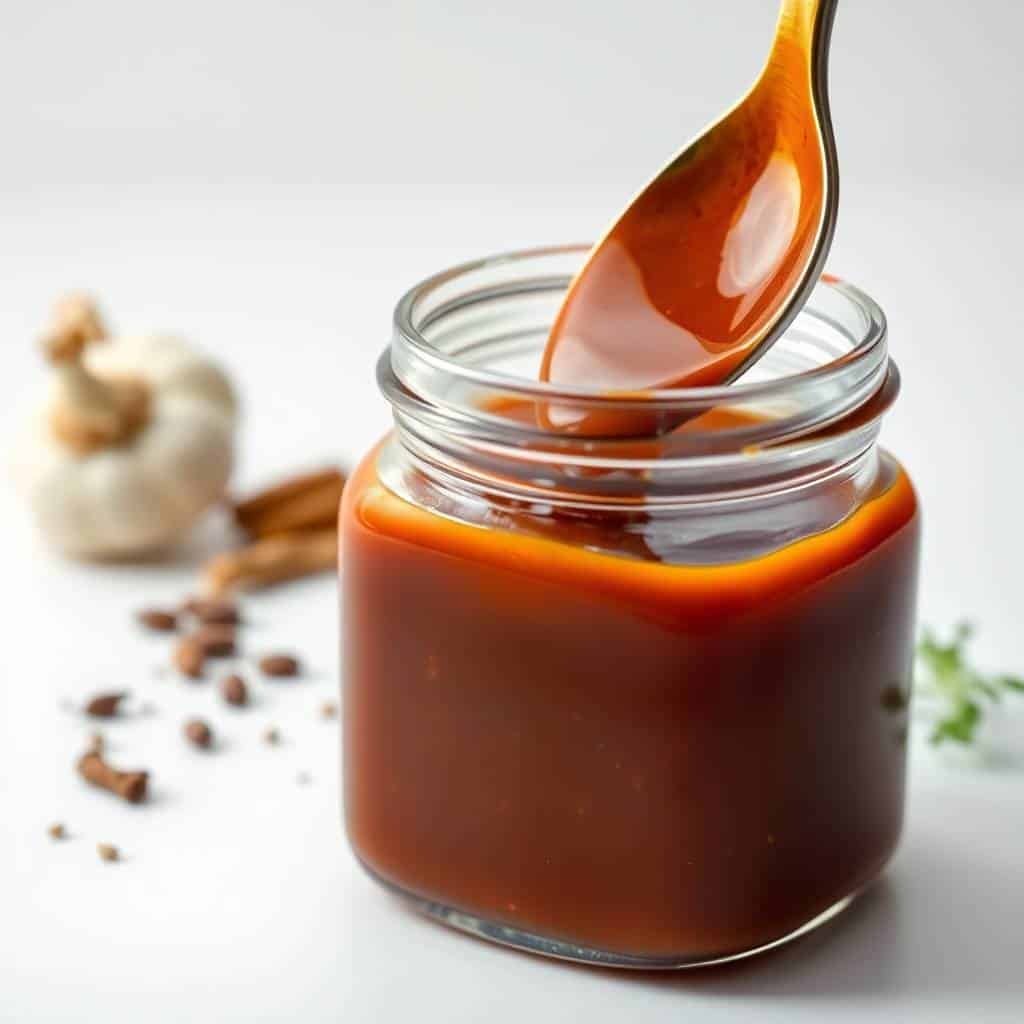
Why You'll Love This Recipe
- It tastes like A1 but actually better: I know that sounds like a bold claim, but when you make it fresh, there's a brightness to it that the bottled version just doesn't have anymore. The lemon juice and fresh-simmered vinegar do something the shelf-stable bottle can't replicate. I'm not saying this to be smug — I genuinely wasn't expecting to prefer my version when I started testing it.
- Everything is already in your pantry: Ketchup, Worcestershire, soy sauce, mustard, vinegar, garlic powder — if you cook regularly, you already have all of this. I've made this sauce without making a single trip to the store, which is saying something because I'm particular about not improvising when I don't have ingredients. This one genuinely requires nothing special.
- Ready in under 15 minutes: The active cooking time is almost nothing — you combine everything, turn on the heat, stir occasionally, and you're done. On nights when I'm already making something involved for dinner, I'll start the sauce first and let it simmer on the back burner while I work on everything else. By the time the rest of dinner is ready, the sauce is already cooling.
- You can adjust it to your taste: More heat, more sweetness, smokier, tangier — this recipe is flexible in a way bottled sauces never are. I usually keep mine close to the base recipe, but my husband adds a few dashes of hot sauce to his bowl every time anyway. If you want a spicier version built into the sauce itself, just increase the cayenne. It responds well to tinkering.
- Works on more than just steak: I use it on burgers most often, but I've also used it as a dipping sauce for roasted vegetables, stirred it into meatloaf glaze, and even mixed a spoonful into salad dressing when I wanted something bold. It's the kind of sauce that earns its fridge space because it actually gets used up.
Ingredients
- ½ cup ketchup
- 2 tablespoons Worcestershire sauce
- 2 tablespoons white vinegar
- 2 tablespoons water
- 1 tablespoon yellow mustard
- 1 tablespoon Dijon mustard
- 1 tablespoon soy sauce
- 1 tablespoon lemon juice (fresh is better, but bottled works)
- 1 teaspoon garlic powder
- ½ teaspoon onion powder
- ¼ teaspoon cayenne pepper (optional — I use it, my kids wish I didn't)
- ¼ teaspoon black pepper
Directions
- Step 1: Combine everything in the saucepan. Add the ketchup, Worcestershire sauce, vinegar, water, both mustards, soy sauce, lemon juice, garlic powder, onion powder, cayenne, and black pepper into a medium saucepan. Give it a good whisk so the mustards and seasonings are fully incorporated before you turn on the heat — lumps of mustard sitting in the sauce don't cook out the way you'd hope.
- Step 2: Bring to a gentle simmer. Set the pan over medium heat and stir as it warms up. You're not looking for a rolling boil — just a steady, gentle simmer with small bubbles around the edges. If the heat is too high, the ketchup base can scorch on the bottom before the flavors have time to develop. I've done this, and the burnt bitterness doesn't disappear even after you stir it in.
- Step 3: Simmer uncovered for 10–12 minutes. Keep the heat at medium-low and let the sauce reduce and thicken slightly, stirring every couple of minutes. You'll notice it darkening a little and smelling more complex as it cooks. It won't get super thick — more like a pourable sauce consistency than a paste, which is what you want.
- Step 4: Blend if you want a smoother texture (optional). Once the sauce is off the heat, if you want a silky consistency, you can hit it briefly with an immersion blender or let it cool and blend it in a regular blender. I usually don't bother — the texture straight from the pan is perfectly fine — but if you're bottling it as a gift or want that ultra-smooth restaurant look, blending takes 30 seconds and makes a visible difference.
- Step 5: Cool completely, then transfer and refrigerate. Let the sauce come to room temperature before putting it in a jar. Sealing hot sauce in a container creates condensation, which can mess with the flavor and reduce the shelf life. A clean glass jar from Walmart or even a repurposed jam jar works perfectly. Refrigerate and use within 2 weeks.
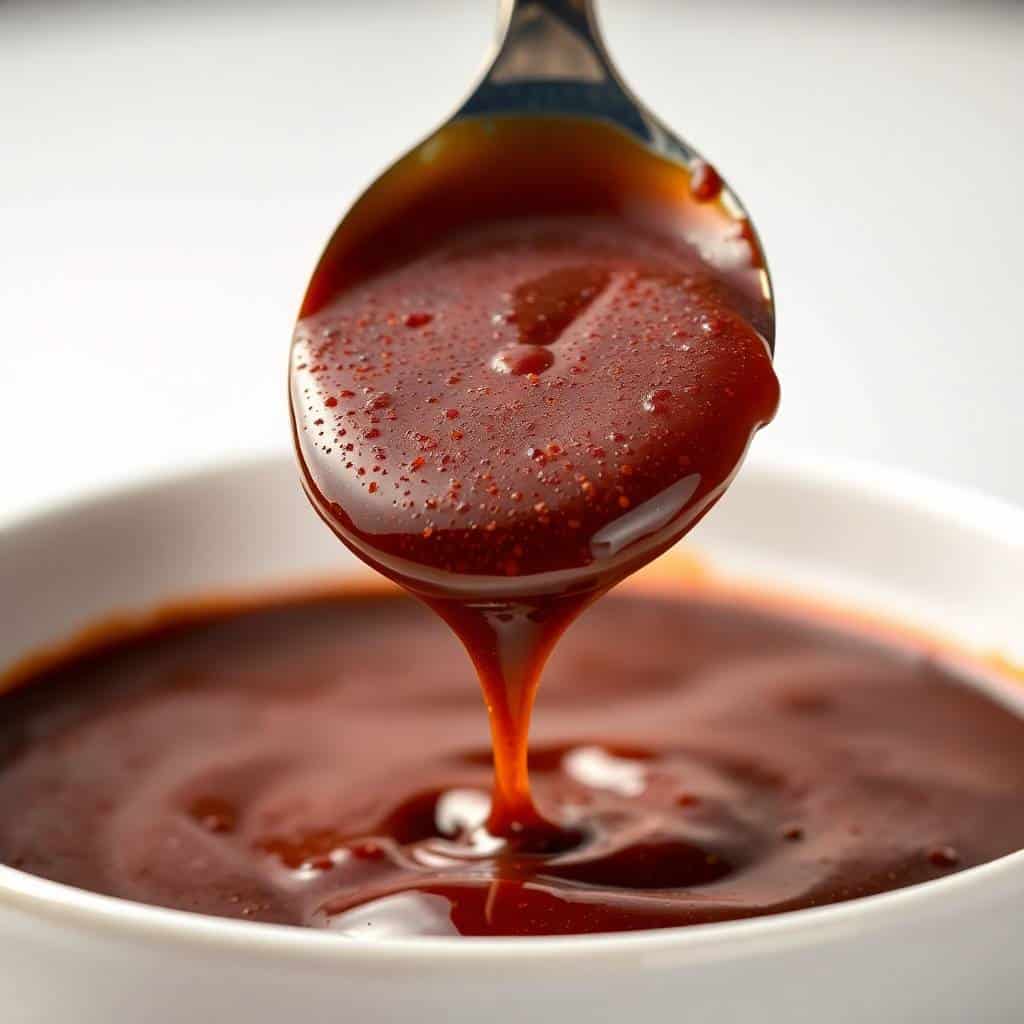
Tips for Success
- Don't skip both mustards: The original recipe I tested used only Dijon, and the sauce came out with a sharper, more one-note tang. Yellow mustard brings a milder, slightly earthy note that softens the acidity and rounds out the flavor. They do different things, and using both is what makes this taste like the real thing rather than like a mustard-forward condiment.
- Keep the heat low and patient: I burned the bottom of a batch once by walking away with the heat set too high. The ketchup has a lot of sugar in it, and it sticks and scorches faster than you'd expect. Medium-low heat and a stir every two minutes or so is all this needs. There's no benefit to rushing it — the 10–12 minutes of simmering is genuinely doing flavor work.
- Taste before you take it off the heat: About 8 minutes in, I always take a small spoon and taste. If it needs more acidity, a tiny splash more vinegar. If it tastes flat, a pinch of salt. If it's too sharp, a small drizzle of honey balances it immediately. Getting used to tasting mid-cook is a habit that makes every sauce better, not just this one.
- Make it at least a day ahead if you can: Fresh off the stove, this sauce is good. After a night in the fridge, it's significantly better. The vinegar mellow out, the garlic and onion powder bloom into the sauce rather than sitting on top, and the whole thing tastes more cohesive. I learned this by accident — I made it the evening before a BBQ because I ran out of time, and everyone asked what I'd done differently that time.
- Use a heavy-bottomed saucepan if you have one: Even a basic heavy skillet or a small Dutch oven works better than a thin pan for this. Thin pans have hot spots that cause uneven cooking and make the scorching problem worse. I use a small Le Creuset-style pan I got for around $20 at a discount store — nothing fancy, just heavier than my thin ones.
Variations
- Smoky version: Add ½ teaspoon of liquid smoke along with the other ingredients before simmering. You can find this at most large grocery stores — Walmart and Kroger usually stock it near the BBQ sauces. It turns this into something that tastes like it's been hanging around a charcoal grill, which is especially good if you're cooking indoors in winter and missing that outdoor smoke flavor.
- Sweeter, BBQ-style version: Stir in 1 tablespoon of molasses or brown sugar before simmering. This pushes the sauce closer to BBQ territory — darker, richer, and a little more complex. My husband prefers this variation when we're doing ribs or slow-cooked beef. It's a small addition but it changes the character of the sauce noticeably.
- Spicier version: Double the cayenne or add 1–2 teaspoons of your favorite hot sauce directly into the pan. I like Tabasco for this because the vinegar in it plays well with the existing acidity in the recipe. If you want actual heat that lingers rather than just a sharp hit, add a pinch of red chili flakes alongside the cayenne.
- Balsamic version: Swap the white vinegar for balsamic vinegar. This gives the sauce a deeper, slightly sweeter, more Italian-leaning profile. It's not the classic A1 taste anymore, but it's genuinely delicious on grilled vegetables or as a dipping sauce — I've served this version alongside my Healthy Chicken Salad Lettuce Wraps as a bold drizzle and it worked really well.
- Gluten-free version: Use tamari instead of regular soy sauce, and double-check your Worcestershire sauce — some brands contain malt vinegar from barley, which isn't gluten-free. Lea & Perrins (the most widely available brand) is generally considered gluten-free in the US version, but always check your own bottle. Everything else in the recipe is naturally gluten-free.
Serving and Storage
Serving
Serve warm from the pan or straight from the fridge — it works both ways depending on what you're eating it with. I serve it at room temperature on burgers and steaks, and cold as a dipping sauce when Saad wants something for his fries. It pairs well with anything that benefits from a tangy, savory hit: grilled chicken, meatloaf, roasted vegetables, even stirred into a sandwich spread. On a full dinner spread, I'll sometimes put out a small bowl of this alongside the main dish the same way I'd set out a dipping sauce, and it always disappears before the meal is over.
Storage
Store in a clean, sealed glass jar in the refrigerator for up to 2 weeks. Natural separation will happen — just shake or stir before each use, same as you would with the store-bought version. If you make a double batch and want to freeze some, pour into small airtight containers (ice cube trays work great for portioning) and freeze for up to 3 months. Thaw overnight in the fridge and give it a good stir before using. Don't freeze in glass jars — the liquid expands and the jar can crack.
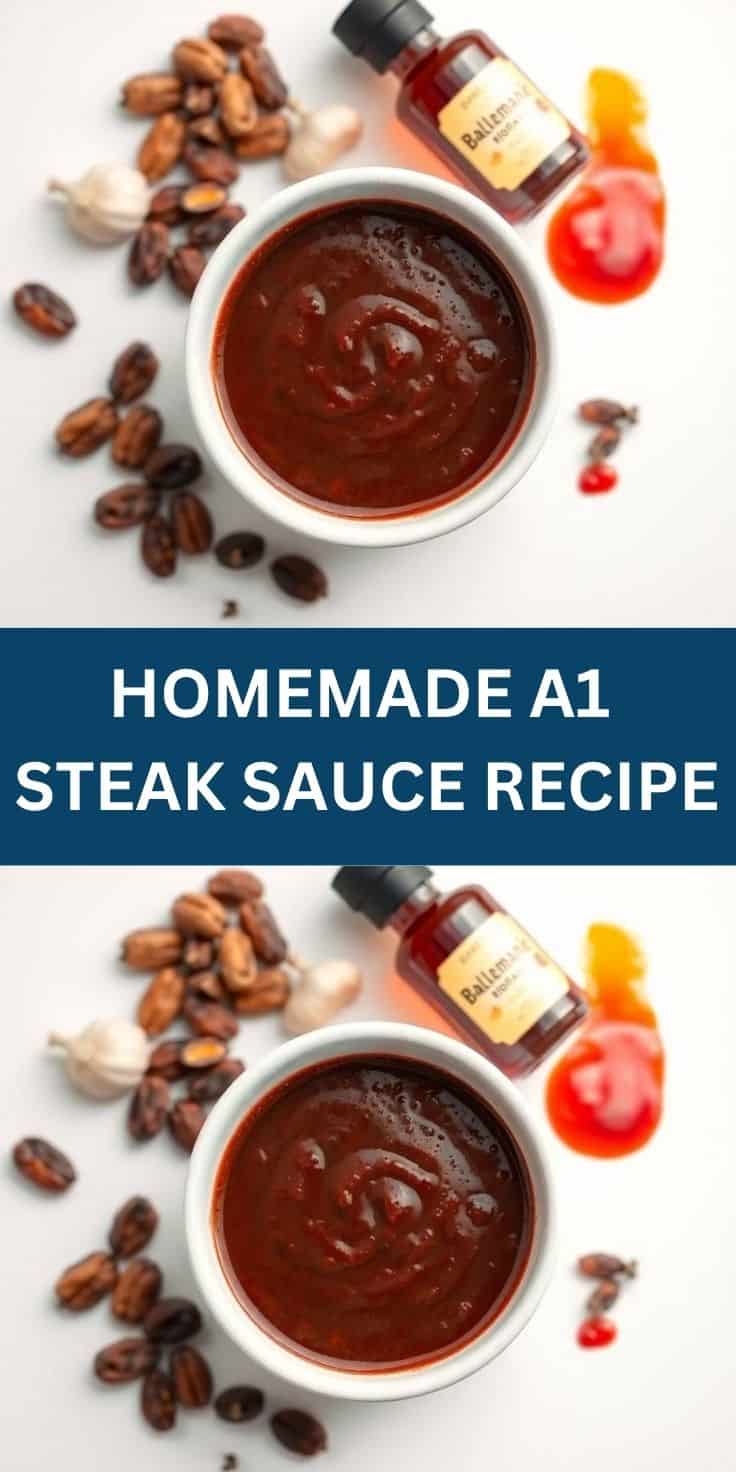
HOMEMADE A1 STEAK SAUCE RECIPE
Ingredients
- ½ cup ketchup
- 2 tablespoons Worcestershire sauce
- 2 tablespoons white vinegar
- 2 tablespoons water
- 1 tablespoon Dijon mustard
- 1 tablespoon lemon juice
- 1 tablespoon soy sauce
- ½ teaspoon garlic powder
- ½ teaspoon onion powder
- ¼ teaspoon black pepper
- Pinch of cayenne pepper optional
Instructions
Mix Ingredients:
- In a small saucepan, combine all ingredients. Whisk until smooth.
Simmer:
- Bring to a simmer over medium heat. Reduce heat to low and simmer for 8–10 minutes, stirring occasionally.
Cool and Store:
- Let sauce cool. Pour into a jar or bottle and refrigerate. Flavours will deepen as it sits.
Notes
- Make Ahead:
Make and store up to 2 weeks in the fridge in a sealed container. - Customizing:
Add a splash of hot sauce or a bit of molasses for a smokier or sweeter version. - Serving Suggestions:
Use with steak, burgers, meatloaf, or grilled vegetables. - Storage Tips:
Refrigerate in a glass jar or bottle. Shake well before each use. - Allergy-Friendly Options:
Use gluten-free soy sauce or tamari to make it gluten-free.
I've been making this sauce for a couple of years now and at this point I genuinely don't reach for the store-bought bottle anymore. Partly because this version tastes fresher, and partly because I almost always have the ingredients already sitting in my pantry. It takes less time than driving to the store to buy a bottle, which is saying something about how easy the recipe actually is.
If you're doing a big grill-out, make a double batch the night before and stash it in the fridge. By the time you're ready to cook, the sauce will have developed fully and you'll have plenty for the whole table. I also love keeping a small jar on hand for weeknight dinners when I want to pull something together quickly — a plain pan-seared steak or a fast burger suddenly feels like a proper meal when there's a good sauce involved. If you want something sweet to round out the meal after all that savory, my Mini Pineapple Upside-Down Cheesecakes are a great follow-up — they're easy, make-ahead friendly, and the kind of dessert that always gets comments.
This isn't meant to be an exact chemical replica of A1 — I'm not a food scientist and I'm working in a normal home kitchen. But it's close enough that my husband didn't notice the difference the first time I swapped it in, and now he specifically asks me to keep a jar in the fridge. That's the kind of feedback I trust more than anything else. 🥩🍶✨
If you made this and liked it, here are a few other things from my kitchen you might want to try next:
- Nacho Cheese Beef Wrap — great for using this sauce as a drizzle inside the wrap
- Healthy Chicken Salad Lettuce Wraps — the balsamic variation of this sauce works really well here
- Mini Pineapple Upside-Down Cheesecakes — for when you need a dessert that's as easy as this sauce
- Puff Pastry Pecan Pie Bites — another one I always make ahead when I'm entertaining
- Strawberry Crunch Cookies — something sweet for the kids after a savory dinner


Comments
No Comments